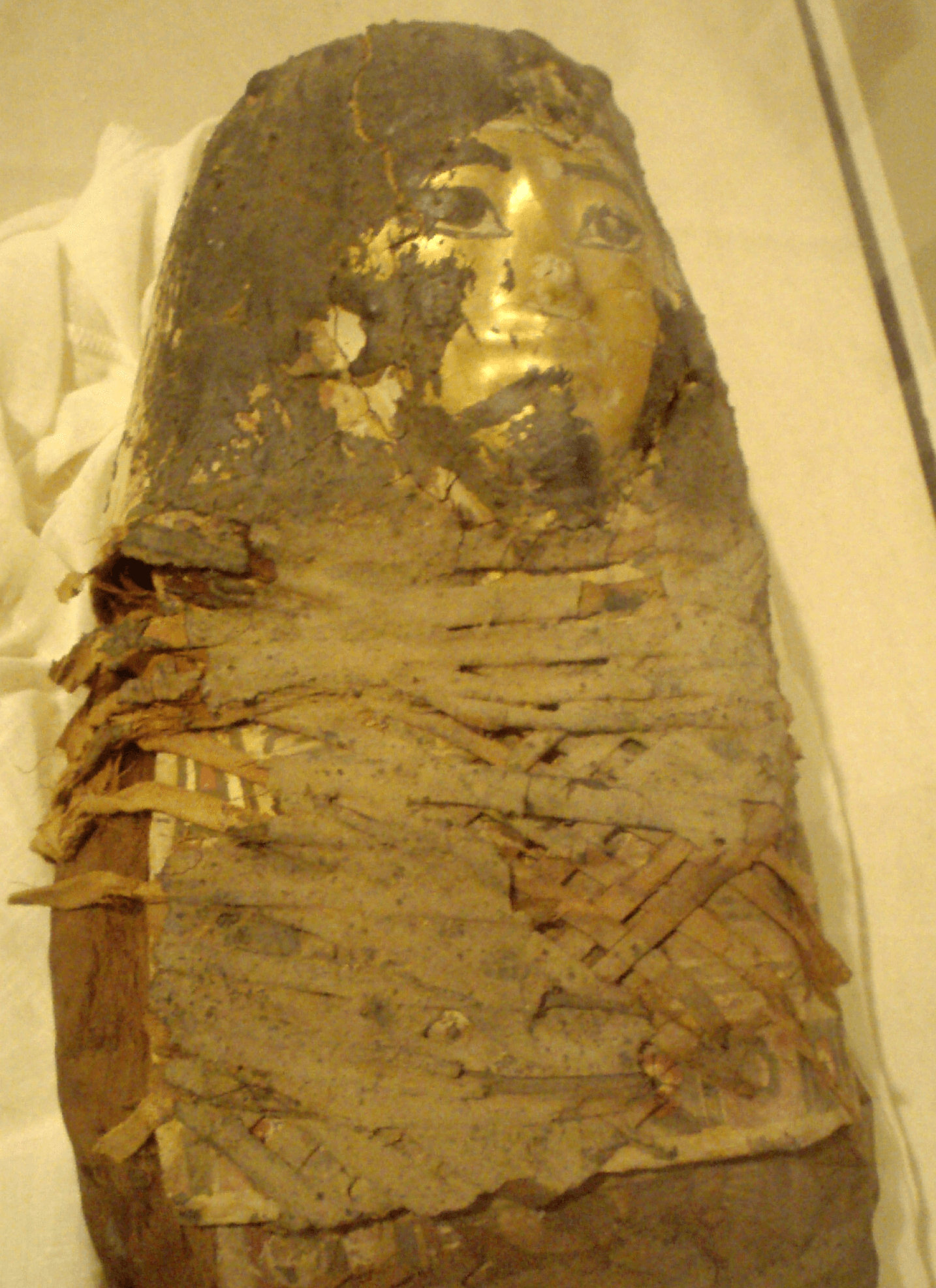
Archaeologists have found a fragment of Homer's Iliad inside a 1,600-year-old, Roman-era Egyptian mummy, according to Phys.org. The fragment was not laid beside the body in the usual manner of grave goods. Instead, it had been placed within the mummy's abdomen, an unexpected location that has drawn attention to how the text came to be there in the first place.
The find dates the burial to the Roman period in Egypt, when the country formed part of a wider Mediterranean world in which Greek learning circulated freely. Phys.org frames the discovery not only as a question of where the fragment was found, but of how it ended up inside the body at all. To make sense of that, the report turns back to the poem itself and to the place it held in Roman culture.
Homer's Iliad was among the most widely copied and studied texts of the ancient world. By the Roman era it was a staple of education, recited, quoted and used in the training of readers and scribes across the Greek-speaking eastern Mediterranean, Egypt included. Copies were produced in large numbers on papyrus, and worn or discarded sheets of writing did not always meet a dignified end. Recycled papyrus was a familiar material in Egyptian workshops, and used documents frequently found second lives.
That practice offers a route to understanding the present find. A page of Homer that had served its original purpose could be reused, and here a fragment of the poem appears to have been repurposed in the preparation of a body for burial. A literary treasure to modern eyes, the papyrus may have been, to those handling it, simply serviceable material to hand.
The discovery sits at the meeting point of two traditions that shared the Nile valley in this period: the long Egyptian practice of mummification and the Greek literary culture that flourished under Roman rule. It is a reminder that Roman-era Egypt was a layered society in which languages, scripts and customs overlapped. Papyrus fragments recovered from mummies and mummy casings have long been an important source for scholars seeking lost or rare copies of ancient texts, and finds of this kind continue to shed light on what people were reading, copying and eventually throwing away.
For readers drawn to the writing systems of ancient Egypt, the Hierolyte app offers a way to begin learning to read hieroglyphs, the script that shaped so much of the culture from which these burials came.