Discoveries
News from the world of ancient Egypt.
Excavations, exhibitions, hieroglyphic texts, and research, drawn from verifiable institutional sources. Every story cites where it came from.
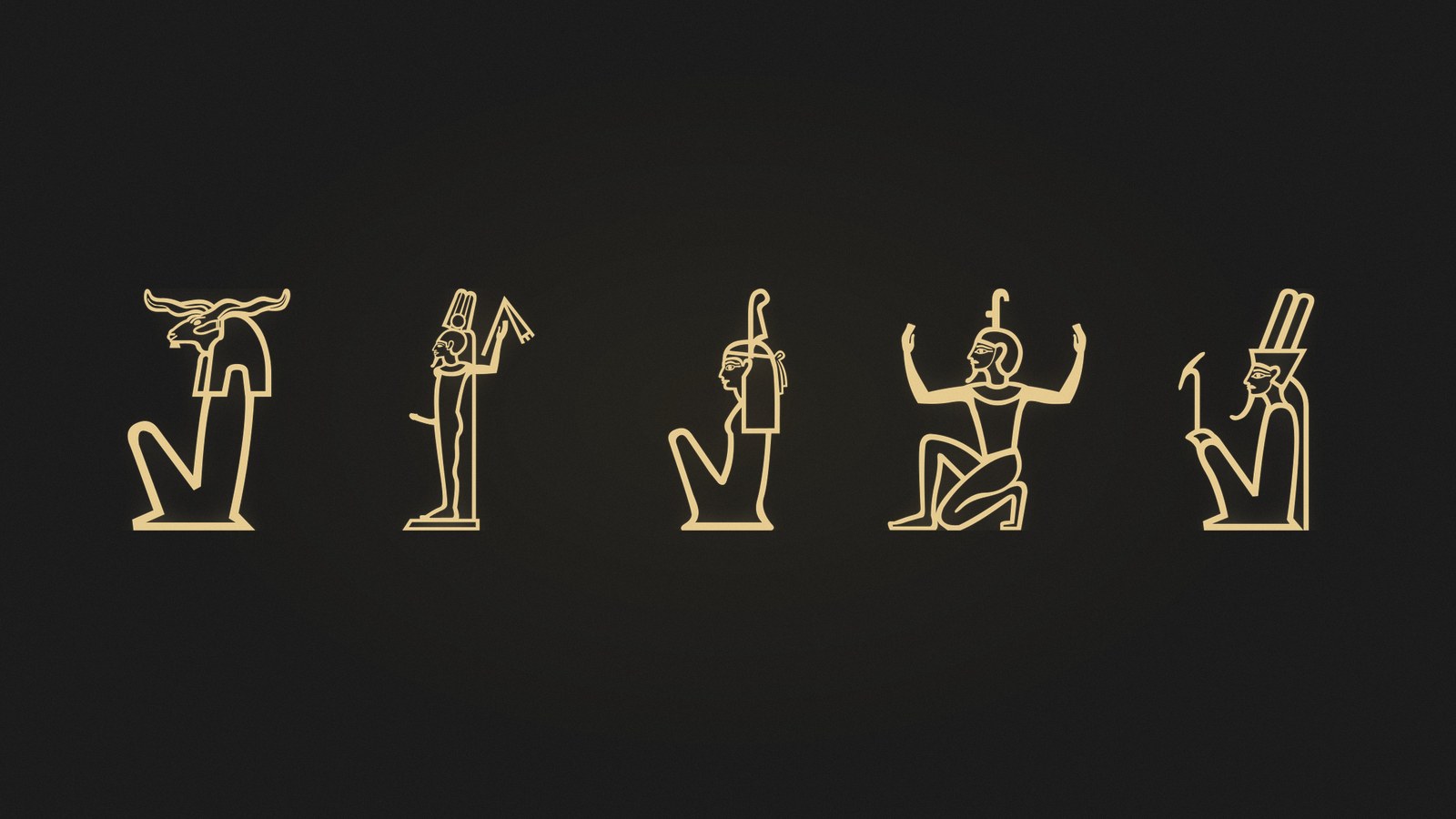
Five more gods you can recognise on sight
A beginner lesson on five more Egyptian gods you can name at a glance: Khnum, Min, Maat, Heh and Amun. Each one is identifiable from a single feature of headdress or posture, so their names are easy to pick out of an inscription.
2 min read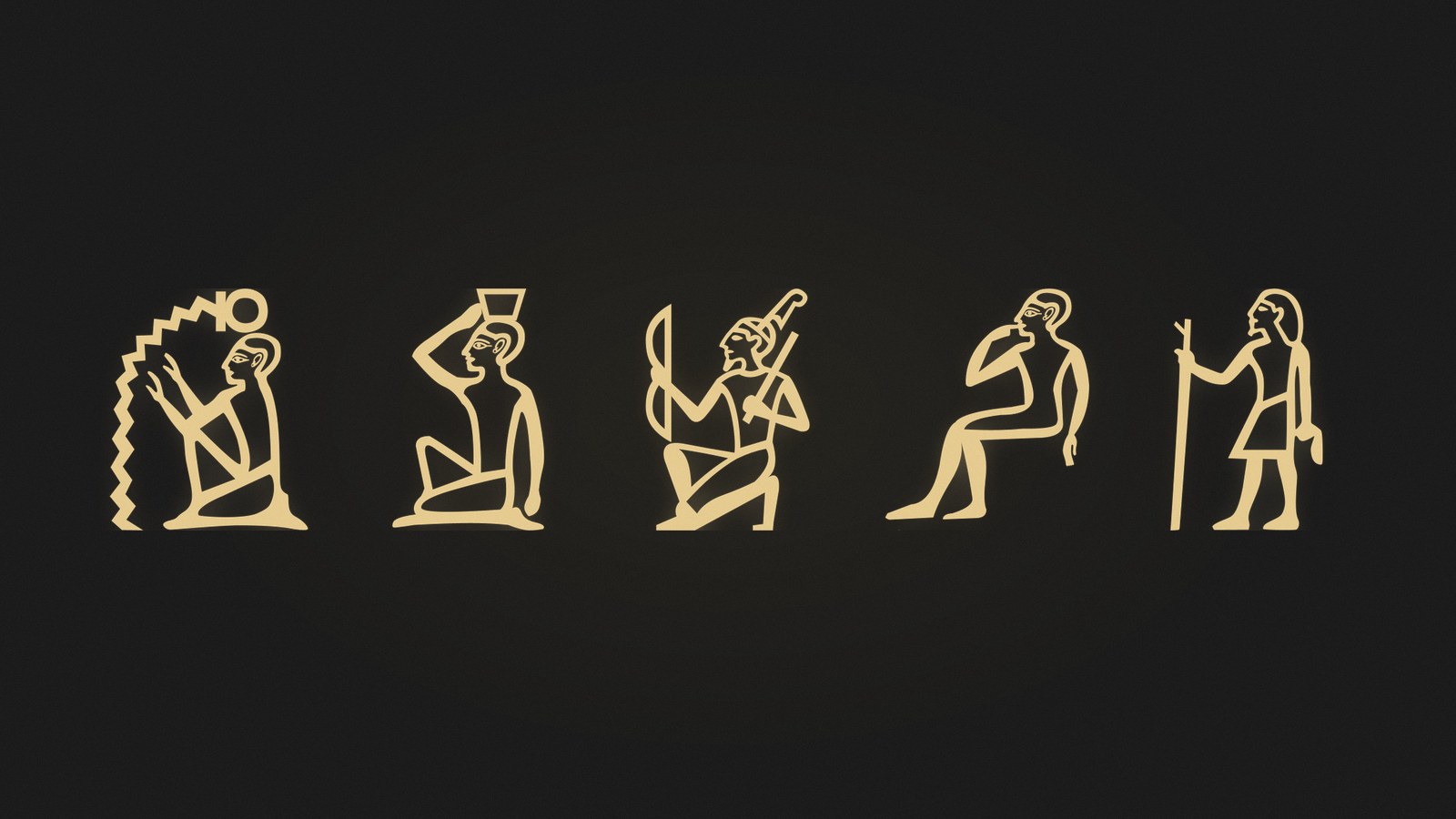
Egyptian jobs, written as little seated figures
The A group of the sign list is a crowd of small human figures, each frozen mid-action. This beginner lesson shows how their postures work as classifiers, from the jubilating figure to the seated official.
2 min read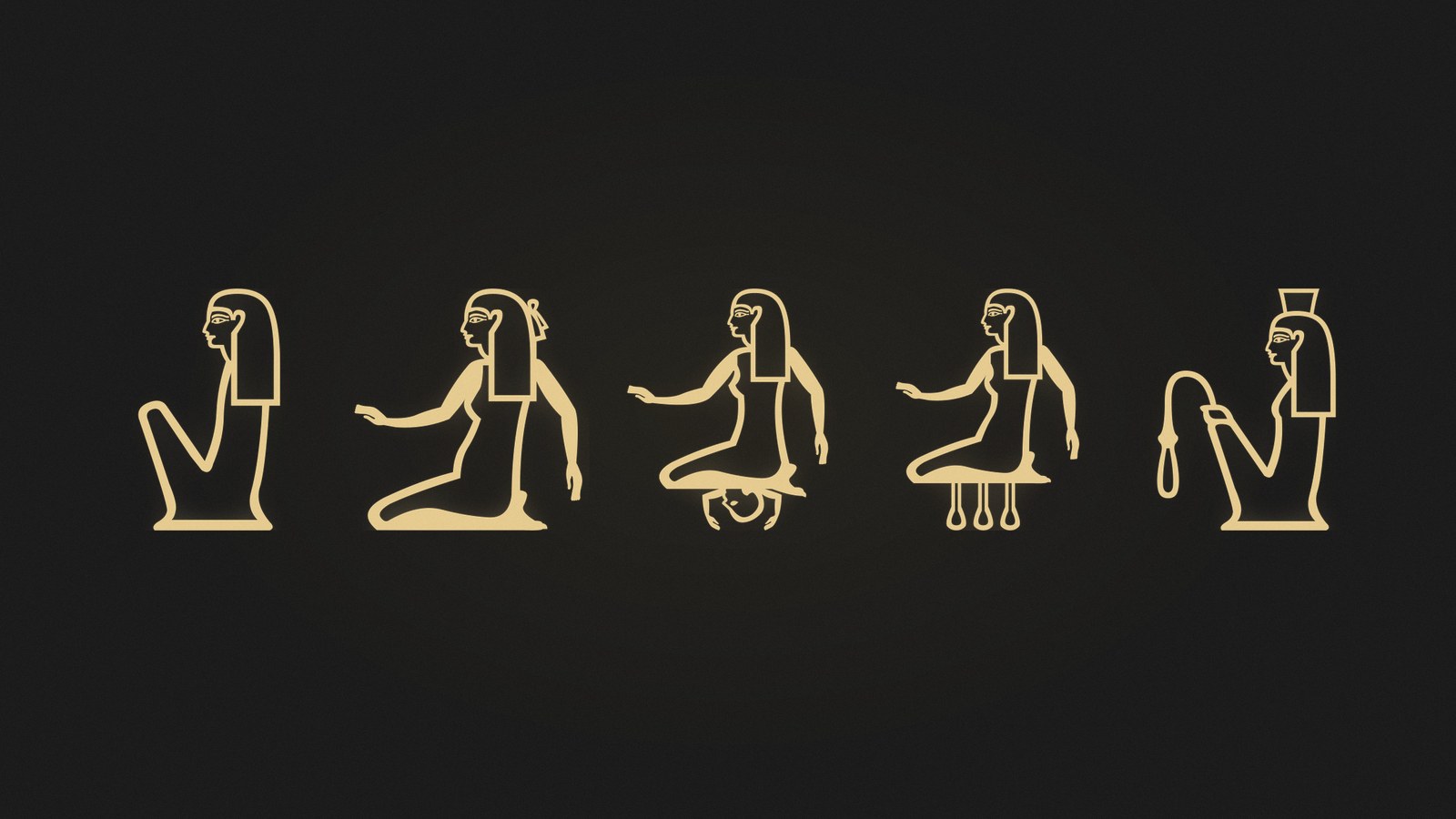
The women written into the hieroglyphic script
The hieroglyphic sign list sets aside a whole group for women, and it is unusually specific: woman, pregnant, giving birth, nursing and queen. This beginner lesson walks through five signs in the B group and what their specificity reveals.
2 min read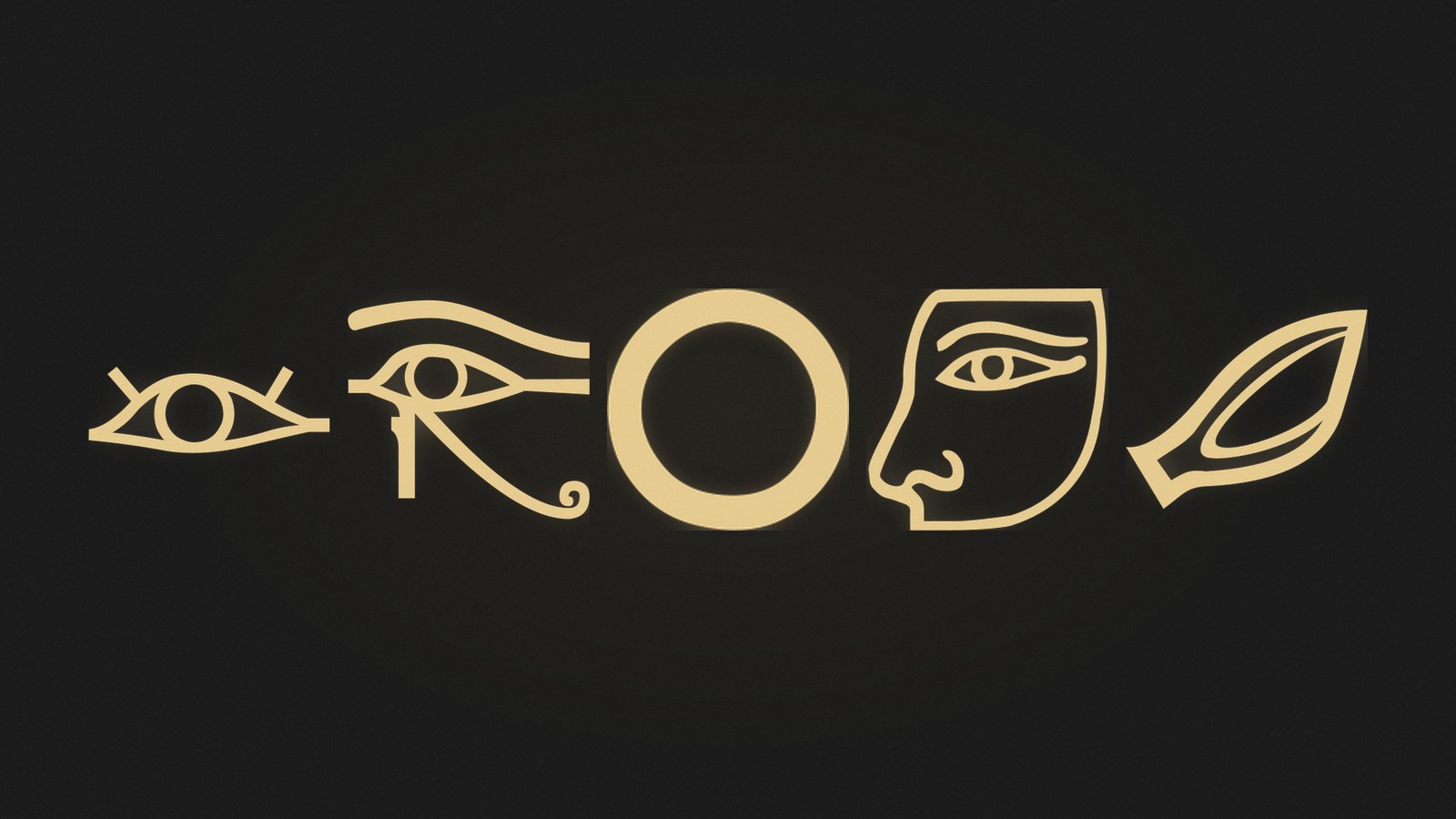
Seeing, hearing and breathing in hieroglyphs
The signs for the senses are among the most recognisable in the whole script. This beginner lesson introduces the painted eye, the wedjat, the pupil, the nose and the ear, and explains how the Egyptians used the body to write about seeing, hearing and breathing.
2 min read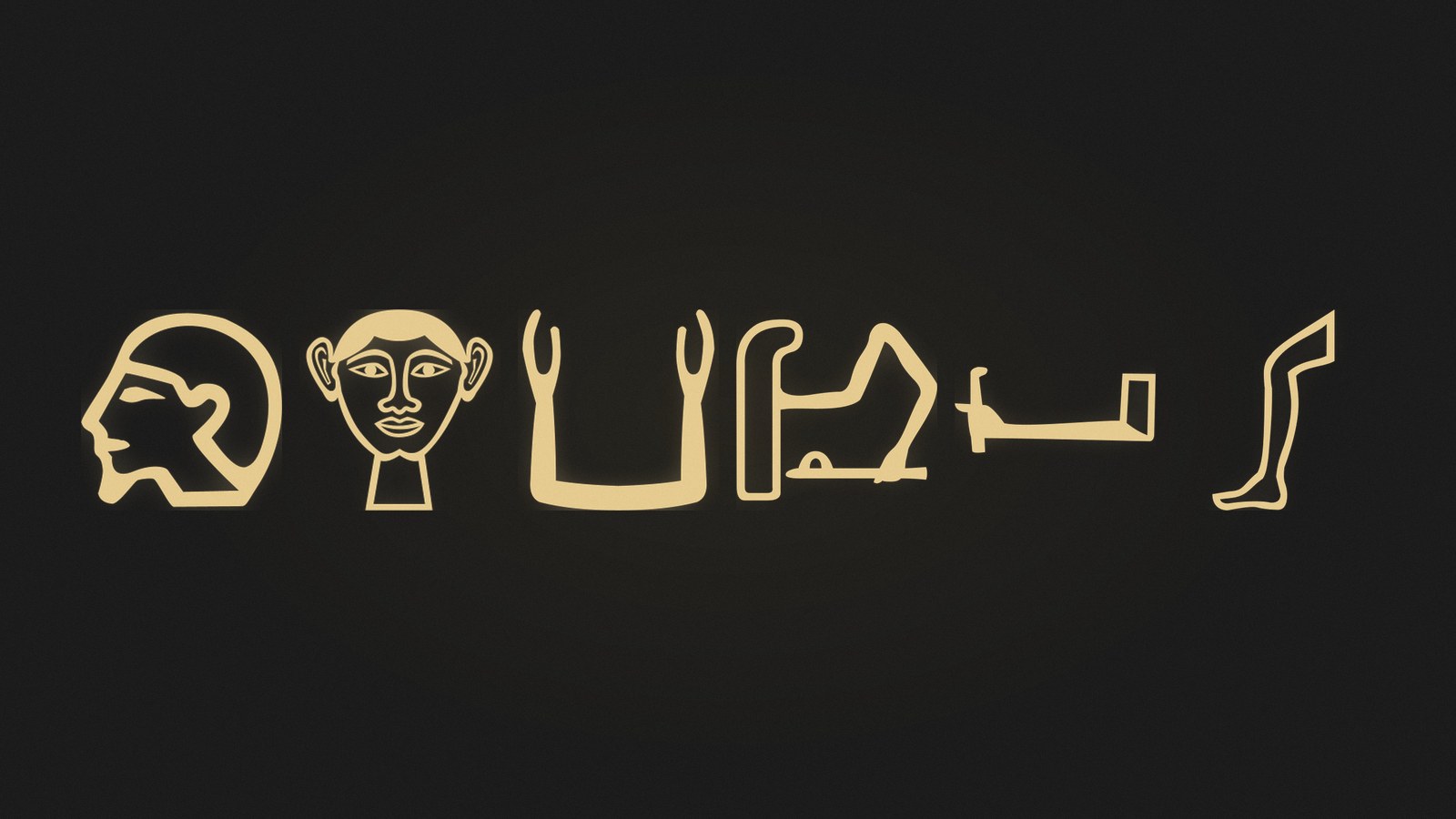
How Egyptian turned body parts into abstract words
Ancient Egyptian repeatedly borrowed pictures of the human body to write abstract ideas: a head for first, a face for upon, arms for standing and strength. This beginner lesson traces the habit across six signs so you can start reading it everywhere.
2 min read
Tomb of a pyramid-age 'keeper of secrets' found at Saqqara
A tomb belonging to a pyramid-age official who held the title of the king's 'keeper of secrets' has been uncovered at Saqqara, the necropolis south of Cairo. The find adds another royal courtier to the record of the men who served Egypt during the pyramid age.
2 min read
The Collector asks why most female pharaohs have been forgotten
A feature from The Collector examines why so few of ancient Egypt's female rulers are remembered, arguing there were more than popular memory allows. It points to how women such as Hatshepsut presented themselves as male kings, or were recorded only as queens.
2 min read
The Collector examines how ancient peoples worshipped rivers as gods
The Collector has published a comparative feature on how ancient civilisations came to worship the rivers they depended on, placing the Nile alongside the Tigris, Euphrates, Ganges and Yellow River. The essay argues that peoples deified these waterways to control and pacify them, shaping the religious life that grew up along their banks.
2 min read
The Collector podcast explores the overlooked women who helped build Egyptology
The Collector has released a podcast episode with Dr Kathleen Sheppard on the women whose notes, correspondence, teaching and research helped build Egyptology yet were often uncredited. The conversation reconsiders who did the work behind the field's famous discoveries.
2 min read
Hyksos-era complex uncovered at Tell el-Ku'a in the eastern Nile Delta
An Egyptian mission has uncovered a large multi-functional complex dating to the Fifteenth Dynasty, the Hyksos era, at Tell el-Ku'a in Wadi Tumilat in the eastern Nile Delta. The Past reports the find, which adds to a growing picture of settlement in the region during Hyksos rule.
2 min read
Roman basilica and marble Aphrodite head found at Ihnasya
An Egyptian team has uncovered a Roman basilica, a large marble head of the goddess Aphrodite and terracotta coin moulds at Ihnasya, ancient Herakleopolis Magna in Middle Egypt. The finds shed light on the town's life under Roman rule.
2 min read
Egyptian mission reveals the plan of a Byzantine city in the Dakhla Oasis
An Egyptian mission at Ain el-Sabil in the Dakhla Oasis has uncovered the overall plan of a Byzantine-era city, along with several previously unknown mud-brick structures. The find reveals how the desert settlement was organised.
2 min read
Egyptian team uncovers Graeco-Roman burials at Tell Kom Aziza in the Delta
An Egyptian mission excavating the multi-period cemetery at Tell Kom Aziza in Beheira has uncovered a Graeco-Roman section with diverse human funerary practices, The Past reports. The find adds to knowledge of burial customs in the Nile Delta during the centuries of Ptolemaic and Roman rule.
2 min read
Egyptian mission uncovers 18 tombs at Marina el-Alamein
An Egyptian mission has discovered 18 tombs at Marina el-Alamein, the site of the Graeco-Roman city of Leukaspis on Egypt's north coast. The find includes 11 deep rock-cut tombs and 7 limestone surface tombs, many still sealed, The Past reports.
2 min read
Almost complete funerary assemblage found at ancient Heliopolis
Archaeologists at ancient Heliopolis, in the Matariya district of Cairo, have uncovered an almost complete funerary assemblage beneath a mud-brick burial structure. The Past reports that the group of personal and ritual objects includes an item of copper.
2 min read
Egyptian mission documents unusual burials at Tell Quesna in the Delta
An Egyptian mission has documented an unusual funerary practice in a newly discovered tomb at the Tell Quesna necropolis in Menoufia Governorate, in the central Nile Delta. The team found several burials accompanied by pottery, according to The Past.
2 min read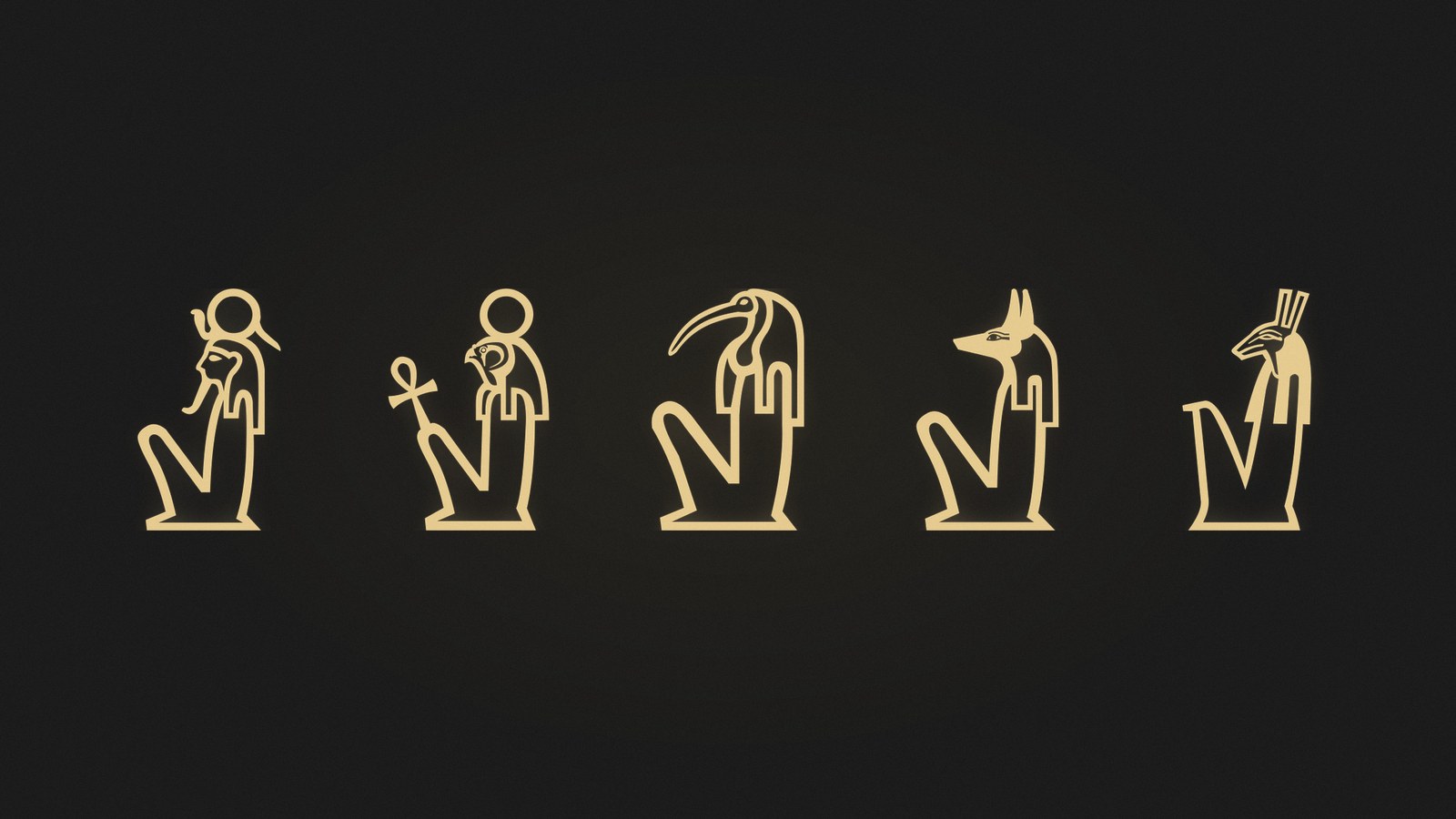
How to spot a god's name in a hieroglyphic text
Divine names are among the easiest things to pick out of a hieroglyphic wall, because a small seated figure marks a name as a god's. Learn the generic deity sign and the specific figures for Ra, Thoth, Anubis and Seth.
2 min read
New book surveys ancient Egyptian textiles in northern English museums
A new book, Weaving for Eternity: Ancient Egyptian Textiles, surveys significant collections of ancient Egyptian cloth held in museums across the north of England. The Past's review notes that these often-overlooked artefacts offer insights into technology, economics, religion, and dress.
2 min read
The Collector lists seven objects it argues museums should return to Egypt
The Collector has published a feature naming seven ancient Egyptian objects held in overseas museums that it argues should be returned to Egypt, using the November 2025 opening of the Grand Egyptian Museum to renew the repatriation debate.
2 min read
A new account revisits the reconstruction of Queen Hetepheres I's furniture
The Past revisits the reconstruction of Queen Hetepheres I's funerary furniture, including her carrying-chair, following George Reisner's discovery of her tomb at Giza in 1925 and the work of William Arnold Stewart. Hetepheres I was the mother of Khufu, builder of the Great Pyramid.
2 min read
Cleopatra VII gains a volume in Bloomsbury's Significant Figures series
Cleopatra VII has become the latest subject in Bloomsbury's Significant Figures in World History series, joining Nelson Mandela, Winston Churchill and Henry VIII. The new reference guide gathers her life and works into a single accessible volume, according to a review in The Past.
2 min read
Ancient Egypt Magazine issue 156 published, spanning Tutankhamun galleries to the Osirion at Abydos
Issue 156 of Ancient Egypt Magazine has been published, with features on the Tutankhamun galleries at the Grand Egyptian Museum, the origins of carnelian, ancient pain relief, the Litany of Ra, women's literacy, John Gardner Wilkinson and the Osirion at Abydos. The line-up was listed by The Past.
2 min read
The Past reviews a new book on religion in Egypt from pharaonic times to today
The Past has reviewed a new book tracing religious ideas in Egypt from the pharaonic period through the Christian and Islamic eras. Taking Herodotus's description of the Egyptians as the most religious of peoples as its cue, the book explores continuity and change across thousands of years.
2 min read
Elephantine papyri unseen since 1916 to feature in exhibition on the origins of writing
An exhibition on the origins of writing in ancient Egypt will feature papyri from Elephantine that have been held in the Brooklyn Museum since 1916 and never before displayed, according to listings from The Past.
2 min read
Three rock-cut tombs of early New Kingdom officials found at Saqqara
An Egyptian team has discovered three rock-cut tombs of high officials from the early New Kingdom in the Bubasteion necropolis at Saqqara. The tombs are inscribed with the biographies of the men buried within them.
2 min read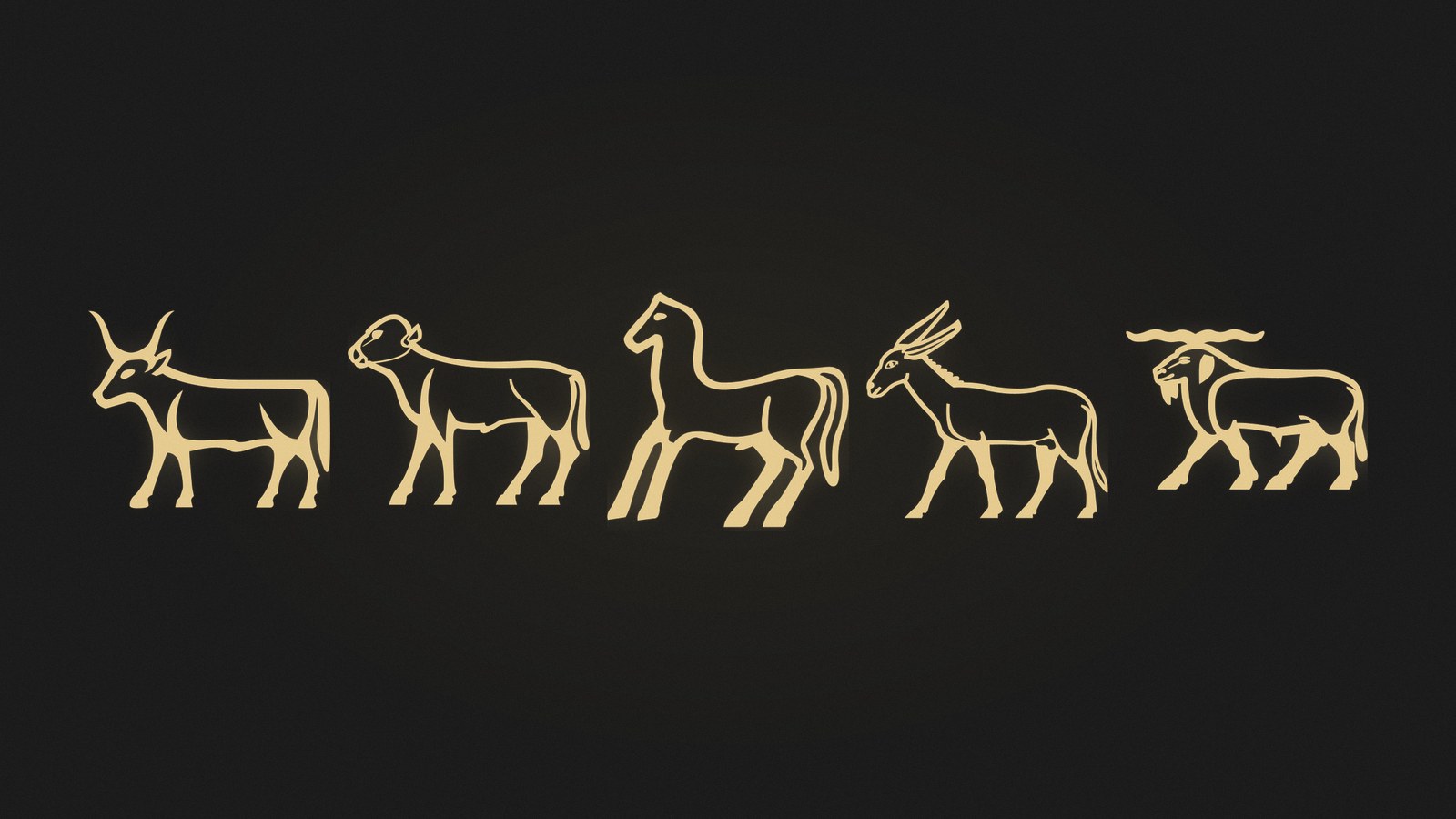
The animals living inside Egyptian words
Egyptian scribes drew the animals around them, and those drawings became working parts of the writing system. From the royal bull to the newly arrived horse, these five signs show how hieroglyphs kept a record of the living world. A gentle introduction for complete beginners.
2 min read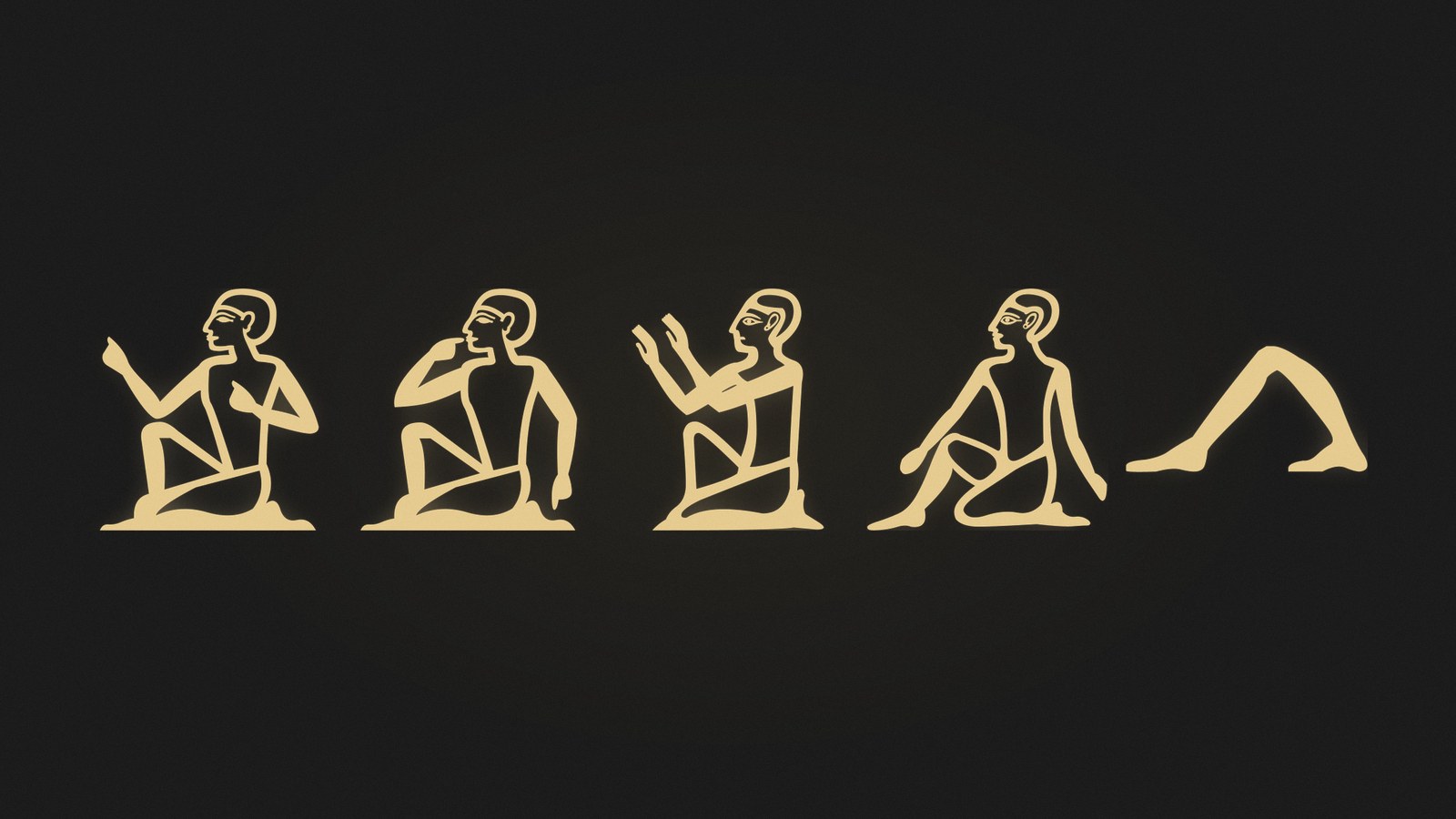
The hieroglyphs you are not meant to pronounce
Some hieroglyphs are never spoken aloud. Placed silently at the end of a word, these determinatives tell the reader what kind of word it is. Meet five of the most common, from the seated man to a pair of walking legs.
2 min read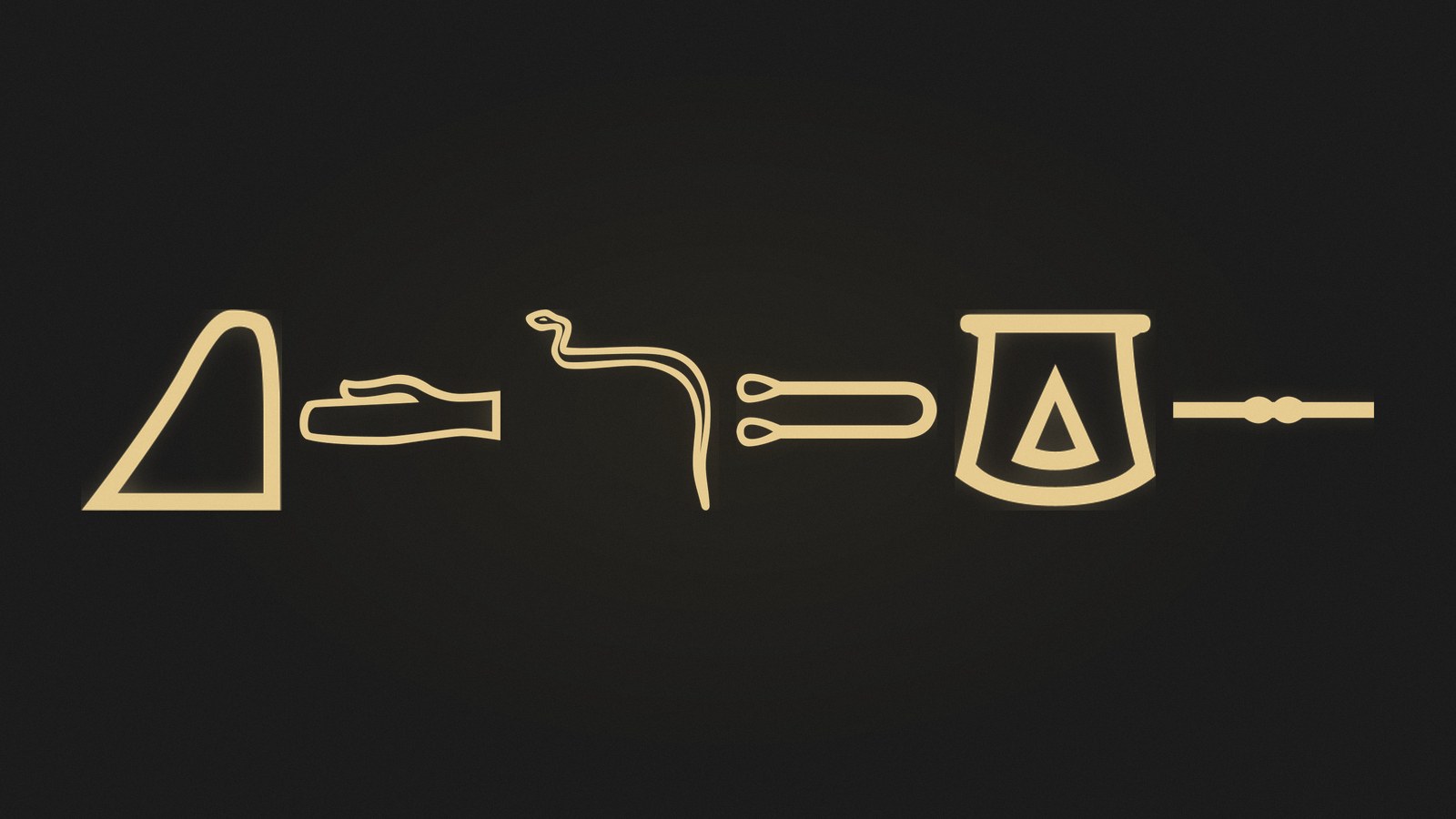
Finishing the hieroglyph alphabet
These six signs complete the single-consonant hieroglyphs: the sandy slope, hand, cobra, tethering rope, ring stand and door bolt. Learn them and you hold the whole uniliteral set, enough to sound out names, titles and everyday words.
2 min read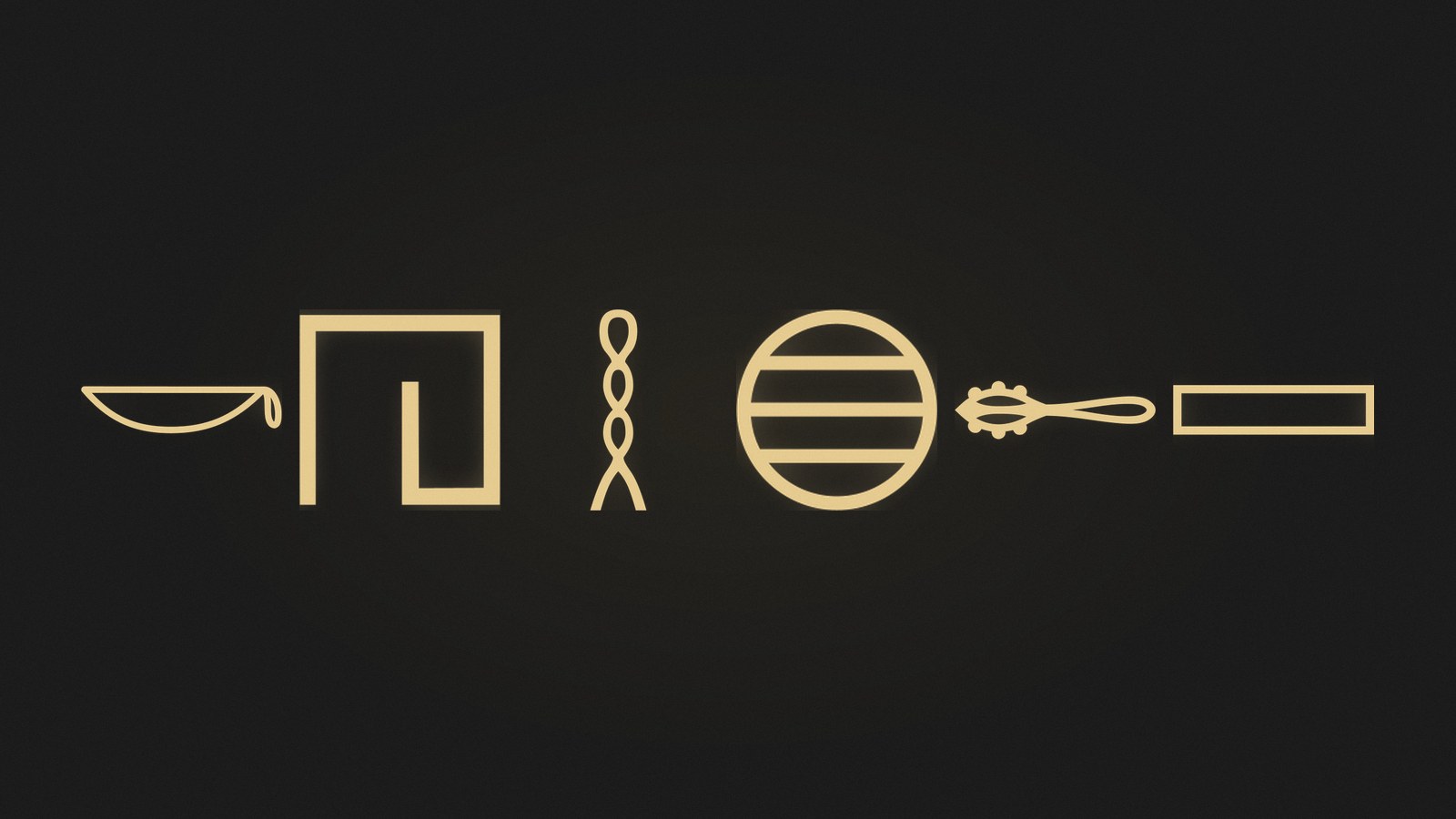
The hieroglyphs English speakers find hardest
Six Egyptian consonants have no easy English equivalent, and they are where beginners tend to slow down. This lesson walks through each sign and explains why the dots and hooks in transliteration matter so much.
2 min read
The Past profiles Sir John Gardner Wilkinson, a pioneer of British Egyptology
The Past has published a feature by Robert R Frost on Sir John Gardner Wilkinson, an antiquary and traveller remembered as a pioneer of British Egyptology. The piece explores his life and why he is regarded as the discipline's 'other founder'.
1 min readNew galleries open at the Grand Egyptian Museum, reviewer reports after return visit
The Grand Egyptian Museum near Giza has opened new galleries, reports Geoffrey Lenox-Smith in a travel review for The Past following a return visit. His account compares the museum as he first found it with what is now on show.
2 min read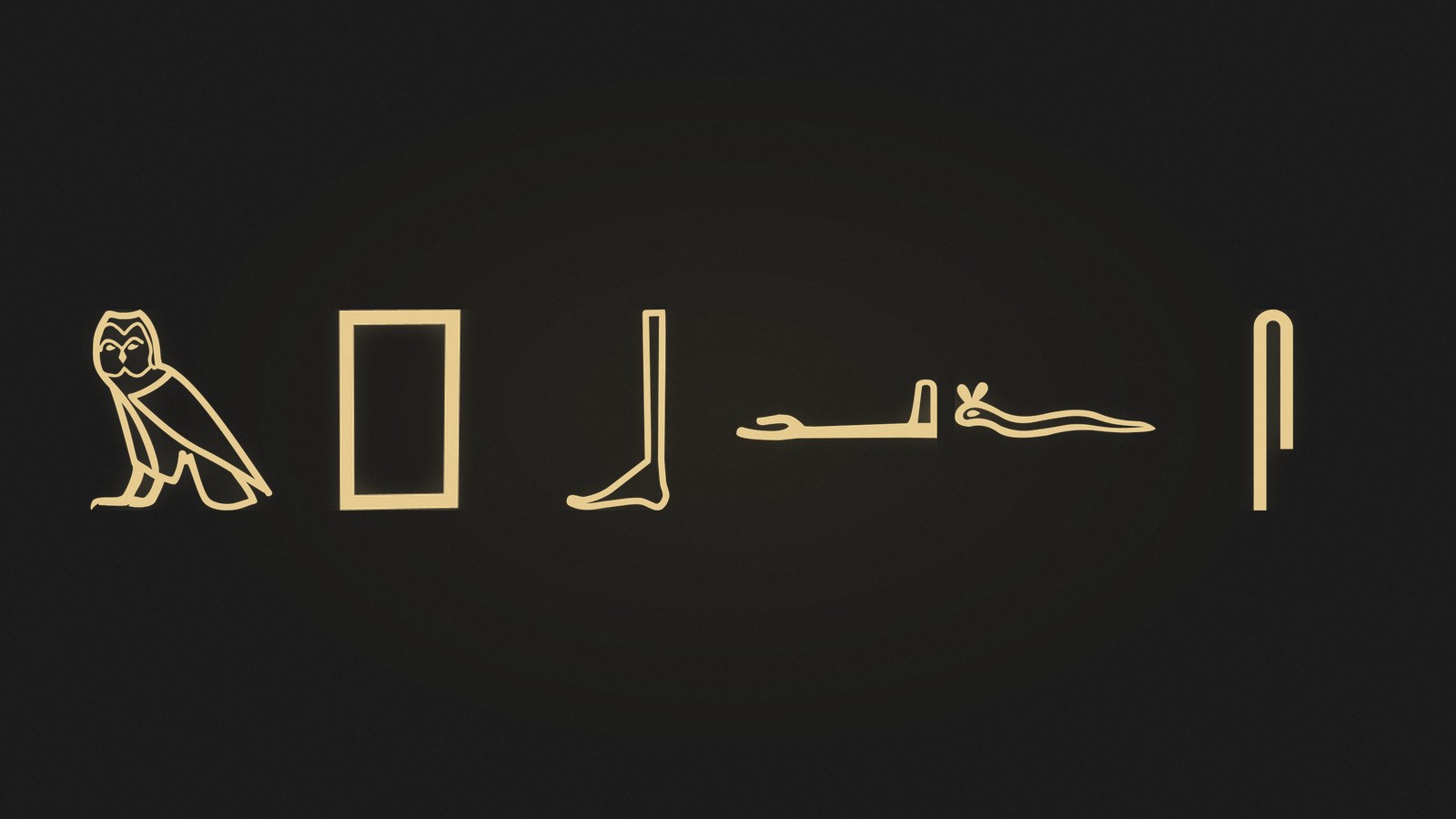
Six more hieroglyphs that work like letters
The alphabet lesson covered six single-consonant signs. Here are six more, and between them you can already sound out a surprising number of real Egyptian words.
2 min read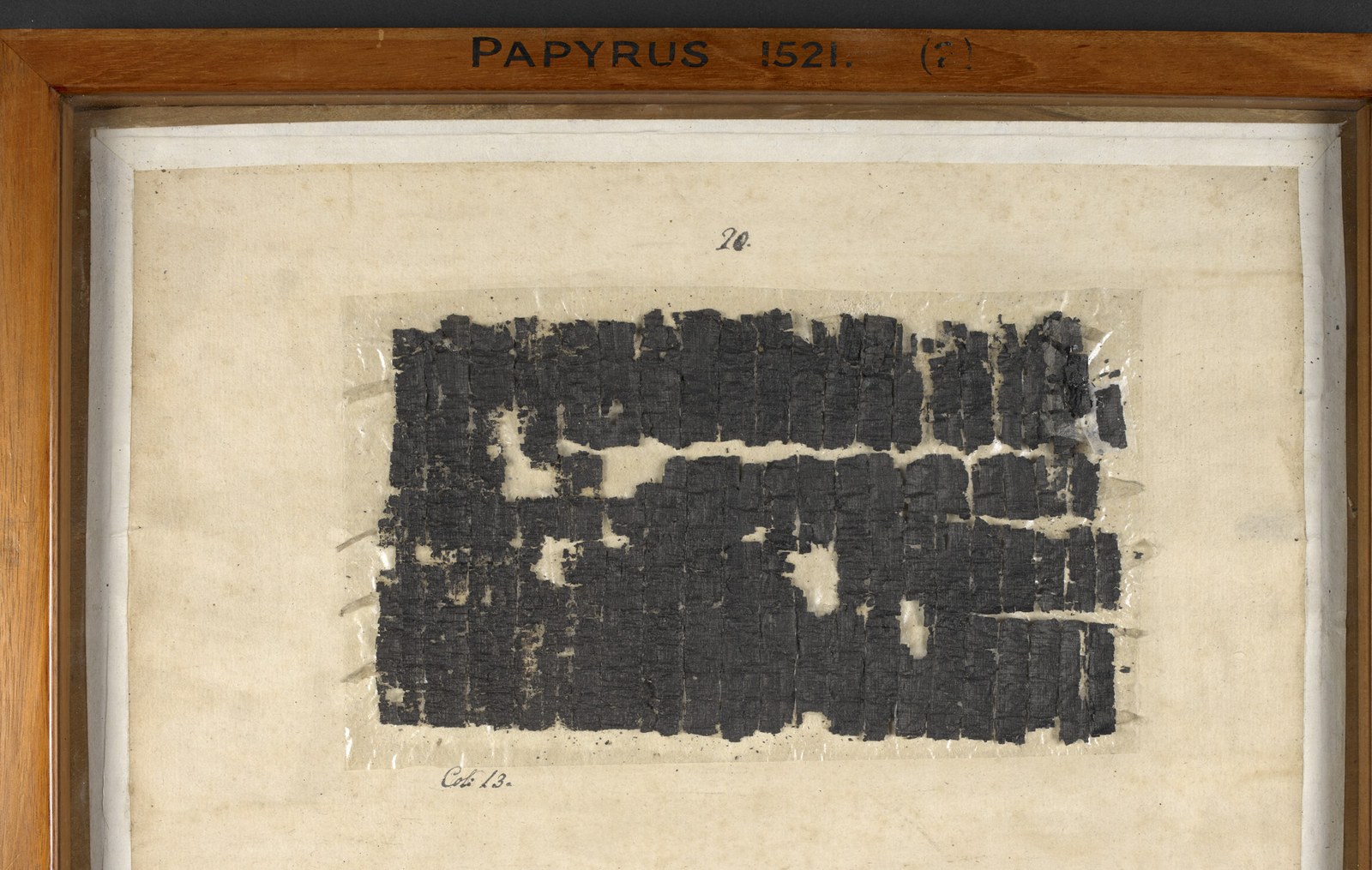
The Buried Library of Herculaneum, and the Machines Learning to Read It
When Vesuvius erupted in AD 79 it sealed the only intact library to survive from the ancient world: hundreds of papyrus scrolls, carbonised and impossible to open. This year, for the first time, a complete sealed scroll was read without being unrolled. Why that matters to anyone who loves ancient texts, and why I am getting involved.
3 min read
Simone Petacchi examines the evidence for women's literacy in ancient Egypt
The Past has published a feature by Simone Petacchi exploring whether women in ancient Egypt could read and write. The piece works through the fragmentary evidence for women's voices in the culture's written record.
2 min read
Sixteen mummies and a dog reveal centuries of reuse in a Theban tomb
Researchers in Egypt's Theban Necropolis have found sixteen mummified people, the partial remains of at least four more, and a mummified dog in a single tomb. The burials span hundreds of years and reveal a shifting pattern of reuse, from wealthy coffined individuals to later bodies stacked in crowded spaces.
2 min read
James Harrell examines the uncertain origins of ancient Egypt's carnelian
Geologist James A Harrell has published a feature with The Past on the uncertain origins of carnelian, one of ancient Egypt's most popular gemstones. The article treats the reddish-orange stone as a geological puzzle, asking where the Egyptians obtained their raw material.
2 min read
Ira Rampil examines physical and magical pain relief in ancient Egypt
Ira Rampil has published a second article on pain relief in ancient Egypt, this time examining the physical and magical interventions used to ease suffering. The feature appears on The Past and follows an earlier piece on herbal remedies.
1 min read
Hilary Wilson explores how ancient Egyptians were paid in bread and beer
The Past has published the second part of Hilary Wilson's feature on ancient Egyptian economics, showing how workers were paid in food and drink. Bread and beer, both made from grain, formed the core of a system that functioned without coinage.
2 min read
The Collector recounts how Wallis Budge brought the Book of the Dead to Britain
The Collector has published a feature on E.A. Wallis Budge, the British Egyptologist who acquired the Book of the Dead and brought it to the West. The piece recounts his controversial methods and sets his story against the popular image of the fictional Indiana Jones.
2 min read
The Collector revisits Napoleon's Egyptian campaign and its scientific legacy
The Collector has published a feature on Napoleon's 1798 to 1801 expedition to Egypt and Syria, tracing its military ambitions, administrative reforms and scientific work. The article presents the campaign's scholarly legacy as its most enduring outcome, standing near the start of modern Egyptology.
2 min read
Archaeologists describe finding a Theban tomb and the fight to protect it from flash floods
An article in The Conversation describes discovering an ancient Egyptian tomb in a necropolis at the foothills of the Theban mountain, where the monuments are extremely vulnerable to flash flooding. It sets out the effort to preserve the site against sudden storms.
2 min read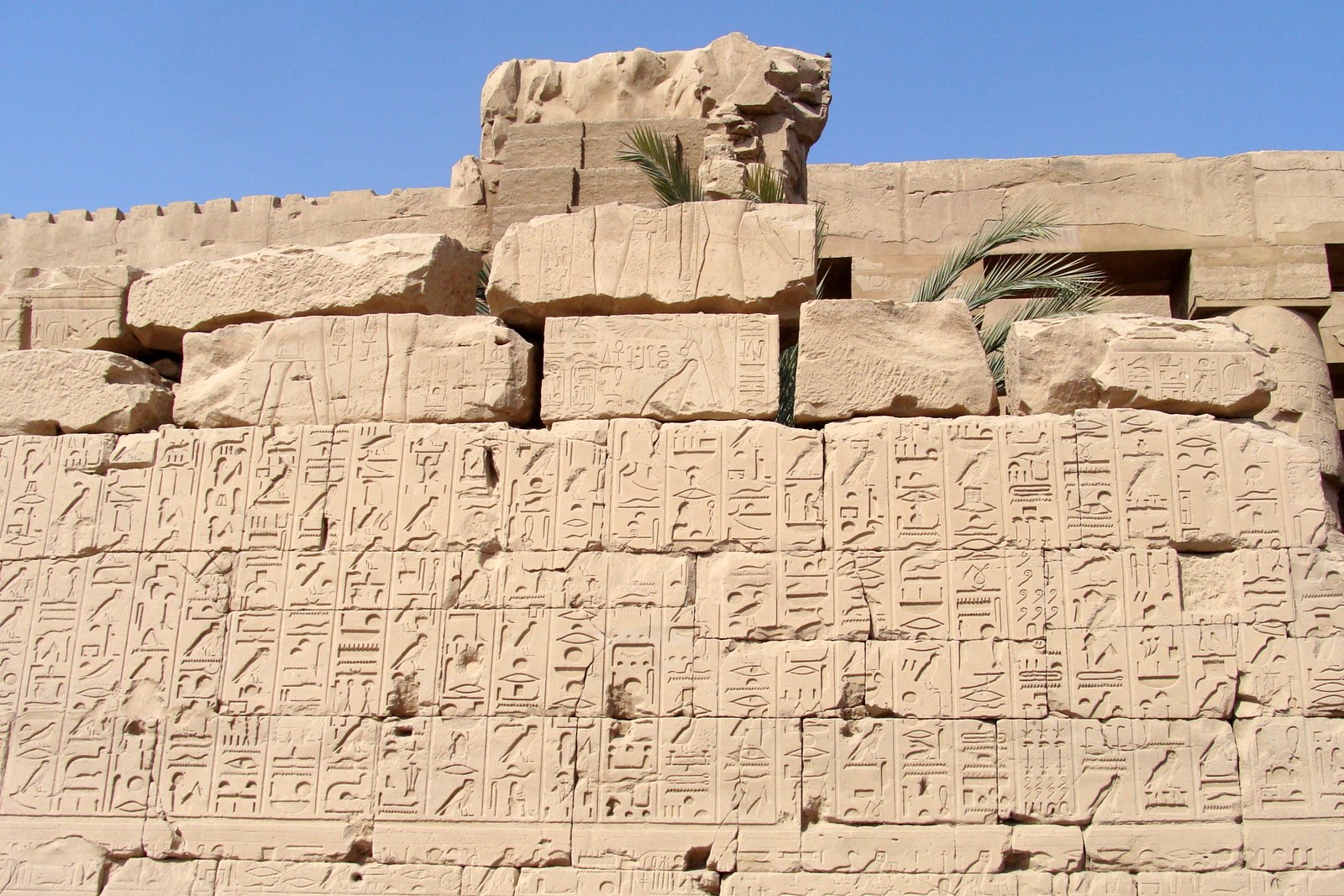
Three signs you will see everywhere: nfr, nb, ra
Three short hieroglyphs, nfr, nb and ra, turn up so often that recognising them transforms a museum visit. This beginner lesson introduces each sign, its meanings and where you will meet it, so you can start reading wall text phrase by phrase.
2 min read
Aidan Dodson traces how the court official Amenhotep-son-of-Hapu became a god
Egyptologist Dr Aidan Dodson has explained, in a podcast with TheCollector, how the 18th Dynasty court official Amenhotep-son-of-Hapu came to be worshipped as a god. Dodson, co-author of a forthcoming biography, traces a reputation that lasted for centuries after the man's death.
2 min read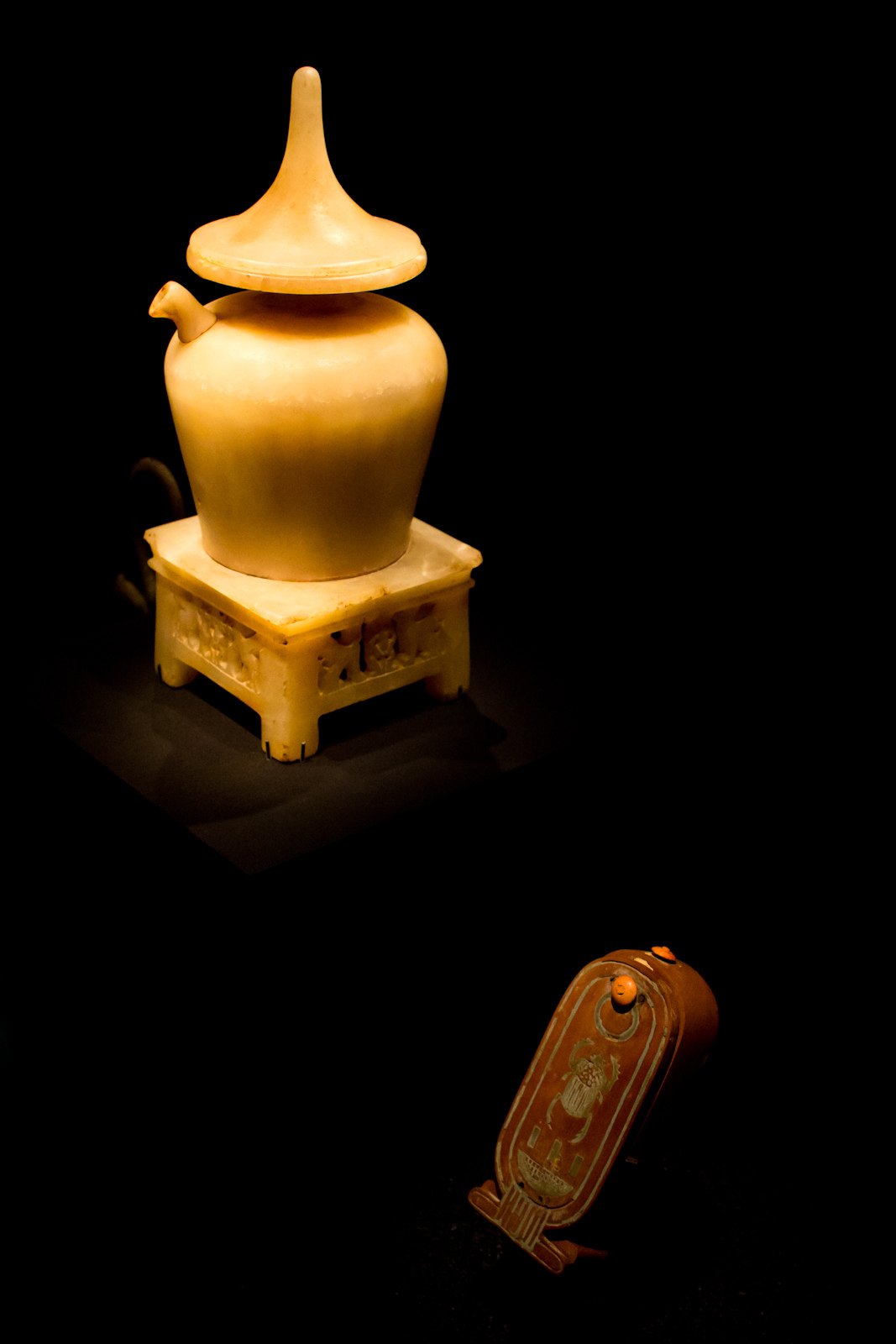
Read Tutankhamun's cartouches yourself
Tutankhamun's name is the most-photographed Egyptian text in the world, and a beginner can genuinely read it. Learn his two cartouches, the throne name Nebkheperure and the birth name Tutankhamun, and the elegant rule that puts the gods first.
2 min read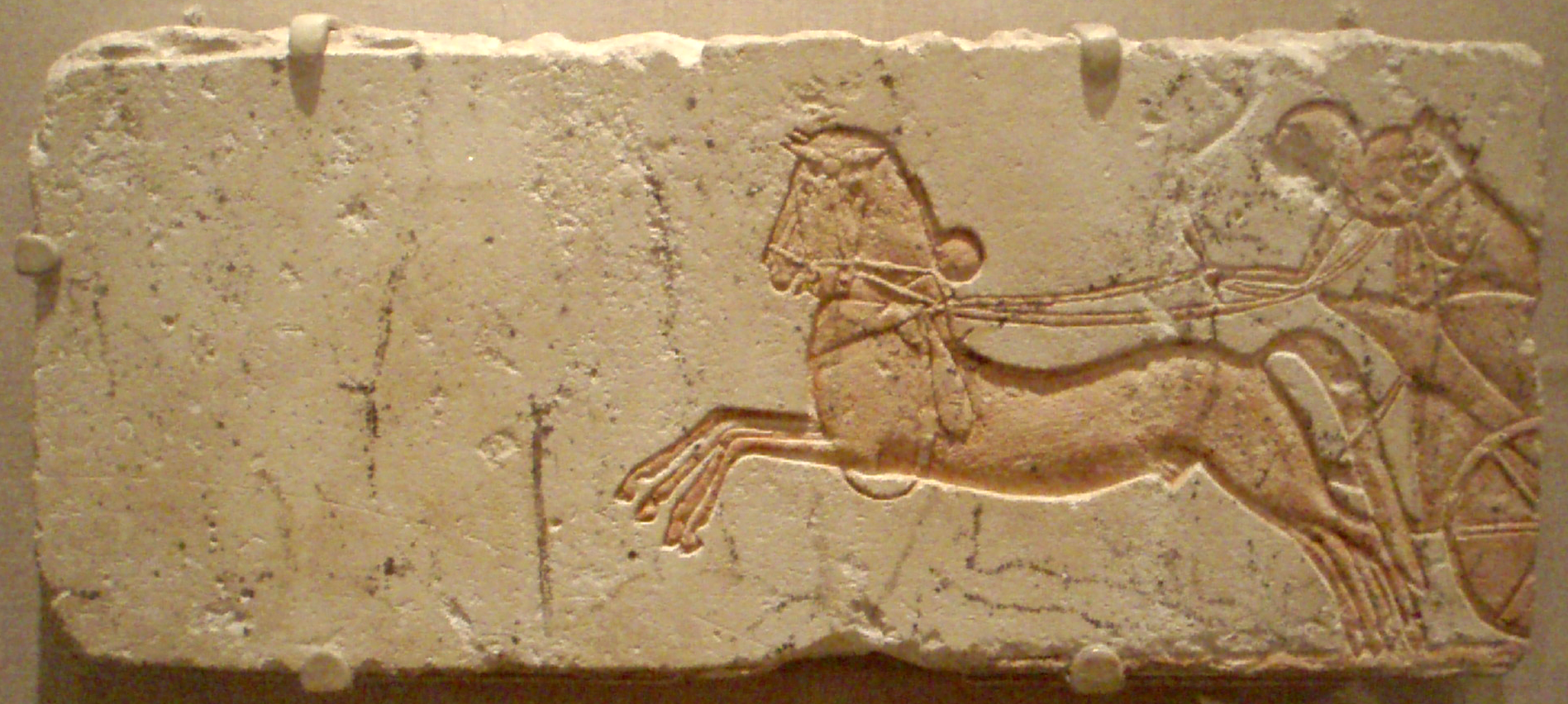
What Egyptian art reveals about horses beyond the chariot
An article from The Collector examines what Egyptian art reveals about horses, noting that nearly all surviving images tie them to chariots. It argues that rare depictions of horses being ridden show their role was broader than the monumental record suggests.
2 min read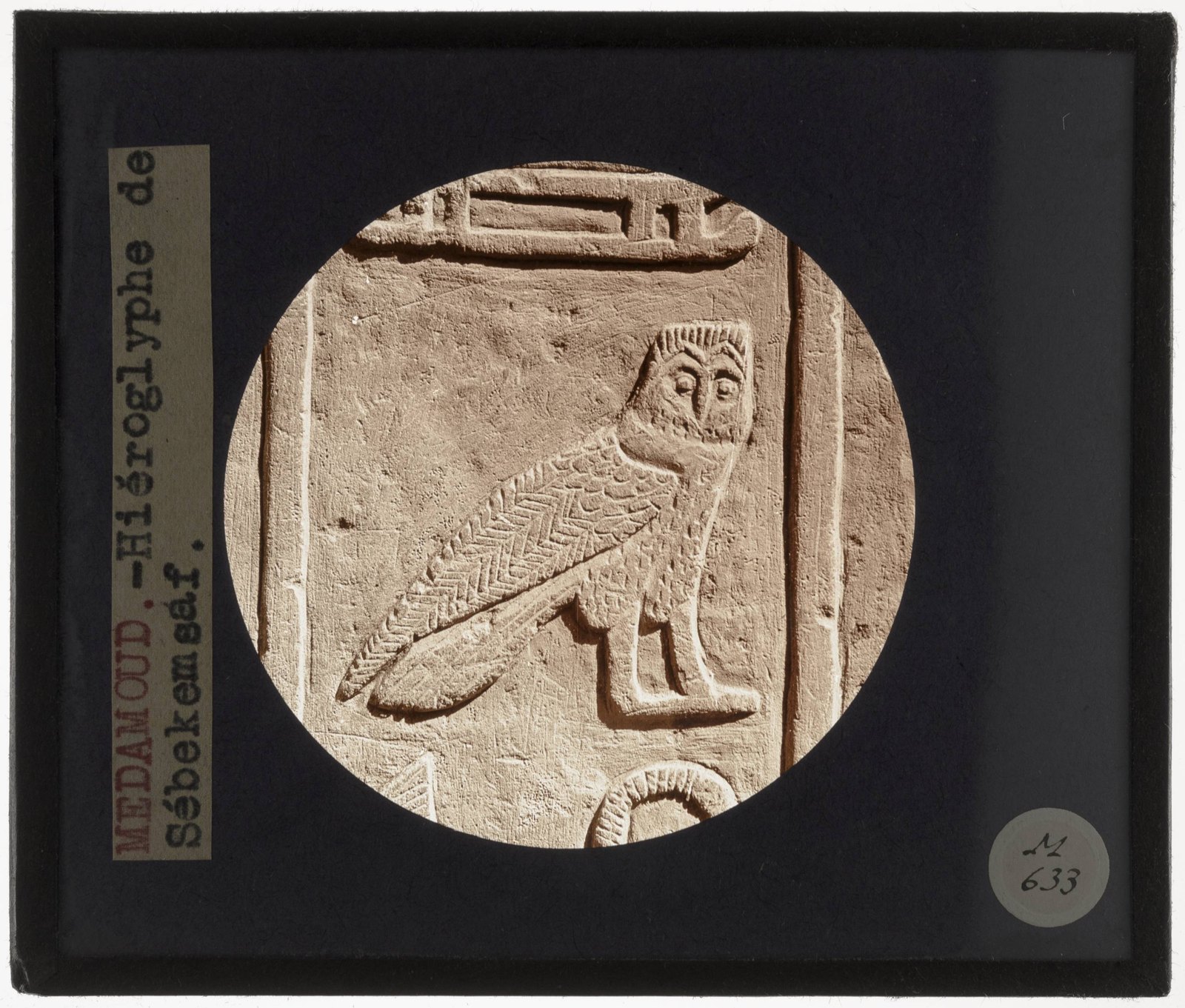
The owl is not an omen: hieroglyph false friends
Three everyday hieroglyphs look like pictures but rarely mean what they show. The owl writes m, the mouth usually writes r, and the walking legs are usually silent. Unlearning the obvious is the first real skill of reading.
2 min read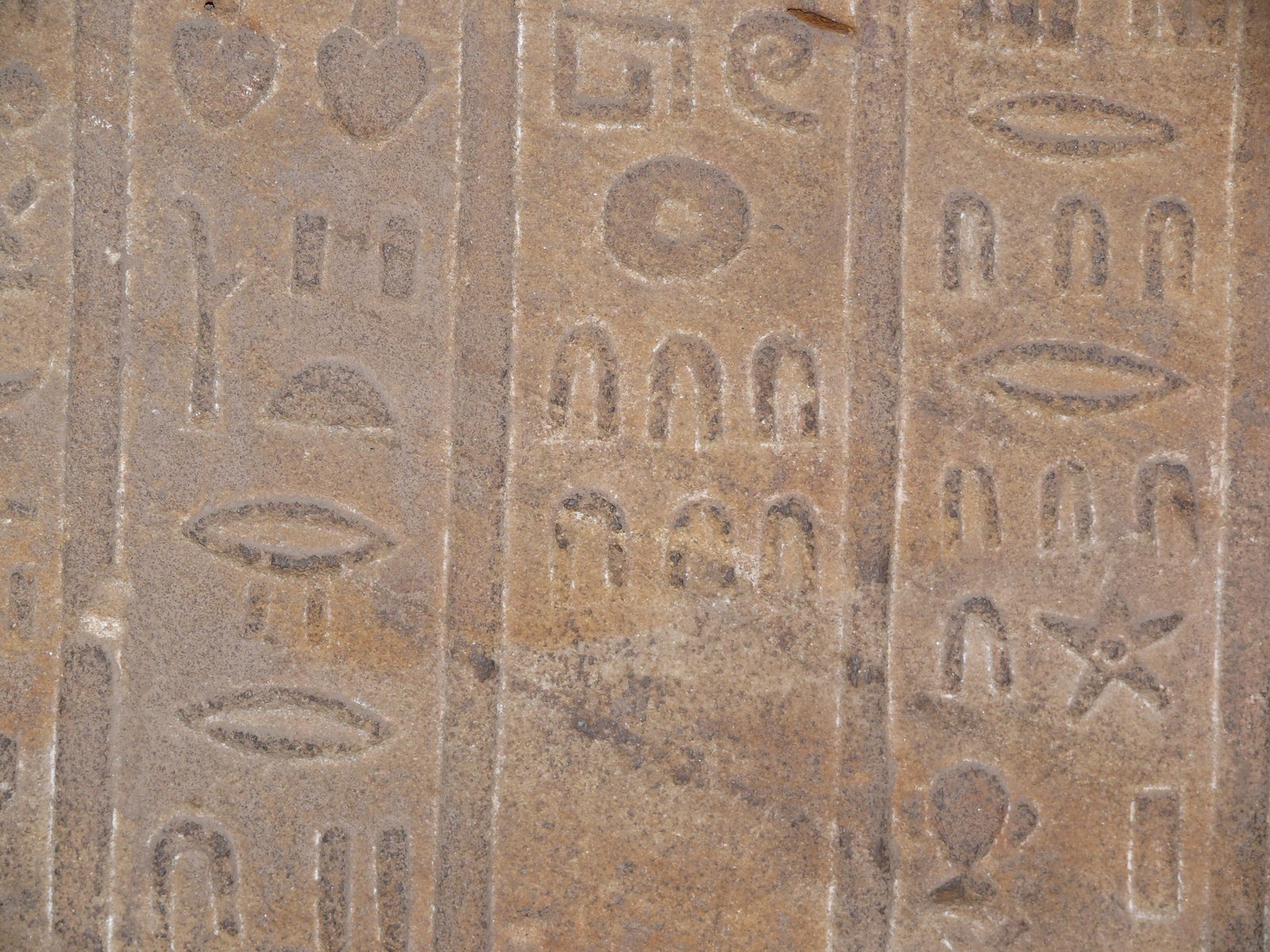
Count like an Egyptian: 1, 10, 100, 1,000
Egyptian numbers are among the easiest parts of the script to read. Learn the four core signs for one, ten, one hundred and one thousand, plus the single additive rule that lets you read quantities and offerings on real monuments.
2 min read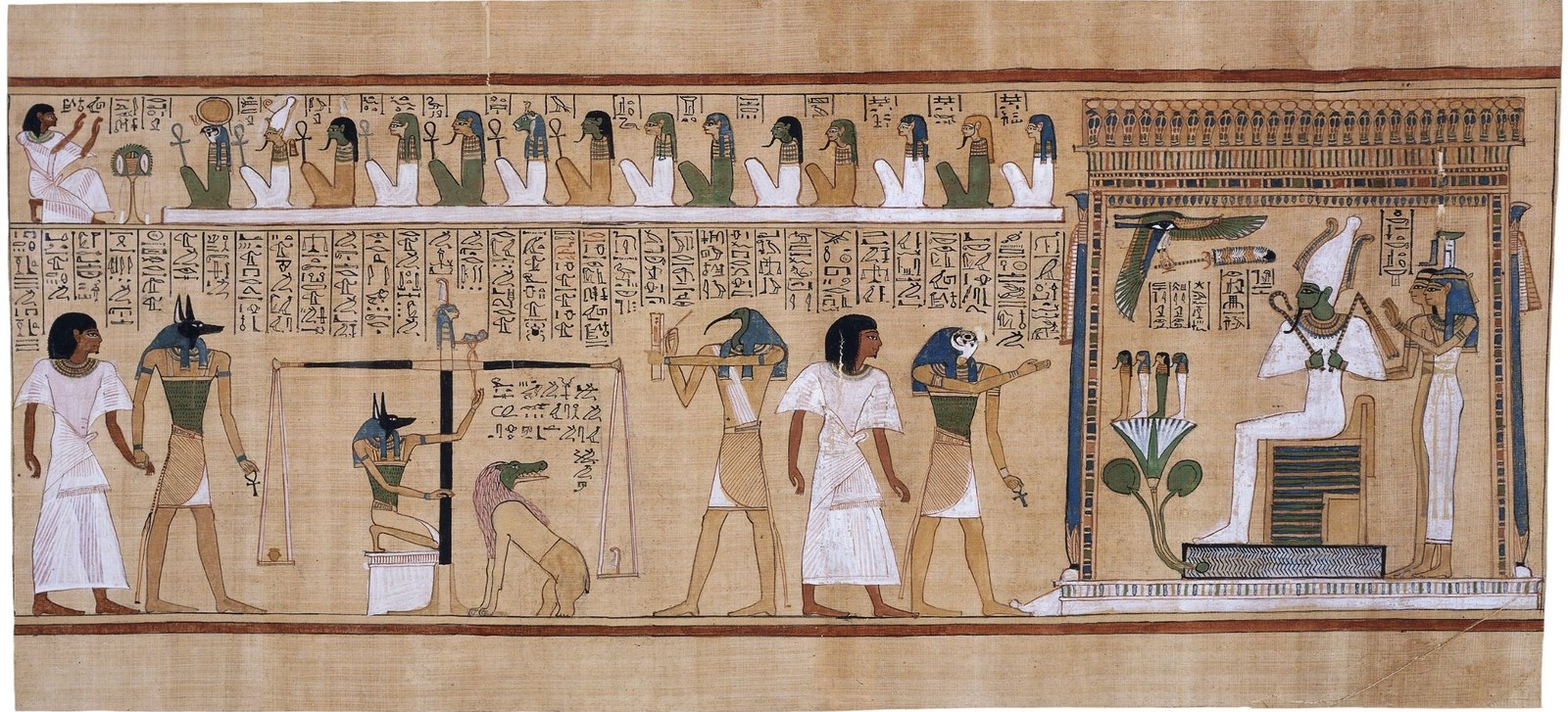
The feather that weighed a soul
The ostrich feather hieroglyph writes maat: truth, balance and right order. In the judgement of the dead, a human heart was weighed against it. This beginner lesson introduces the sign, the goddess and the famous weighing scene.
3 min read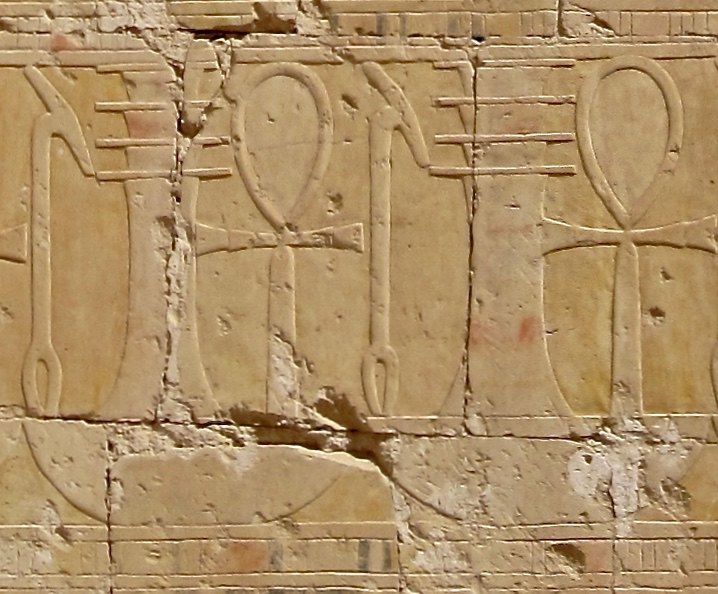
Ankh, djed, was: the three wishes behind every king
The ankh, djed pillar and was sceptre trail royal names across Egyptian art, spelling out a single wish: life, stability and dominion. Learn to name these three signs and you will start to spot the same blessing everywhere.
2 min readA 3,400-year-old relief shows a pharaoh crushing enemies beneath his chariot
Live Science reports on a roughly 3,400-year-old painted relief fragment showing an Egyptian pharaoh crushing western Asian soldiers beneath his chariot. The carved stone was reused three centuries later as building material for a tomb.
2 min readNew discoveries, straight to your inbox.
An occasional email when new Egyptology stories publish - nothing else. Every email has a one-click unsubscribe link, and your address is used only for this (privacy policy).