News
News from the world of ancient Egypt.
Excavations, exhibitions, and research. Drawn from cited museums, research publications, and specialist reporting; every story links to its sources.
Learning to read the script? The free lessons are in the learning library.
Page 3 of 5, newest first

Research
The Past profiles Sir John Gardner Wilkinson, a pioneer of British Egyptology
The Past has published a feature by Robert R Frost on Sir John Gardner Wilkinson, an antiquary and traveller remembered as a pioneer of British Egyptology. The piece explores his life and why he is regarded as the discipline's 'other founder'.
Source: The Past

Exhibitions
New galleries open at the Grand Egyptian Museum, reviewer reports after return visit
The Grand Egyptian Museum near Giza has opened new galleries, reports Geoffrey Lenox-Smith in a travel review for The Past following a return visit. His account compares the museum as he first found it with what is now on show.
Source: The Past
Research
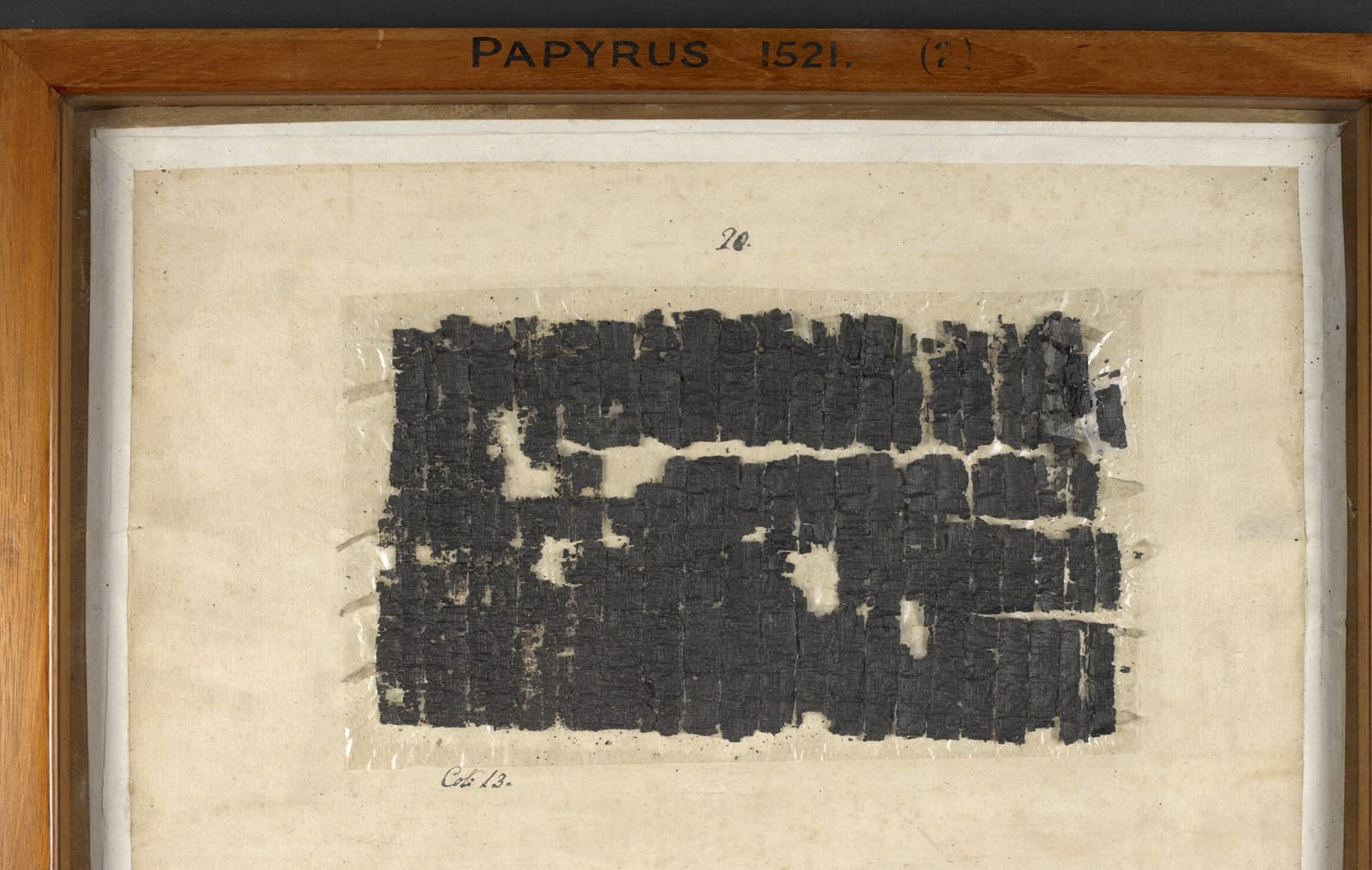
The Buried Library of Herculaneum, and the Machines Learning to Read It
When Vesuvius erupted in AD 79 it sealed the only intact library to survive from the ancient world: hundreds of papyrus scrolls, carbonised and impossible to open. This year, for the first time, a complete sealed scroll was read without being unrolled. Why that matters to anyone who loves ancient texts, and why I am getting involved.
Source: Vesuvius Challenge, Open Problems (2026)

Research
Simone Petacchi examines the evidence for women's literacy in ancient Egypt
The Past has published a feature by Simone Petacchi exploring whether women in ancient Egypt could read and write. The piece works through the fragmentary evidence for women's voices in the culture's written record.
Source: The Past

Discoveries
Sixteen mummies and a dog reveal centuries of reuse in a Theban tomb
Researchers in Egypt's Theban Necropolis have found sixteen mummified people, the partial remains of at least four more, and a mummified dog in a single tomb. The burials span hundreds of years and reveal a shifting pattern of reuse, from wealthy coffined individuals to later bodies stacked in crowded spaces.
Source: ScienceDaily: Ancient Civilizations

Research
James Harrell examines the uncertain origins of ancient Egypt's carnelian
Geologist James A Harrell has published a feature with The Past on the uncertain origins of carnelian, one of ancient Egypt's most popular gemstones. The article treats the reddish-orange stone as a geological puzzle, asking where the Egyptians obtained their raw material.
Source: The Past

Research
Ira Rampil examines physical and magical pain relief in ancient Egypt
Ira Rampil has published a second article on pain relief in ancient Egypt, this time examining the physical and magical interventions used to ease suffering. The feature appears on The Past and follows an earlier piece on herbal remedies.
Source: The Past

Research
Hilary Wilson explores how ancient Egyptians were paid in bread and beer
The Past has published the second part of Hilary Wilson's feature on ancient Egyptian economics, showing how workers were paid in food and drink. Bread and beer, both made from grain, formed the core of a system that functioned without coinage.
Source: The Past

Discoveries
The Collector recounts how Wallis Budge brought the Book of the Dead to Britain
The Collector has published a feature on E.A. Wallis Budge, the British Egyptologist who acquired the Book of the Dead and brought it to the West. The piece recounts his controversial methods and sets his story against the popular image of the fictional Indiana Jones.
Source: The Collector

Research
The Collector revisits Napoleon's Egyptian campaign and its scientific legacy
The Collector has published a feature on Napoleon's 1798 to 1801 expedition to Egypt and Syria, tracing its military ambitions, administrative reforms and scientific work. The article presents the campaign's scholarly legacy as its most enduring outcome, standing near the start of modern Egyptology.
Source: The Collector

Discoveries
Archaeologists describe finding a Theban tomb and the fight to protect it from flash floods
An article in The Conversation describes discovering an ancient Egyptian tomb in a necropolis at the foothills of the Theban mountain, where the monuments are extremely vulnerable to flash flooding. It sets out the effort to preserve the site against sudden storms.
Source: The Conversation: Ancient Egypt

Research
Aidan Dodson traces how the court official Amenhotep-son-of-Hapu became a god
Egyptologist Dr Aidan Dodson has explained, in a podcast with TheCollector, how the 18th Dynasty court official Amenhotep-son-of-Hapu came to be worshipped as a god. Dodson, co-author of a forthcoming biography, traces a reputation that lasted for centuries after the man's death.
Source: The Collector
New lessons and news by email.
An email when a new lesson or news story publishes (currently most days), and nothing else. Every email has a one-click unsubscribe link, and your address is used only for this (privacy policy).
Follow Hierolyte in Google Search
Add Hierolyte as a preferred source and its stories are more likely to appear in your Top Stories.