Learn to read Egyptian hieroglyphs.
Explore free lessons, make a cartouche of your name, and follow the stories behind ancient Egypt's writing. Build a daily learning habit with Hierolyte for iPhone and iPad.
Or make a cartouche of your name →
Latest from Hierolyte
The newest lesson, and the most recent Egyptology news.
Egyptology news
- ResearchAncient Egypt Magazine issue 157 published, from Theban festivals to the Rosetta Stone's find-spotIssue 157 of Ancient Egypt Magazine has been published, The Past reports. Its features range from celebrating the dead in New Kingdom Thebes and the dangers of childbirth to Ricardo A Caminos, Ain Khadra and Fort Rashid, the find-spot of the Rosetta Stone.
- DiscoveriesRoman-era tomb in Egypt yields a Greek funerary poem and spells for the deadA tomb dating to about 1,700 years ago, from the time of Roman rule in Egypt, contains a funerary poem in ancient Greek and spells to protect the dead, Live Science reports. The poem opens with the words "Listen, father!"
New to hieroglyphs? Start here.
Four short lessons take you from which way to read to the signs that spell sounds, the first step to reading names on real monuments.
The full beginner path →- 1Which way do hieroglyphs read?Hieroglyphs can run left to right, right to left, or top to bottom, and the direction is not fixed. This beginner lesson shows how the faces of people, birds and animals act as a built-in compass telling you where each line begins.
- 2Six hieroglyphs that work like lettersMost people think every hieroglyph is a picture-word, but about two dozen common signs each write a single consonant, working much like letters. Learn six of them and you can start sounding out real inscriptions.
- 3Six more hieroglyphs that work like lettersThe alphabet lesson covered six single-consonant signs. Here are six more, and between them you can already sound out a surprising number of real Egyptian words.
- 4The hieroglyphs English speakers find hardestSix Egyptian consonants have no easy English equivalent, and they are where beginners tend to slow down. This lesson walks through each sign and explains why the dots and hooks in transliteration matter so much.
Your name in hieroglyphs.
Make a modern approximation of your name using real Egyptian signs, framed in a royal cartouche. Royal names were the first hieroglyphs scholars read: Champollion matched the signs in the cartouches of Ptolemy and Cleopatra to their sounds.
Open the cartouche maker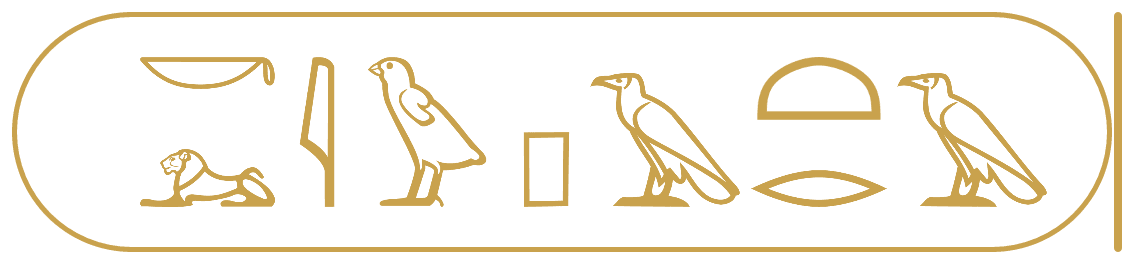
A glyph a day, on iPhone and iPad.
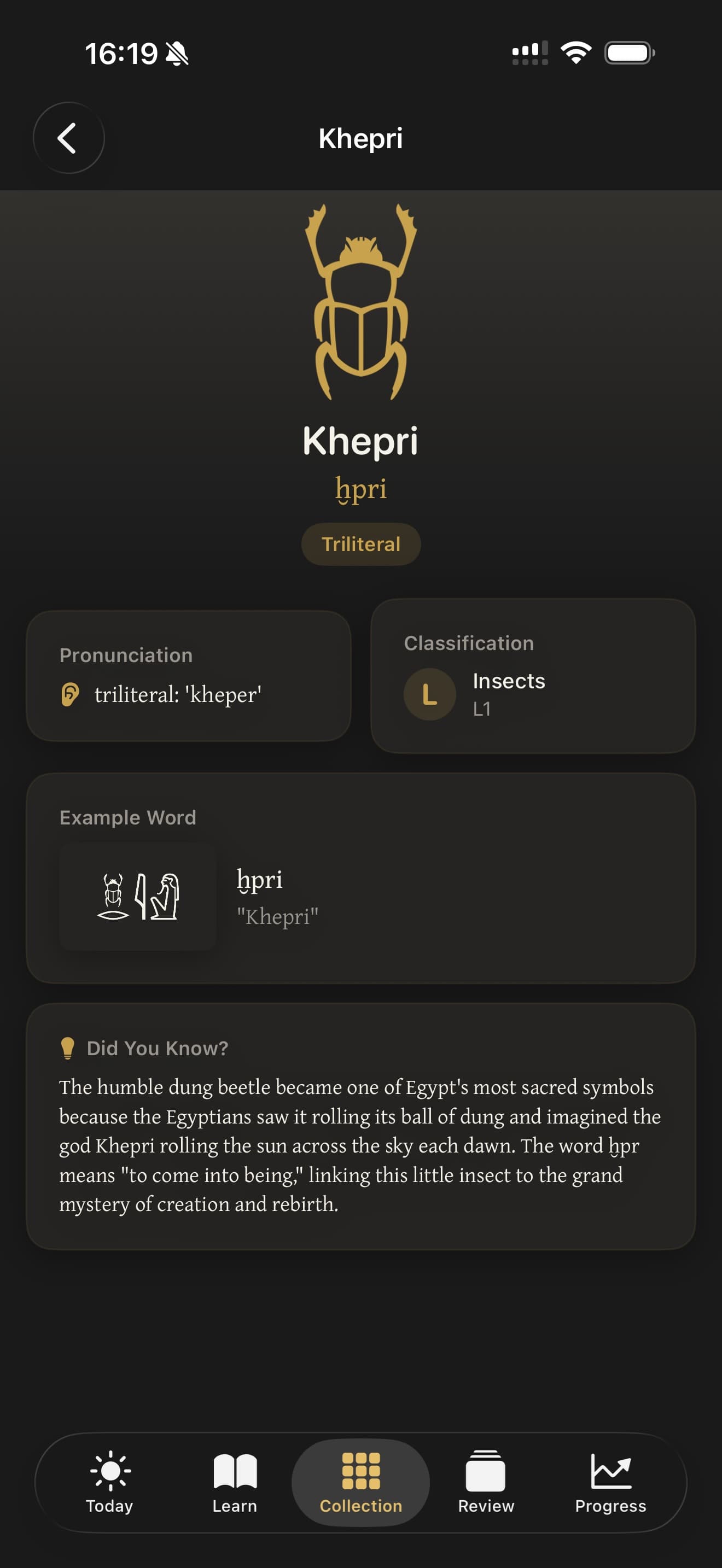
Hierolyte is a free app for building the habit: five minutes a day, with the most common signs first.
- A new glyph each dayIts sound, its meaning, and a real Egyptian word that uses it.
- Flashcard reviewSpaced repetition brings back the signs you find hardest.
- Progress you can seeStreaks, a calendar of your practice, and progress by sign category.
Go further with the in-app courses.
The lessons on this site are free. The app also offers two structured courses with exercises and quizzes, each a one-time in-app purchase (£4.99 each on the UK App Store).
Reading Royal Names
A cartouche course · 5 modules, 20 lessons
Read the names of Egypt's rulers, from Ptolemy to Ramesses, ending with real cartouches in photographs.
Reading Real Words
Beyond royal names · 5 modules, 20 lessons
Two- and three-consonant signs and determinatives, ending with the offering formula found on stelae everywhere.
How it is made.
The lessons draw on the standard grammars, and the grammar course is checked claim by claim against Gardiner and Allen. Hieroglyphs are typeset with JSesh, the software Egyptologists use, and every lesson is checked before it is published.
News stories are drafted with AI assistance from their cited sources and reviewed by the editor, Lucas Young, before publication. Every story links to where it came from.
- Sir Alan GardinerEgyptian Grammar and its sign list
- James P. AllenMiddle Egyptian: An Introduction
- James E. HochMiddle Egyptian Grammar
New lessons and news by email.
An email when a new lesson or news story publishes (currently most days), and nothing else. Every email has a one-click unsubscribe link, and your address is used only for this (privacy policy).