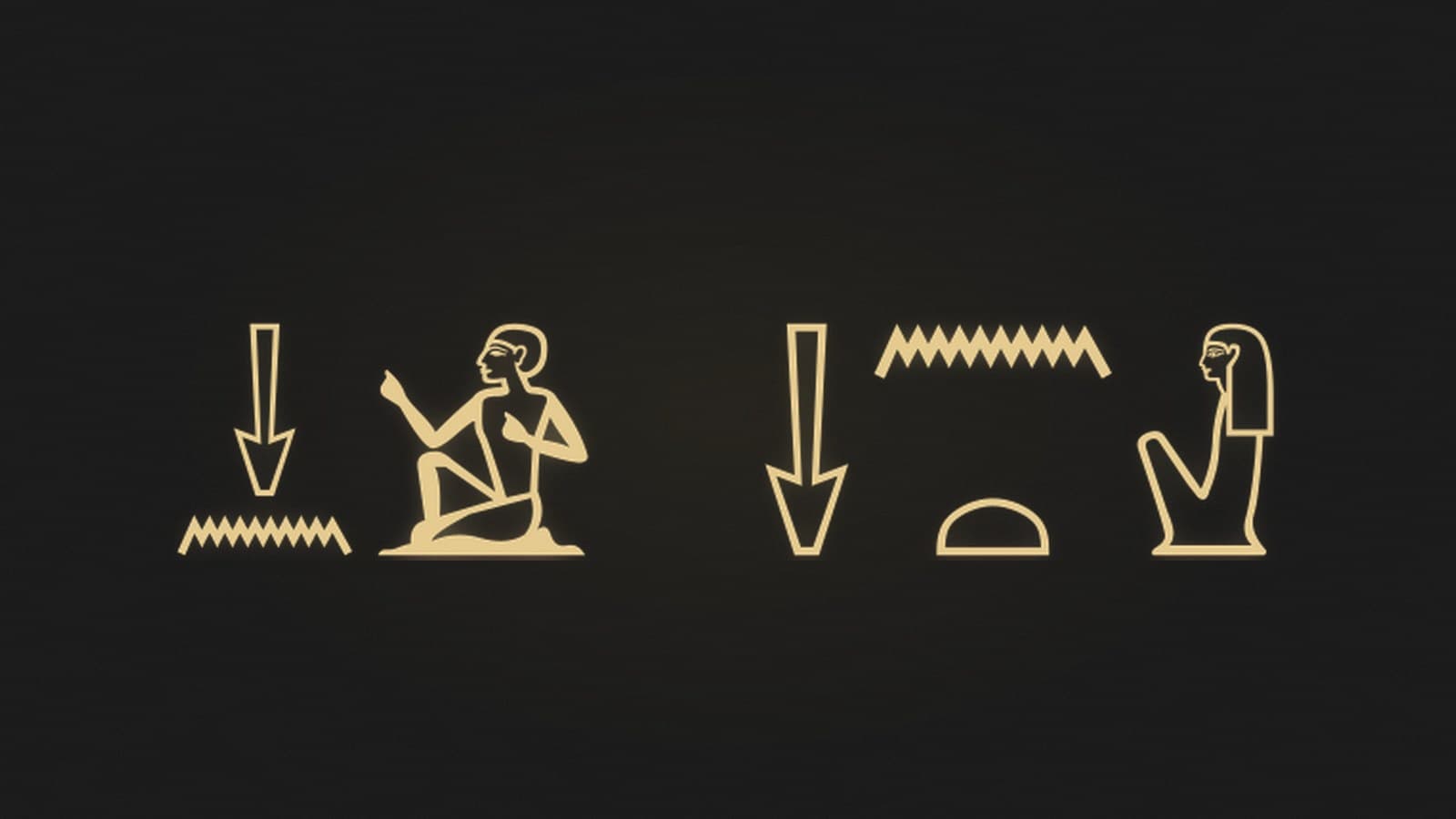
So far these lessons have been about signs. This one is about what happens when signs become words, and it starts with two questions Egyptian answers for almost every noun: is it masculine or feminine, and how many are there? English hardly marks the first. Egyptian marks both, with a handful of endings that turn up on nearly every line of text.
Start with gender. Egyptian has only two, masculine and feminine, and every noun is one or the other. A masculine noun usually has no special ending. A feminine noun adds t. So sn is "brother" and snt is "sister", nṯr is "god" and nṯrt is "goddess".
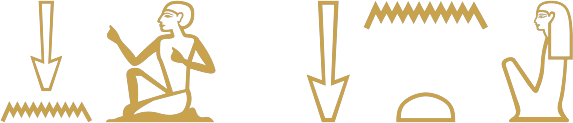
That t is written with the small loaf, the same sign that writes the sound t anywhere else. It is an ending added to the root, not part of the word itself. That is why a few masculine words still end in t: in ḫt, "wood", the t belongs to the root, and the word stays masculine.
Now number. Egyptian has three: singular, plural and the dual, which is used only for pairs of things or people. The endings are regular. Masculine plurals add w, feminine plurals wt. Masculine duals add wy, feminine duals ty. So snw is "brothers", snwt "sisters", snwy "a pair of brothers" and snty "a pair of sisters". James Allen, whose grammar is a standard teaching text, calls the plural rule absolutely consistent: every noun forms its plural this way. He writes the dual endings as wj and tj; the spelling here follows Alan Gardiner's.

Here is the catch. Scribes often left those endings out. Gardiner notes that the shortened spellings are the more common ones, and that the full feminine plural is especially rare. The reader tells the number another way. The oldest method was simply to repeat the sign: three times for a plural, twice for a dual. One house plan is pr, "house"; three are prw, "houses"; two are prwy, "the two houses".

Towards the end of the Old Kingdom, three short strokes, occasionally three dots, took over from the repetition, and by Middle Egyptian they are the usual way of marking a plural. The old habit survives in places. nṯrw, "gods", is normally still written with the god sign three times.
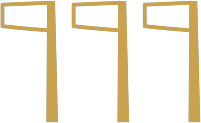
The strokes are a strong hint rather than a guarantee. rḫyt, "people" or "subjects", takes them because it means a group, though the word itself is singular. nfrw, "beauty", takes them because it happens to end in w, the same letter as a plural. The dual has a sign of its own too: when its ending is written, it is usually two short slanting strokes.
Adjectives follow the same rules. They come after their noun and agree with it in gender and number, so a feminine noun pulls its adjectives into the feminine. ḫt meaning "thing" is feminine, and so "every good thing" is ḫt nbt nfrt, with the feminine t on all three words.
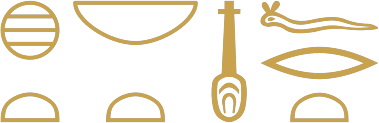
That gives you three habits to look for at the end of a word. A small loaf usually means feminine. Three strokes mean plural, or at least a group. Two slanting strokes, or a sign written twice, usually mean a pair. Look for these signs first, because the endings themselves are so often left out.