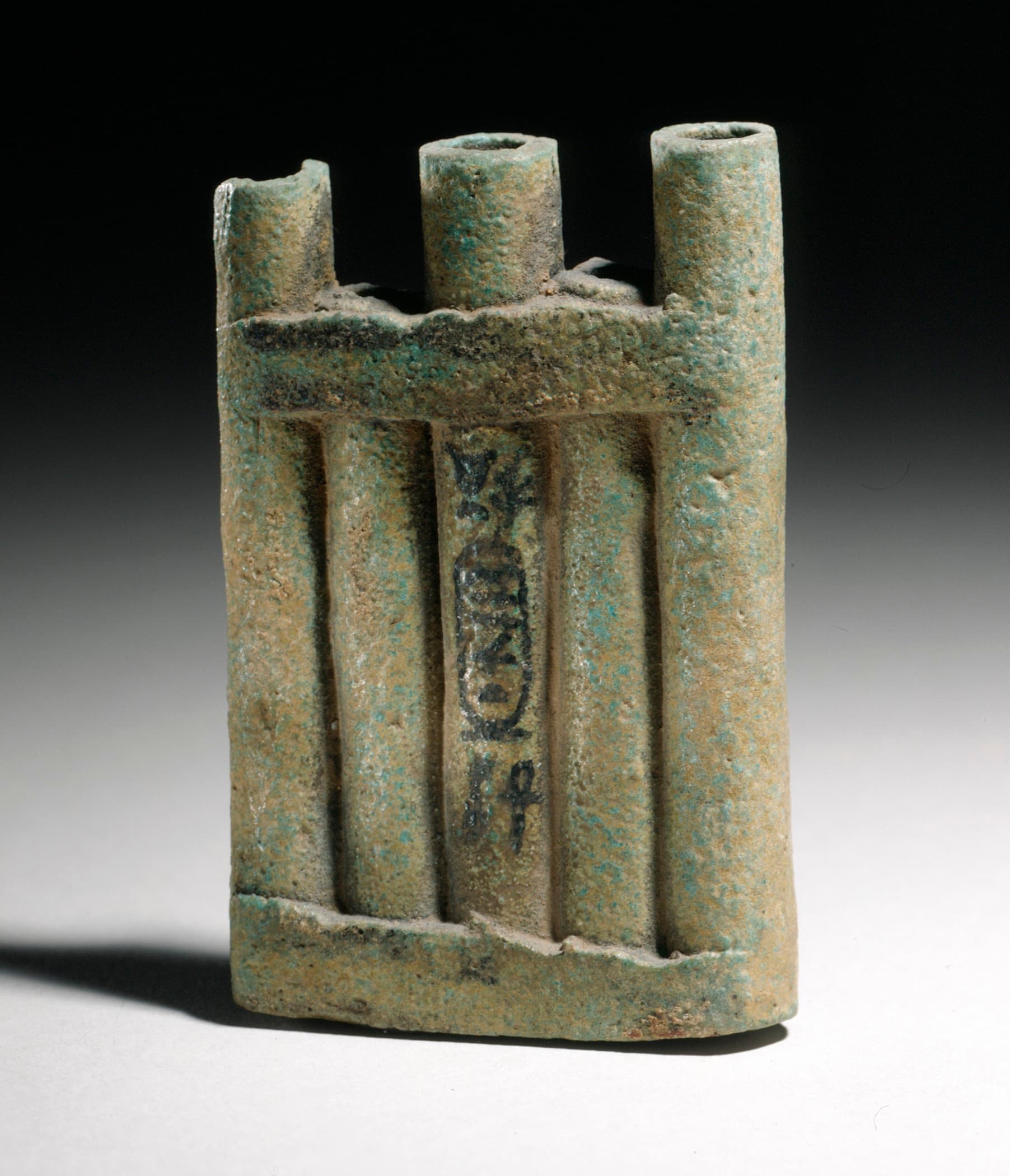
A kohl bottle found in York may hint at the presence of an ancient Egyptian in Roman Britain, according to a report published by Phys.org. Kohl was the black eyeliner often associated with ancient Egyptians, and it was kept in small containers of the kind that has now drawn attention in the north of England.
The significance of the find rests on where such objects usually turn up. Kohl containers are typically recovered throughout Egypt and Sudan, the region historically known as Nubia. Their appearance outside those areas is unusual, and the report notes that only a handful of examples are known from beyond Egypt and Nubia. A container of this type surfacing in York therefore stands out, and it is this rarity that has prompted the suggestion of a link to an individual with Egyptian connections living in Roman Britain.
Kohl itself was a fixture of daily life along the Nile. The dark cosmetic was applied around the eyes, a practice that appears again and again in Egyptian art, where figures are frequently shown with the distinctive lined eyes that kohl produced. Because the substance needed to be stored and carried, small bottles and pots were made to hold it, and these vessels have become a familiar category of find for archaeologists working in Egypt and Sudan. Their concentration in that part of the world is what makes the York example worth remarking upon.
An object of this kind travelling as far as Britain raises questions about the movement of people and goods across the Roman world. Roman Britain sat at the edge of an empire that stretched to Egypt itself, and personal possessions could travel long distances with the individuals who owned them. A kohl bottle in York may reflect such a journey, whether carried by an Egyptian who had come to Britain or acquired through the wider networks of trade and settlement that connected the provinces of the empire. The report frames the find as a possible hint rather than a certainty, and the careful wording reflects the difficulty of drawing firm conclusions from a single object.
Finds of this sort are a reminder that ancient Egypt reached well beyond the Nile valley, and that its material culture can appear in unexpected places. Readers who would like to get closer to the world these objects came from can learn to read hieroglyphs with the Hierolyte app, which offers a way into the script that shaped so much of Egyptian daily life.