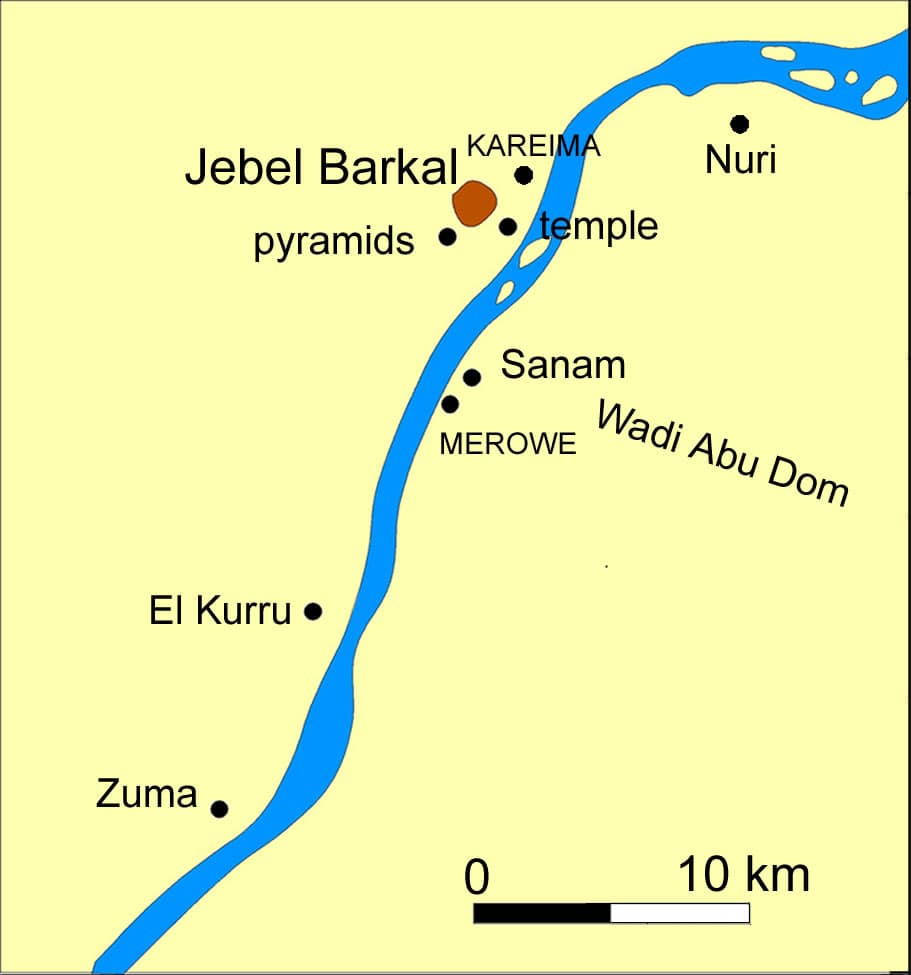
Researchers at the University of Michigan have examined the land beneath the ancient city of Napata in present-day Sudan to understand which geological processes helped the settlement thrive. Napata was a major urban and cultural centre of Kush, an ancient empire in Nubia, and the study set out to explain why the site proved so successful over the centuries.
According to Phys.org, the work brought together archaeologists and earth scientists, combining the two disciplines to look at the physical foundations of the city rather than its monuments alone. By studying the ground on which Napata stood, the team sought to identify the natural conditions that made long-term settlement possible in this stretch of the Nile valley.
The city's position was central to that success. Napata sat within the wider region of Nubia, along the Nile, and the research points to the river and the landscape it shaped as key factors in the city's endurance. The title of the Phys.org report captures the emphasis plainly, framing the story around location and the role the Nile played in sustaining an urban centre for so long.
Kush was one of the great powers of the ancient Nile world, and Napata ranked among its most important places. Understanding how such a centre took root and lasted matters for the broader picture of how cities in the region grew, how they depended on the river, and how the surrounding geology supported or constrained daily life. The Michigan approach, drawing on earth science as much as excavation, offers a way of reading a site through its very ground.
The findings sit within a growing body of work that treats the Nile not simply as a backdrop to ancient settlement but as an active force in where and how people chose to live. For Napata, the study suggests, the combination of river and land helped turn a favourable location into a lasting home for a Kushite population.
Nubia and Kush produced a rich written and monumental record of their own, and the culture of the region was closely connected to that of Egypt to the north. Readers who would like to learn to read the ancient script that links these worlds can explore it with the Hierolyte app. You can read the full report at Phys.org.