The original mud-plaster sealings that once secured the burial chambers of King Tutankhamun's tomb have been placed on public display for the first time, according to a report in Current World Archaeology, carried in a news round-up by The Past.
These sealings are the closures that were applied to the tomb in antiquity, holding the burial chambers shut after the young king was laid to rest. They are made of a Theban material, and their survival links directly to the moment the tomb was closed in the Valley of the Kings. For readers used to seeing the golden mask and the gilded shrines that filled the tomb, the sealings offer something quieter: physical evidence of the sealing of the burial itself, rather than of the treasures inside.
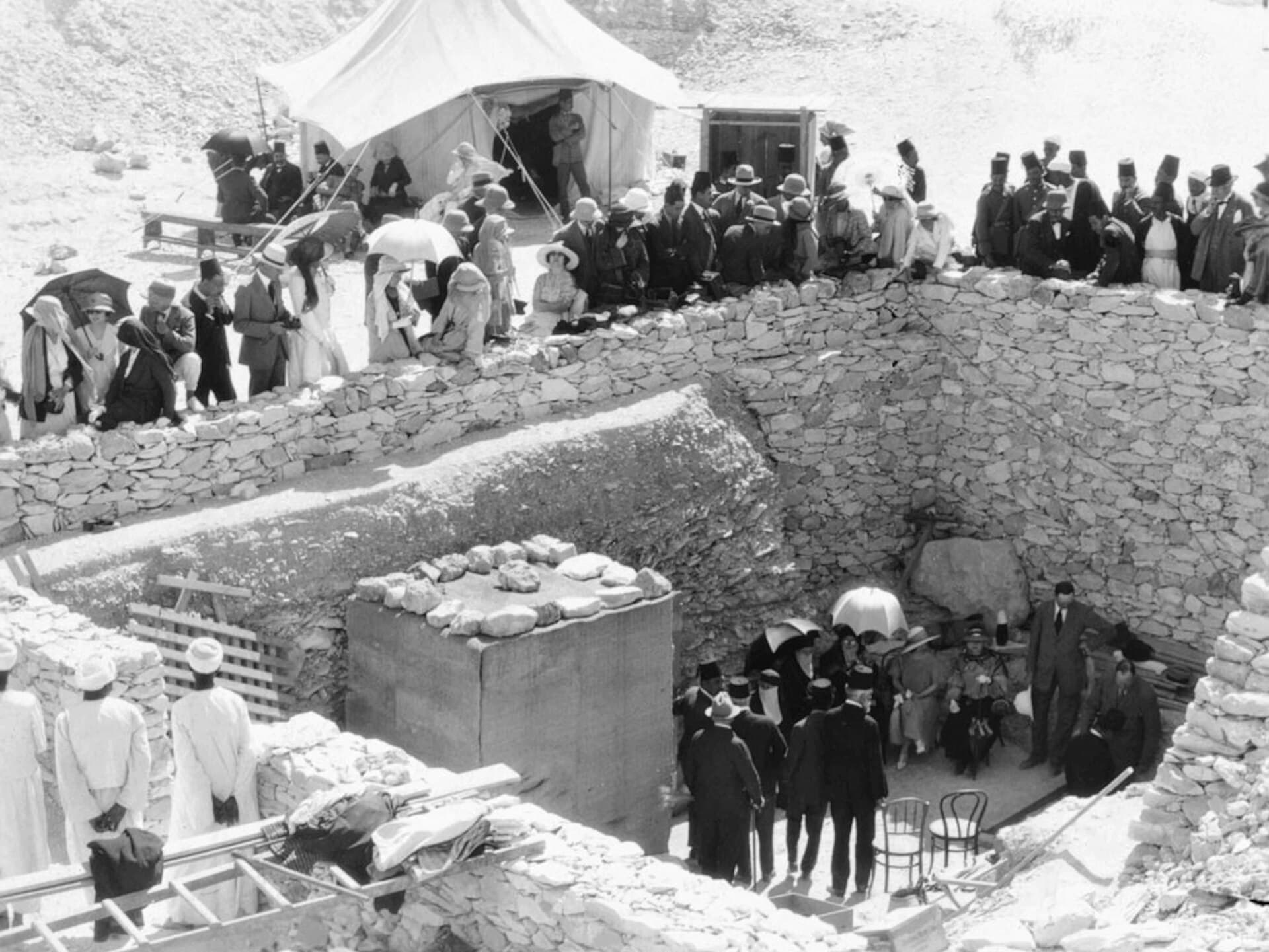
Tutankhamun's tomb, known to Egyptologists as KV62, was discovered by Howard Carter in 1922 and remains one of the best-known finds in the history of Egyptology. The scale of the burial and the state of preservation of its contents made it a landmark, and objects from the tomb have travelled and been exhibited many times since. The sealings, by contrast, are the kind of material that is easy to overlook, and their appearance on public display marks the first time visitors have been able to see them directly.
Sealings of this type are among the most informative objects an archaeologist can recover. Because they were pressed and marked while still wet, they can preserve the impressions used to close and identify a burial, and they carry information about the officials and administrative bodies responsible for the tomb. That makes them valuable well beyond their modest appearance, offering a direct trace of the people who worked on the burial rather than the king who occupied it.
The display gives the public a chance to consider a part of the tomb that is rarely shown, and to reflect on the practical business of closing a royal burial in the Valley of the Kings. The sealings speak to the moment when the tomb passed out of daily use and into the long silence from which Carter's team eventually recovered it.
For anyone drawn to the marks and symbols that ancient Egyptians pressed into clay and plaster, the sealings are a reminder of how much meaning the Egyptians packed into small surfaces. Readers who would like to learn to read the script for themselves can explore the signs with the Hierolyte app.