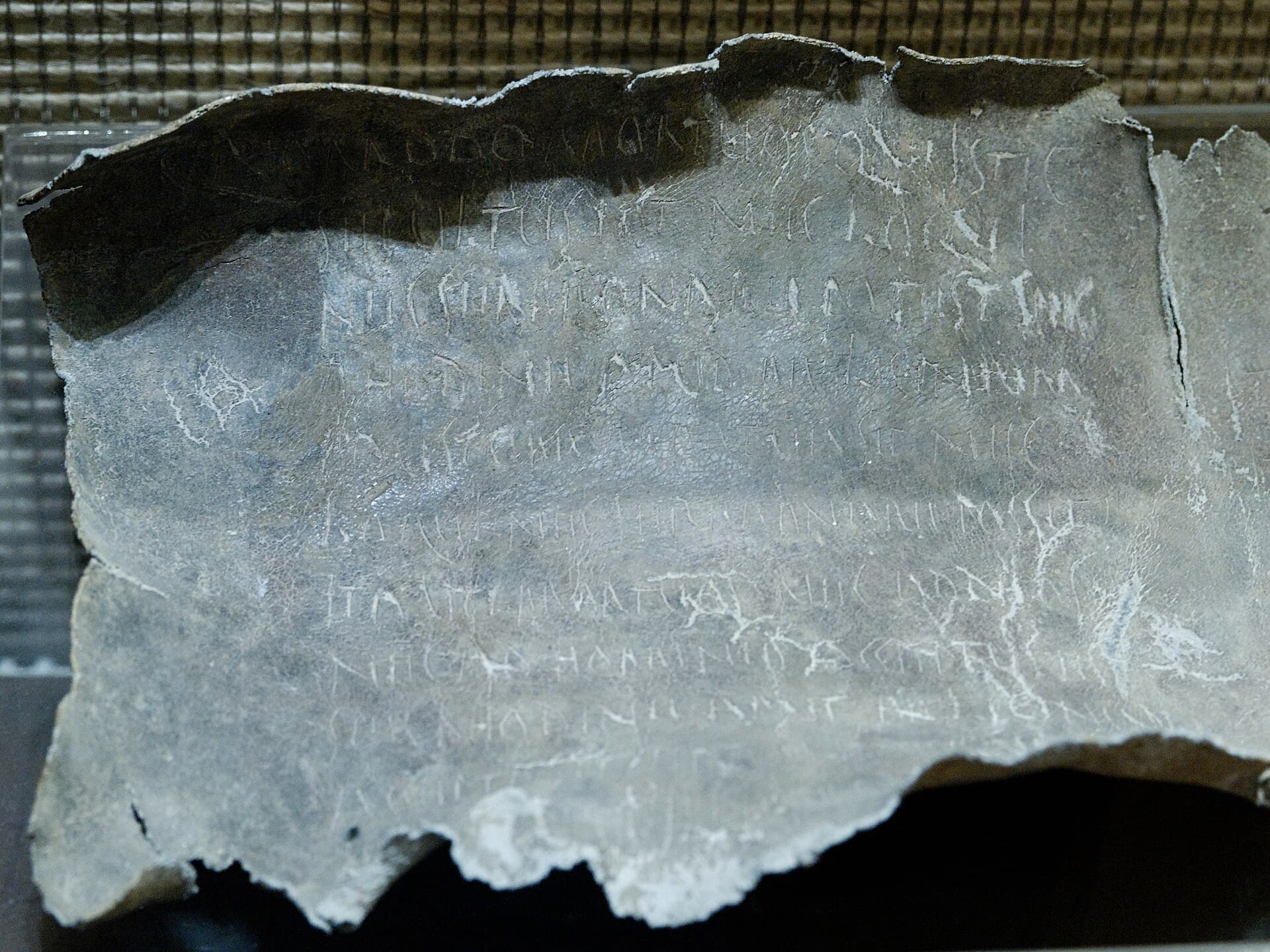
Researchers at Heidelberg University have deciphered the inscription on an ancient curse tablet that was once used to invoke deities and demons in order to harm an enemy, Phys.org reports. The lead artefact comes from the Roman province of Lower Germania and was found during excavations in the Dutch municipality of Heerlen.
The tablet dates to the 2nd century A.D. What sets it apart, the team explains, is that it does not carry the Latin text that might be expected in this part of the Roman world. Instead it bears an ancient Greek inscription written in what is described as the Egyptian style. Dr Rodney Ast, academic director at the Institute for Papyrology at Heidelberg, is cited as the researcher explaining this distinctive feature.
Curse tablets, often known by their Latin name as defixiones, were a widespread part of everyday belief across the Roman Empire. They were typically thin sheets of lead on which a person inscribed a wish to bring misfortune on a rival, whether in love, business, law or sport. The metal was chosen partly because it was cheap and easy to scratch, and the finished tablet was frequently rolled up or pierced and then deposited somewhere thought to carry the message to the powers being addressed. The Heerlen tablet belongs to this tradition, having been made to call on gods and demons against a chosen target.
The significance of this particular find lies in the combination of language, script style and location. A Greek text produced in an Egyptian manner, recovered from a site in the north-western reaches of the Roman world, points to the movement of ideas and magical practices over long distances. The traditions of ritual and spellcraft that developed in the eastern Mediterranean, and in Egypt in particular, evidently travelled with people, texts and objects far beyond their place of origin, reaching a provincial town in what is now the Netherlands.
The decipherment was carried out by the Heidelberg team, and the announcement identifies Dr Ast as the scholar setting out why the object is unusual. Work of this kind depends on close reading of damaged and often abbreviated writing, since curse tablets were rarely composed as tidy literary documents. They were practical objects, made quickly and hidden away, which makes each surviving example a small window onto private hopes and fears in the Roman period.
For readers drawn to the scripts of the ancient world, the same patience that lets scholars recover a faded spell underlies the study of Egyptian writing more broadly. Those who would like to begin reading hieroglyphs for themselves can do so with the Hierolyte app.