Some of the animals that shared the world of the ancient Egyptians carried a great deal of meaning. Cats were sacred, hunting hounds were named and buried, and canine figures were linked with keeping watch over the cemetery. The hieroglyphic script has a sign for each of these creatures, and it goes further still, with separate signs for parts of an animal, right down to a single horn. In this lesson we will meet five of these signs, three whole animals and two animal parts, and see what each one does in writing.
First, a word about how these signs work. All five can be used as classifiers, which you will also see called determinatives. A classifier closes a word and tells you what kind of thing that word names. When one of the animal signs below appears in this role, it tells you that the word names that animal, or that part of one. This is very helpful for a beginner, because the sign at the end of a word gives you a strong clue about its meaning. Next to each sign you will see a short code, such as E13. Think of it simply as a label that lets you find the same sign again.
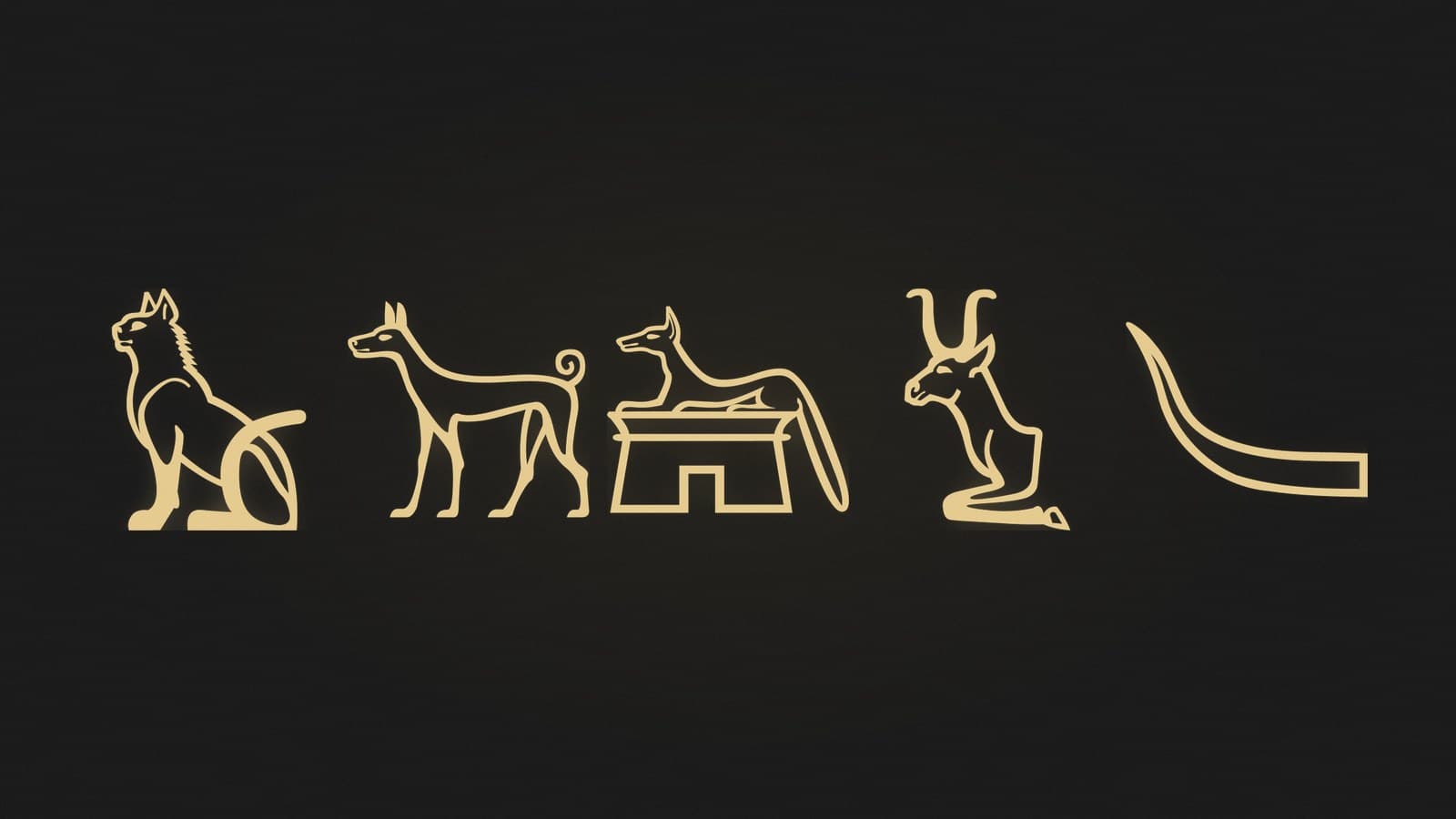
We begin with the cat, E13. Cats were held in deep reverence in ancient Egypt as sacred animals of the goddess Bastet. That reverence was so strong that killing a cat, even by accident, could be punishable by death. When you meet this sign closing a word, it is worth remembering how much the animal behind it meant to the people who wrote it.
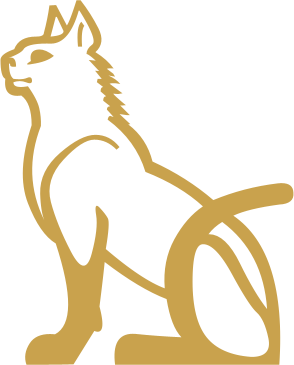
Next comes the dog, E14. Egyptian hunting hounds were prized companions. They were sometimes given names, they were buried with care, and some were even mummified alongside their owners. This was an animal valued as a working partner and as a friend, and as a classifier the sign tells you that a word names this animal.
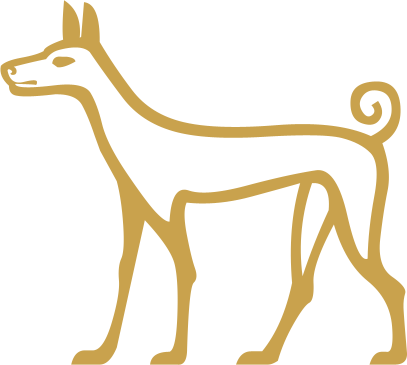
Our third animal is the wolf lying variant, E16. This sign is a variant of the reclining jackal or wolf, and it shares the same canine associations with guarding the cemetery and with pathfinding. Canine figures also had a public role: they were placed on top of the standards of the nomes, serving as emblems of several Egyptian provinces. So a sign like this one connects to ideas about the dead, about finding the way, and about the identity of a region.
Now we turn from whole animals to their parts, which have work of their own in the script. The first is the front of animal sign, F6. It shows a generic animal forepart, cut just behind the shoulders. Because it is generic rather than tied to one species, it serves as a determinative for words relating to the front portions of various animals.
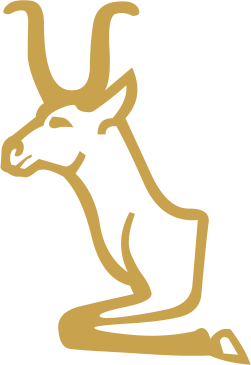
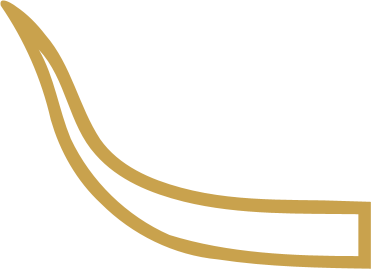
Finally there is the horn, F16. This is a single horn, as opposed to the pair of horns in a related sign, F13. The single horn marks words for horning and goring, and also words for the horn itself as an object. It is a neat example of how precise the script can be: one horn and two horns are treated as different signs.
Taken together, these five signs show two sides of the same idea. Whole animals such as the cat, the hound and the reclining canine close words that name those creatures, while animal parts such as the forequarters and the single horn close words about those parts and, in the case of the horn, about what a horn does. Learning to spot them at the end of a word is one of the easiest ways to start making sense of a hieroglyphic text.
If you would like to keep going at a gentle pace, Hierolyte, the iPhone and iPad app behind this site, teaches one of these signs a day, with the same notes you have just read.