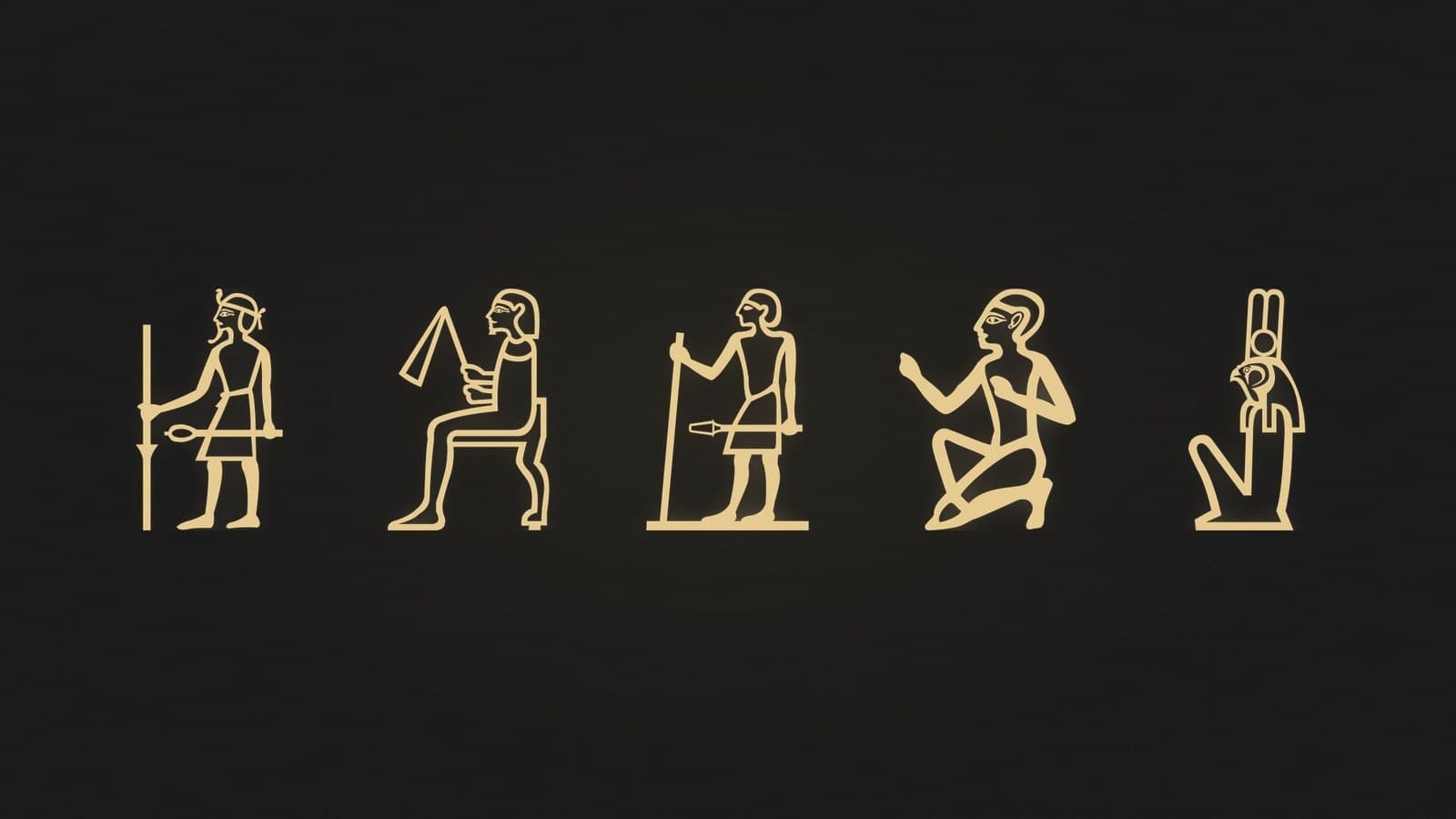
Hieroglyphic writing is crowded with small people. Some stand, some sit, some hold objects, and a few are not people at all but gods. For a beginner, these little figures are among the friendliest signs to learn, because once you know what to look for, they tell you a great deal at a glance. In this lesson we meet five of them: a king with a staff, a seated noble, a statue on its plinth, a man resting on his heels and a warrior god.
First, a word about what these signs actually do. Like the other human figures, these are classifiers: silent signs that close a word and point to its general meaning. A classifier is not read aloud. Instead, it sits at the end of a word like a quiet label, helping the reader see what kind of thing or idea the word is about. When you spot one, you have a useful clue even before you can read the rest of the word.
The second thing to notice is that props and posture carry rank. The king holds a staff and a mace, the noble sits on a chair with a flail, and a plinth turns a standing man into a statue. In other words, these figures tell you not only who someone was but where they stood. Training your eye to notice what a figure is holding, and what it is standing or sitting on, is one of the most rewarding habits you can build.
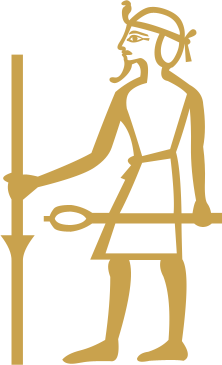
Let us begin at the top. The king with staff, numbered A23 in the sign list, shows a royal figure holding a staff of authority. It appears after words connected to kingship and rulership. This matters because it distinguishes royal vocabulary from the terminology of ordinary officials, which is marked by a different sign, A21. The difference between a king and an official, in other words, can be written into the very last sign of a word.
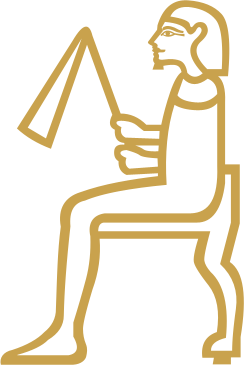
Next comes the noble seated, A51. This is a variant of the seated noble, and it appears in similar contexts to its close relative, A50. Its existence is a small window onto how scribes worked: it reflects the Egyptian scribal tradition of maintaining multiple versions of signs that evolved across different regions and dynasties. So if you meet two slightly different seated nobles, you have not made a mistake. You are seeing that tradition at work.
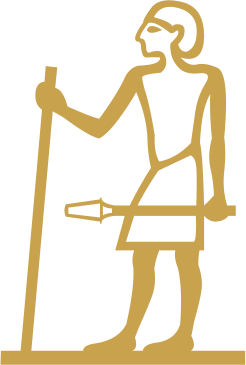
The statue sign, A22, is a human figure standing on a rectangular base or pedestal. That base is the whole point: it is what turns a person into a statue. The sign marks words for statues and images. For the Egyptians these were never simply decoration, because they believed that a statue could serve as a vessel for the ka (spirit), making these objects far more than mere art.
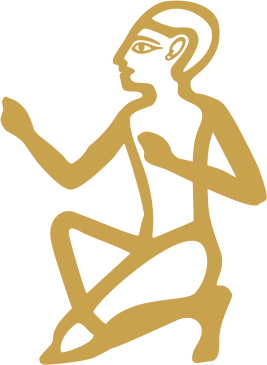
Not every figure is about status. The sitting on heels sign, A3, shows a man sitting back on his heels in the posture Egyptians adopted for rest. It marks words like ḥmsi ("to sit") and other terms for inactivity. It is a pleasingly familiar pose, still common in the Middle East today.
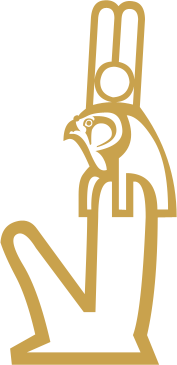
Finally, a god. Sign C17 is a falcon-headed figure crowned with a sun disk and tall double plumes. This is Monthu (mnṯw), the fierce warrior deity who was Thebes's supreme god before Amun eclipsed him. His crown and falcon head are what set him apart, a reminder that even among the gods, what a figure wears tells you who it is.
Taken together, these five signs show a simple principle you can carry into all your reading. Look at the staff, the chair, the plinth, the posture and the crown, and you will often know what sort of word you are dealing with before you have read a single sound. If you would like to build up your knowledge gradually, Hierolyte, the iPhone and iPad app behind this site, teaches one of these signs a day, with the same notes you have just read.