A finger stands for 10,000. A lip stands for the bank of a river. Some of the smallest parts of the body carry the script's most surprising meanings, and this lesson is about those small parts. The signs here all come from the part of the sign list given over to the human body. Earlier lessons covered the head, the eyes and the ear. Now we move on to the smaller details.
Before looking at the signs one by one, it helps to know what a body-part sign can actually do. It can name the part itself, so that a picture of a lip simply means a lip. It can mark a whole family of related words, telling the reader the general area of meaning a word belongs to. Or, in the finger's case, it can serve as a number. As you read on, try to notice which of these jobs each sign is doing.
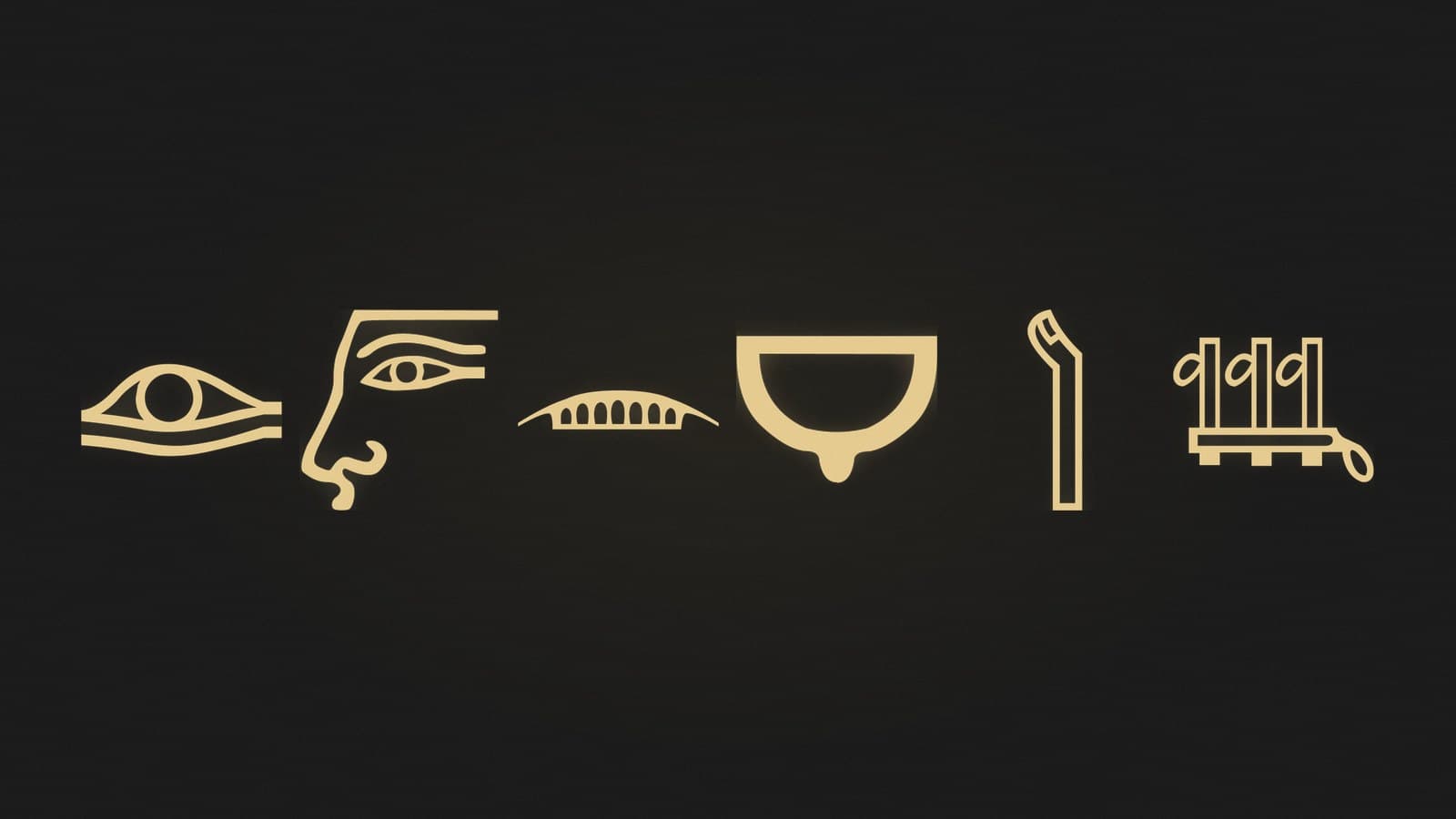
We start close to the eyes, which you have already met. The eye cosmetic sign, numbered D7, shows an eye with a cosmetic line beneath it. Rather than naming a body part, it marks words related to cosmetics and face-painting. It is a good first example of a sign that points to a family of words. When you see it, you know the word it belongs to has something to do with cosmetics or painting the face.
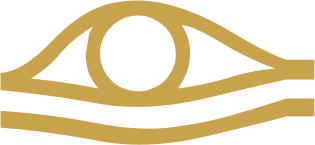
The nose with eye sign, D20, combines two features into a single composite glyph. Instead of standing for the nose alone or the eye alone, it determined words relating to the face as a whole. A helpful way to remember it is to picture two parts of the face joined together to stand for the whole.
The lip sign, D24, depicts a single lip. It writes spt, meaning "lip", but also "edge" and "border". This is where the script starts to surprise. The Egyptians extended the metaphor from the lip of a mouth to the lip of a vessel, the bank of a river, and the border of a land. The same small sign therefore stretches from the mouth all the way out to the edge of a country.

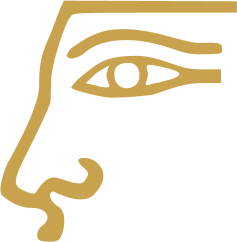
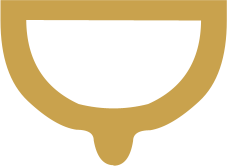
The breast sign, D27, shows a female breast in profile. It writes mnḏ and determines words for nursing and nourishment. Here one sign does two jobs. It names the body part, and it also gathers together a family of words about feeding and nourishing.
Now to the sign in this lesson's title. The finger sign, D50, shows a single outstretched finger. It determined the word for "finger", which is what you might expect. But it also served as the hieroglyphic numeral for 10,000. So the same small picture could point to a part of the hand in one place and to a large number in another. This is the third job a body-part sign can do, and it is perhaps the one beginners least expect.

Finally, we move down to the foot. The toe sign, D61, depicts toes or the front of the foot. It writes sꜣḥ and determines words for toes and digits. Set beside the finger, it rounds off this group of small details, giving both the hand and the foot a place in the script.
Taken together, these six signs show how much meaning could be folded into the smallest parts of the body. A lip can reach out to the bank of a river, a pairing of nose and eye can stand for a whole face, and a single finger can stand for 10,000. Whenever you meet one of these signs, it is worth checking which of the three jobs it is doing: naming the part, marking a family of words, or, in the finger's case, giving a number.
If you would like to keep learning at a gentle pace, Hierolyte, the iPhone and iPad app behind this site, teaches one of these signs a day, with the same notes you have just read.