Ancient Egypt was a thin strip of green with desert pressing in on either side. Life clustered along the river, where crops grew and cattle were kept, but the sign list does not stop at the edge of the fields. It records what lived out in the dry lands beyond just as carefully as what lived on the farm. Among the hieroglyphs you will meet elephants, a large antelope, a small desert hare, and cattle wild enough to be dangerous. Reading these signs is a way of walking out past the farmland and into the world the Egyptians knew was there.
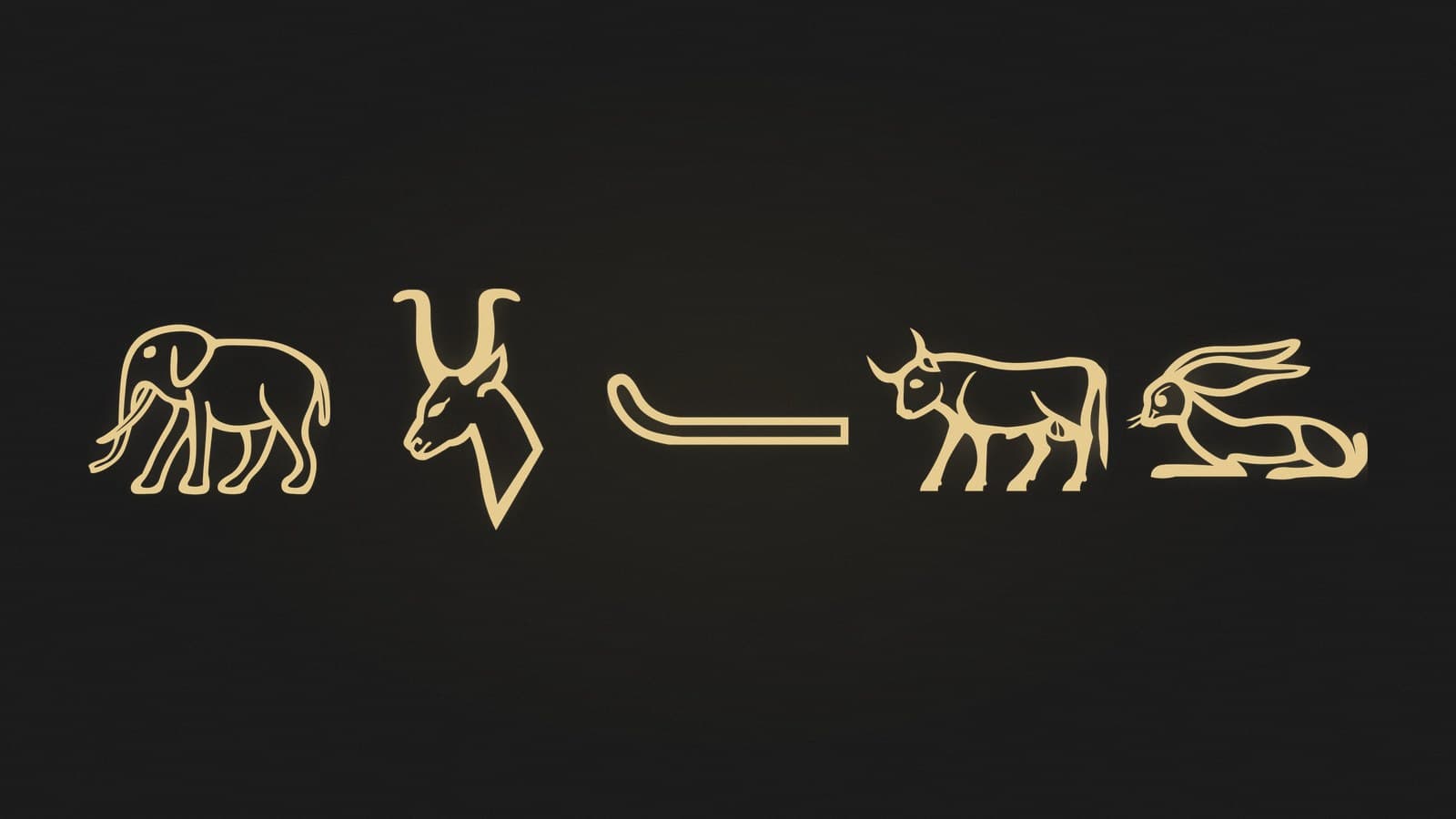
One of the most striking of these creatures is the elephant. Egypt's southernmost major settlement was called Elephantine, from ꜣbw, meaning "ivory", and it was named for the elephant tusk trade that flowed through it from Nubia. So the animal was not just a picture; it was tied to a real place and a real trade route running along the river's upper reaches.
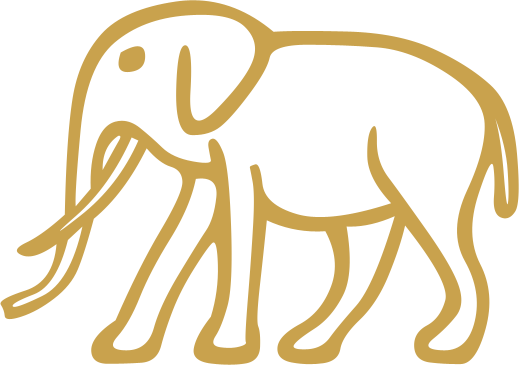
Next comes the hartebeest, a large antelope that once roamed Egypt's desert edges in great herds. It was hunted to local extinction, which means the animal itself vanished from the land while its head lived on as a sign. This is one of the quiet lessons the sign list teaches. Scribes went on drawing animals that had already gone from Egypt, which makes the writing a record of a landscape that had changed.
The elephant returns in a second, smaller form: a single tusk. On its own this sign gives us ḥw, meaning "to strike". Ivory's hardness made it a natural symbol for forceful blows, so a piece of the animal came to stand for the action of striking rather than for the beast itself. It is a good reminder that wild animals in the script do not only classify. They can carry sounds and abstract ideas too.

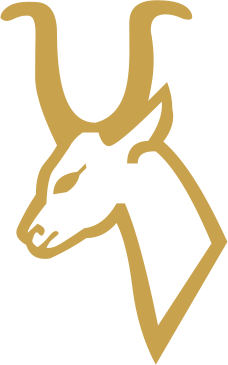
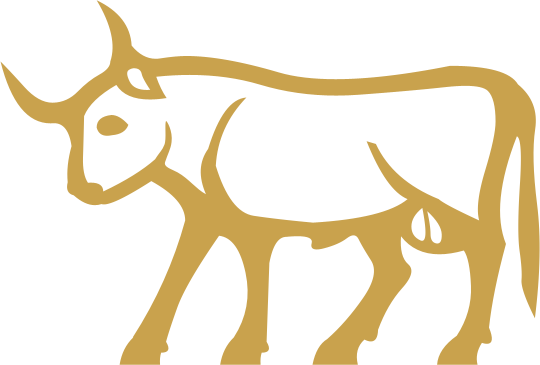
The danger of the untamed comes through clearly in the charging bull. With horns lowered and ready to gore, this sign depicts a bull in full aggressive charge. It appears in words for wild or raging bulls, capturing the raw danger the Egyptians associated with untamed cattle in the Nile marshlands. Cattle were familiar on the farm, but out in the marshes they could be something else entirely.
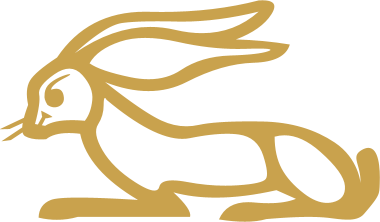
The last of these wild creatures is the smallest, and perhaps the most surprising. The desert hare seems an unlikely candidate for the biliteral wn, meaning "to exist" or "to be open". Egyptologists still debate why this animal was chosen for such an abstract concept. There is no need to force an answer; part of the pleasure of learning hieroglyphs is meeting a sign whose logic remains genuinely open.
Taken together, these five signs show how much of the wider world the Egyptians folded into their writing. The desert was not empty to them. It was full of animals worth naming, worth remembering, and worth pressing into service as sounds and meanings. If you would like to keep meeting them a little at a time, Hierolyte, the iPhone and iPad app behind this site, teaches one of these signs a day, with the same notes you have just read.