Every writing system needs a way to talk about things going wrong, and the ancient Egyptians built theirs out of the human body. When something fell, collapsed, hid or was pushed away, the scribe reached for a small set of signs showing a person caught in the act. Four of these are what we call classifiers. They sit at the end of a word and quietly tell you which corner of the world it belongs to, in this case the world of defeat or concealment. They are never spoken aloud, but they shape how you read everything that comes before them. The fifth sign in this group does something different, and we will come to it last.
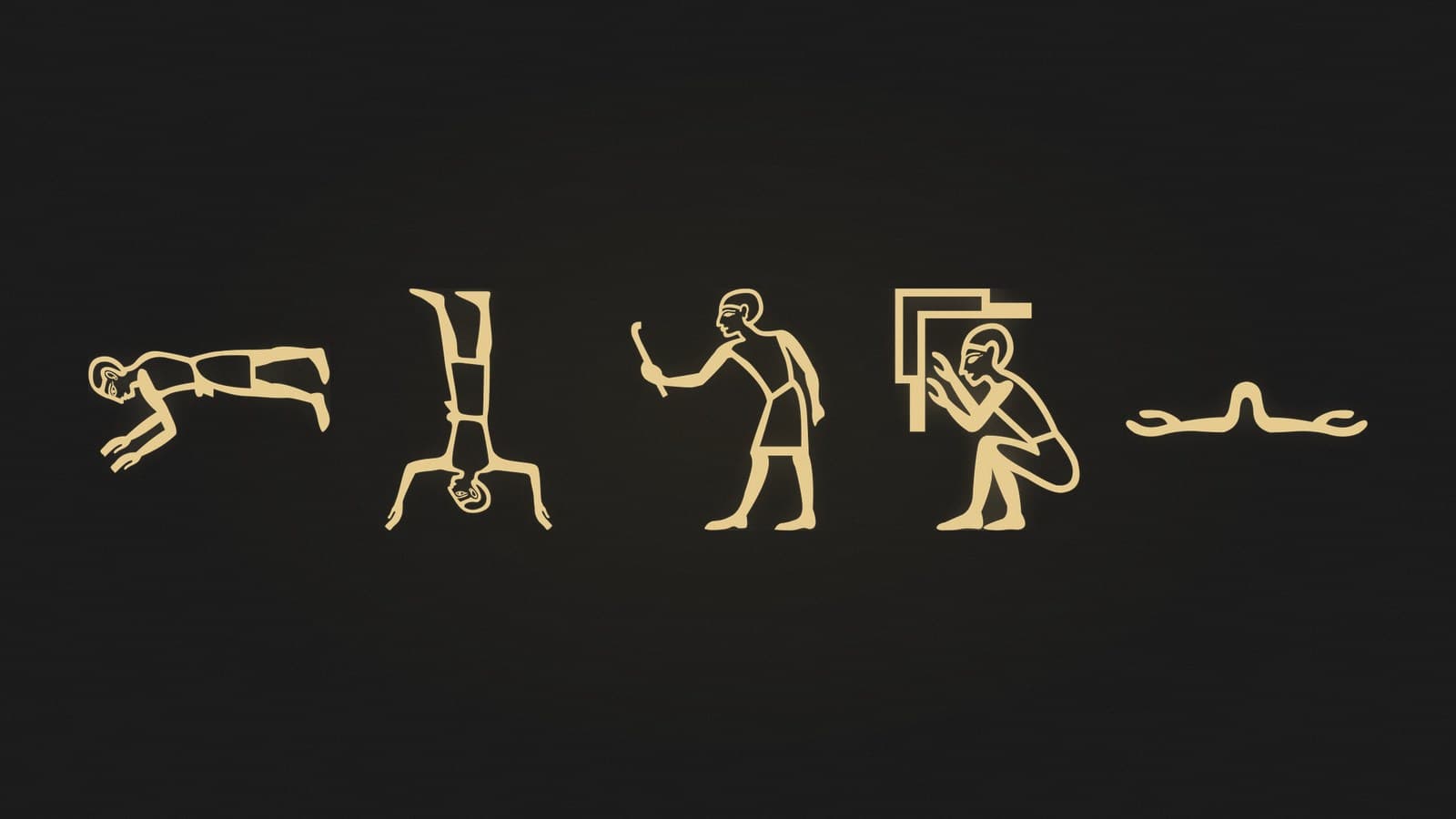
The first is the falling man, known to scholars as A15. It shows a figure tumbling forward, head-first, and it marks words for falling, for being overthrown, and for defeat itself. You will often find it in military texts, where it describes the rout of enemy forces. Once you know the shape, the meaning almost reads itself, because the body on the page is already going down.
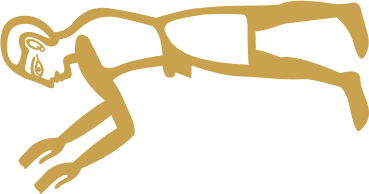
Next comes the man upside down, A29, one of the most visually dramatic signs in the whole script. It shows a figure turned completely over, and it marks words for chaos, disorder and inversion. This one carries a real weight of feeling. The Egyptians deeply feared the overturning of mꜣꜥt, the cosmic order that held the world in its proper shape, and this sign embodies that anxiety. To see a man flipped on his head was to see everything that should stay upright coming apart.
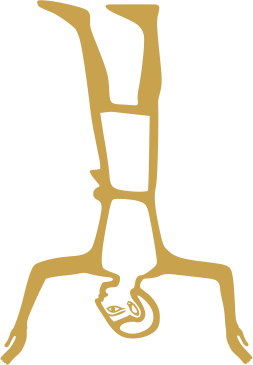
The third sign, A25, shows a man striking backward over his shoulder. It is used in contexts similar to a related sign, A24, but sometimes it appears specifically in words about repelling or driving away, whether the target is an enemy army or some evil force. Here the figure is not falling or overturned but active, pushing something back and out.
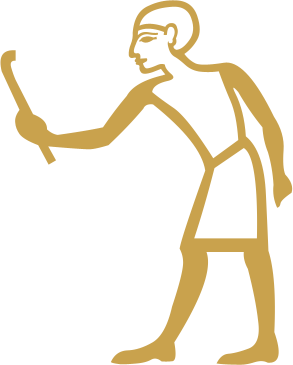
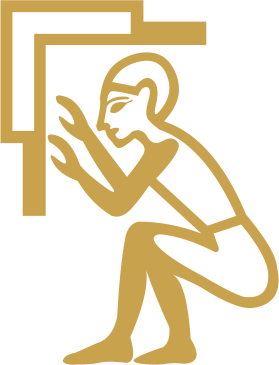
The fourth is gentler and rather charming. This is the hiding man, A5, a figure crouching behind a low wall. It appears after words for hiding, for secrets and for concealment. You might think of it as ancient Egypt's version of a do not disturb sign, a small person tucked out of sight, telling you that whatever the word describes is meant to stay hidden.
The fifth sign breaks the pattern, and it is the most useful of all. It is a pair of arms spread wide and low, in a sweeping gesture of denial, and it is how Egyptian wrote the idea of not. This is D35, the primary determinative for negation. Order mattered enough to the Egyptians that its opposite was given pictures of its own, and this simple gesture is what carries a refusal. When you learn to spot those outstretched arms, you have found the language saying no.

Taken together, these five signs give you a compact vocabulary of trouble: the fall, the overturning, the driving away, the hiding, and the flat refusal. Each is a human figure, and each teaches you to read not just a word but a state of the world. Hierolyte, the iPhone and iPad app behind this site, teaches one of these signs a day, with the same notes you have just read, so that the shapes settle in slowly and stay put. Learn them once and you will recognise them across the walls and papyri wherever things go wrong.