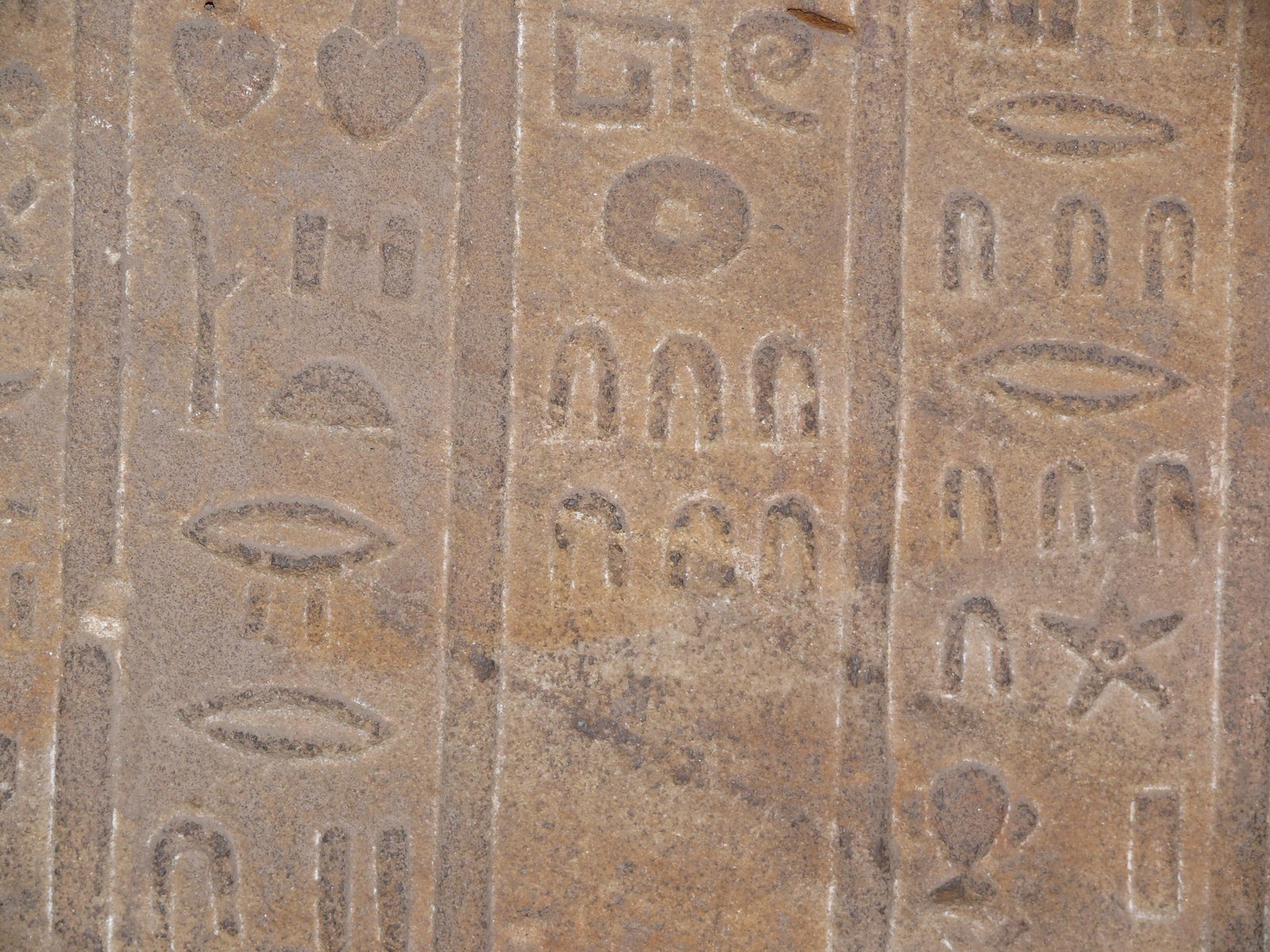
If you are just beginning with hieroglyphs, numbers are one of the kindest places to start. Where the writing of words can feel dense and unfamiliar, the numbers are refreshingly simple. Just four signs and one easy rule will let you read quantities, offerings and dates on real monuments, and you can begin to do it today.
The first sign is a single stroke, and it means one. Nothing more to memorise: one stroke, one thing.

The second sign is a cattle hobble, and it stands for ten. This is a good moment to notice that these signs come from everyday life, from the tools and objects the ancient Egyptians knew well.

The third sign is a coil of rope, and it means one hundred. With just these signs you can already read a surprising range of numbers on a wall or a stela.

The fourth sign is a water-lily plant, often called a lotus, and it stands for one thousand. That gives you the four powers you will meet most often as a beginner: one, ten, one hundred and one thousand.

Now the one rule that ties it all together. The system is additive, not positional. That means the signs simply repeat and you add them all up. There is no place value as we have in modern numbers, and there is no zero digit at all. So three hobbles and two strokes is thirty plus two, which is thirty-two. To read any number, you find each sign, count how many times it appears, and add the totals together. That really is the whole method.
Because there is no zero and no columns to line up, you never have to worry about an empty place holding a spot. A number is just a heap of signs waiting to be added. Once that idea settles, larger numbers stop looking intimidating and start looking like simple sums.
The system does not stop at one thousand. Larger powers had their own signs too, including a raised finger for ten thousand and a tadpole for one hundred thousand. You do not need those to get started, but it is worth knowing they exist, so that a very large number on a monument does not take you by surprise.
One of the best places to practise is an offering list. Offering lists use these number signs constantly, which is why the counts of bread and beer are often a beginner's first fluent reading. There is real pleasure in looking at an ancient list, spotting a run of strokes and hobbles, adding them up, and understanding exactly how much was being recorded. That small moment, when a wall stops being decoration and becomes a quantity you can read, is one of the friendliest doorways into the whole script.
If you would like to keep these signs close as you learn, Hierolyte includes the number signs in its collection, each with a note on where you will actually see it. From there, the next step is simply to look, to count the repeats, and to add. With four signs and one rule, you are already reading numbers the way the ancient Egyptians wrote them.