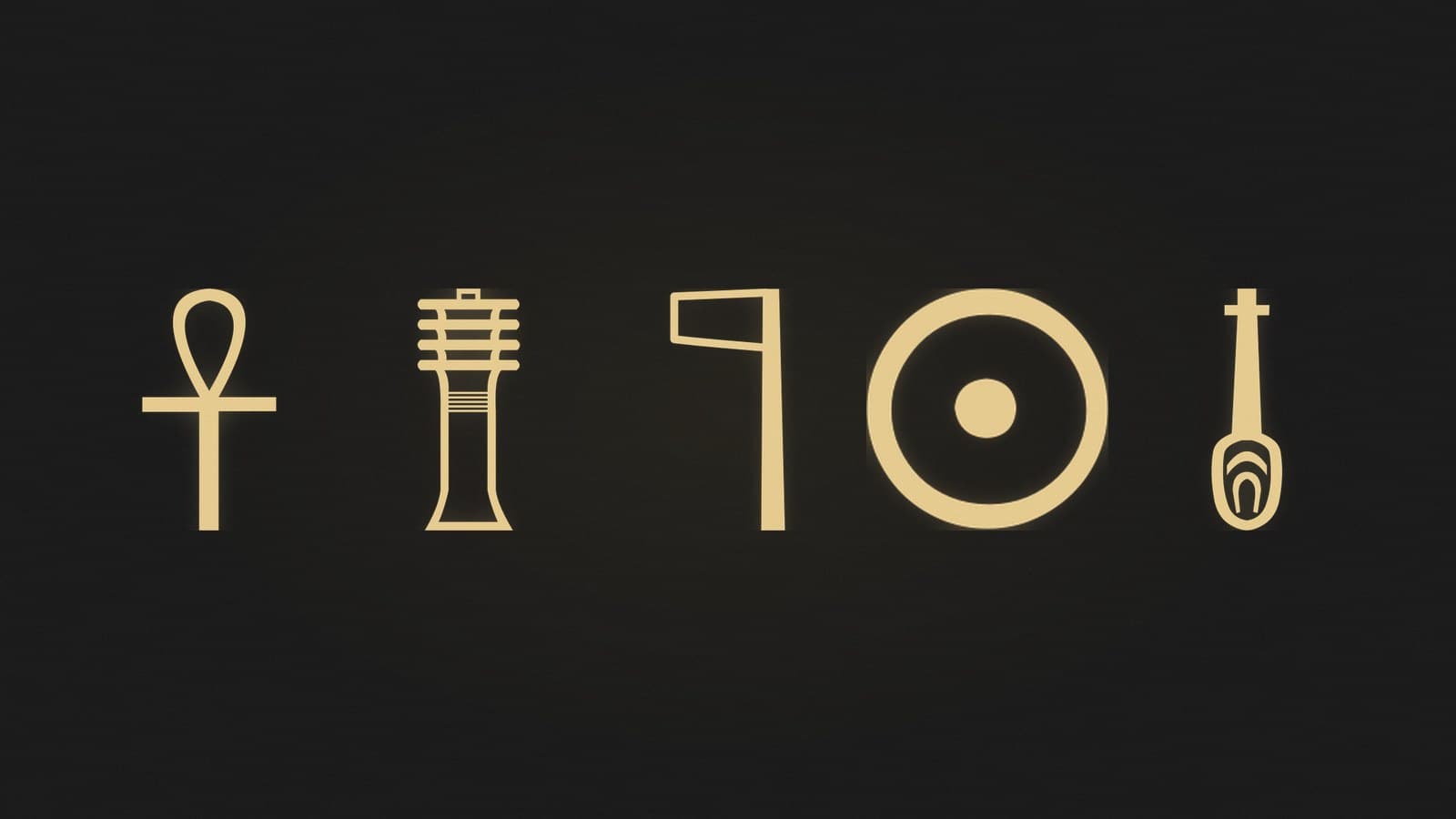
Some of the most reproduced symbols in the world are not exotic mysteries at all. They are ordinary hieroglyphs doing ordinary work. The ankh on a pendant, the djed pillar on a museum label, the sun disk above a pharaoh's head: each of these is a sign in a writing system, and each one is a word you can read. What makes them special is a simple point about how the script works. These are not silent classifiers that only help sort other words. Each one writes a whole word by itself, which is why a single sign can stand alone on an amulet or a wall and still say something.
Start with the most famous of them all. The ankh, sometimes called the 'Key of Life', is perhaps the most recognisable Egyptian symbol. Gardiner suggested it originally depicted a sandal strap, a humble origin for so grand a shape. It means 'life', and it was carried by gods. Its life outside Egypt has been long as well. The ankh in particular has been borrowed, copied and worn for centuries by people who have no idea that it spells a word.

The next sign is quieter but no less common on museum labels. The djed pillar symbolises stability and endurance. Some scholars associate it with the spine of Osiris. During festivals it was ritually 'raised' upright, an act meant to ensure cosmic stability. When you see it, you are looking at the written word for steadiness itself.

The third sign is easy to walk past, yet it sits at the heart of Egyptian religion. It depicts a divine flag or cult emblem wrapped in cloth on a pole. It is one of the oldest religious symbols, and it is used to write nṯr, meaning 'god' or 'divine'. Once you know its shape, you begin to notice it threaded through inscriptions wherever gods are named.

The fourth could hardly be simpler to draw, and yet it is one of the most powerful signs in the whole script. It is a plain circle, the sun disk, and it writes rꜥ, the word for both the sun and the great god Ra himself. That is a lot of meaning packed into one small circle, which is exactly why it so often appears above a pharaoh's head.

The last of the five is the 'nefer' sign, which depicts a heart with its windpipe, or trachea. It means 'beautiful', 'good' or 'perfect'. You have almost certainly met it already without realising, because it lives inside a famous name. The queen Nefertiti's name means 'the beautiful one has come', and it is this very sign that carries the beauty.

Taken together, these five signs make a gentle first lesson. Each is a word, not just a decoration, and each is a shape you have very likely seen many times over. Learning to read hieroglyphs often begins here, with the pleasure of recognising something familiar and finally knowing what it says. If you would like to keep going, Hierolyte, the iPhone and iPad app behind this site, teaches one of these signs a day, with the same notes you have just read. Five words is a small start, but it is a real one, and every inscription you meet from now on will have a few of them waiting for you.