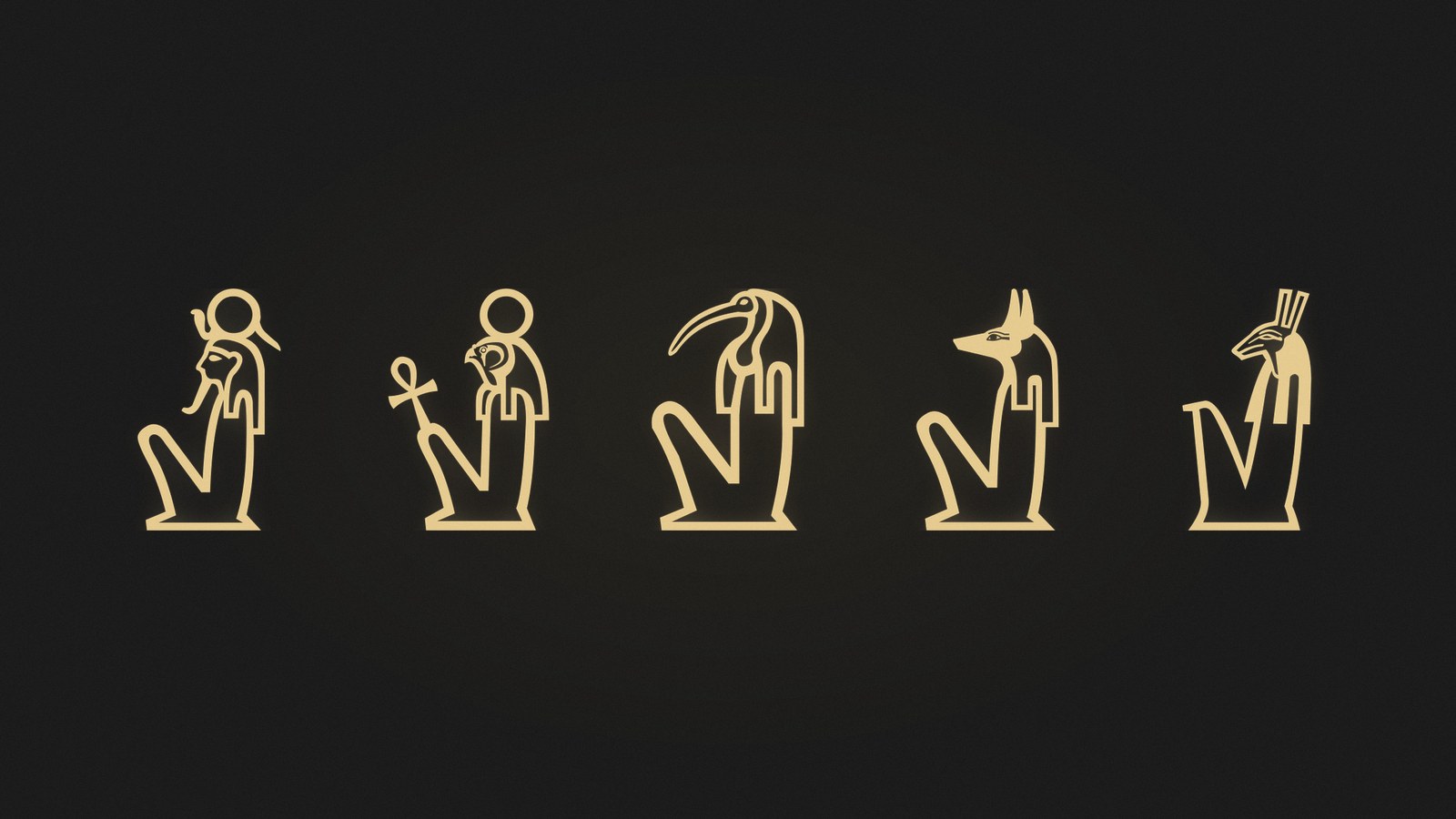
One of the most encouraging things to discover as a beginner is that you do not need to read Egyptian to find the gods in a text. Their names are marked in a way that stands out, and once you know what to look for, you can pick them out of a crowded wall long before you can sound anything out. The trick is a small seated figure that the Egyptians placed at the end of a name to signal that the name belongs to a god.
This seated figure does not add any sound of its own. It is what scholars call a classifier: a sign that tells you what kind of word you are looking at, rather than how the word is pronounced. When you see it sitting at the end of a name, it is quietly announcing that the word in front of it is divine. That single habit of Egyptian writing turns divine names into some of the easiest things to spot in a whole inscription.
The most general of these figures is the generic seated god, known to sign lists as C1. It is the all-purpose divine determinative, placed after the names of gods and goddesses who do not have their own dedicated hieroglyph. When a deity has no special sign of their own, this is the figure that marks their name as belonging to the divine world.

Many gods, however, do have their own dedicated figure, and this is where spotting becomes genuinely satisfying. More specific signs name the god outright through their headdress or their animal head, so you are not just seeing that a name is divine, you are seeing exactly who is meant. A handful of these are worth learning early, because they appear again and again.
The sign C2 depicts a falcon-headed figure crowned with the blazing sun disk, and it writes the name of Rꜥ, the supreme solar deity who sailed across the sky each day in his barque. The sun disk overhead makes this one hard to mistake once you have met it.

The sign C3 shows an ibis-headed god, and this is Thoth (ḏḥwty), whom the Egyptians credited with inventing hieroglyphic writing itself. That makes him, in a sense, the patron deity of everyone learning these signs today, which is a pleasant thought to keep in mind as you practise.

The sign C6 is a jackal-headed figure, and this is Anubis (inpw), the god who presided over mummification and guided the newly dead through the dangerous paths of the underworld. You will often meet him in funerary settings.

Finally, the sign C7 depicts the mysterious "Seth animal", a creature with a curved snout and forked tail that matches no known species. It writes the name of Stḫ, the volatile god of storms, chaos, and the desert. Because the animal resembles nothing you can name, this one tends to lodge in the memory quickly.

With these few figures in mind, you already have a reliable way to scan a text for its gods. Look for a seated figure at the end of a name, then check whether it carries a telling headdress or animal head. If it does, you have found not just a god, but a specific one. Hierolyte, the iPhone and iPad app behind this site, teaches one of these signs a day, with the same notes you have just read, so the shapes become familiar a little at a time.