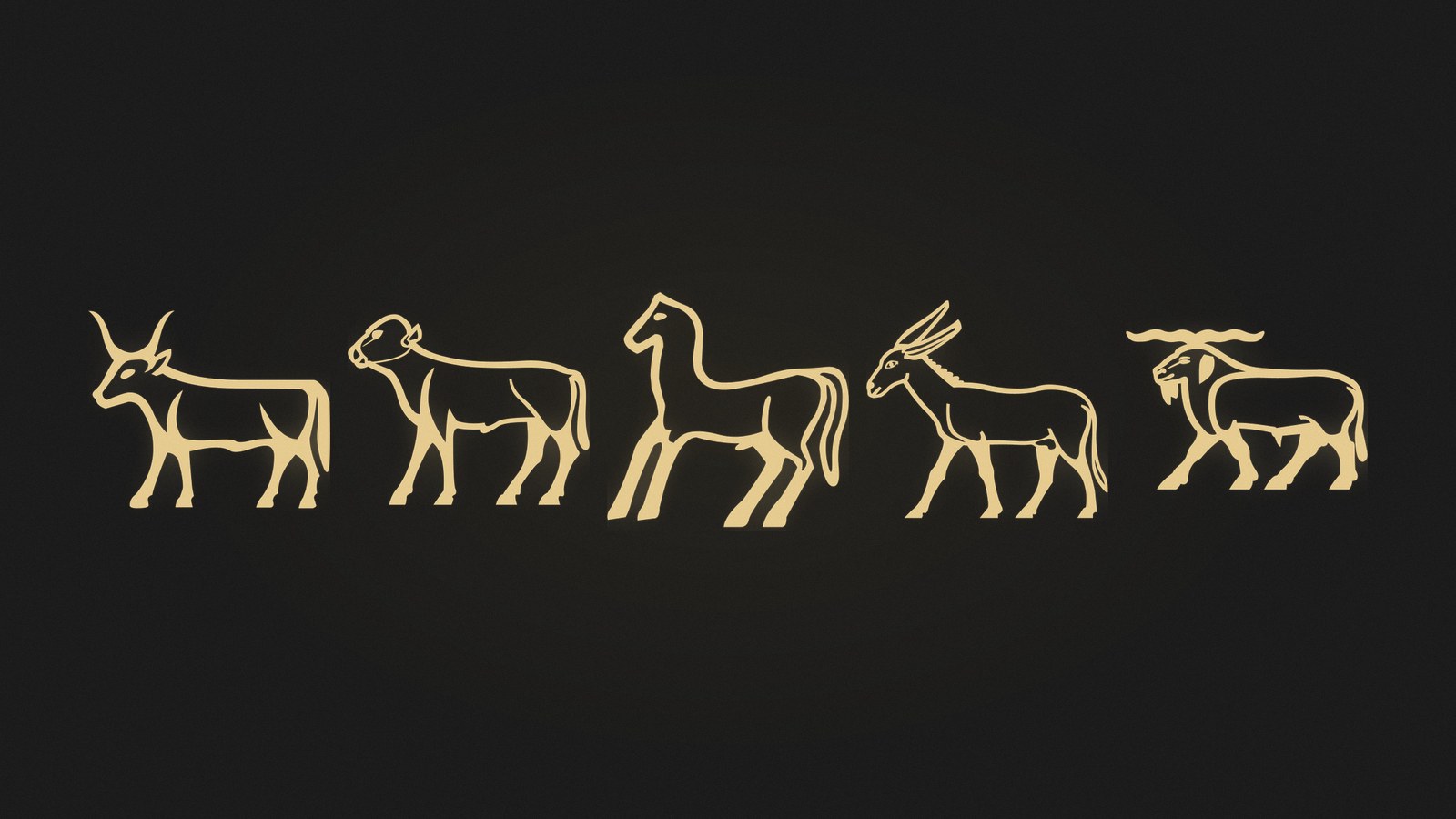
When you first look at Egyptian writing, the little pictures of animals feel like decoration. They are not. Egyptian scribes drew the creatures around them, and those drawings became working parts of the writing system. Some animal signs stand for sounds, spelling out words the way our letters do. Others sit silently at the end of a word as classifiers, telling the reader what kind of thing the word is about without being pronounced at all. The same sign can do either job depending on the word, and learning to notice which one is which is a large part of learning to read.
What makes these signs so rewarding for a beginner is that they are also a record of daily life. The animals in the sign list are a record of what Egyptians actually kept, hunted and feared. Because the script grew out of the real world, the arrival of a new animal in Egypt shows up in the script itself. Read the animals carefully and you are reading the countryside the scribes lived in.
Take the bull. The bull was the ultimate symbol of royal power in ancient Egypt, and pharaohs were called "mighty bull", kꜣ nḫt, as early as the Old Kingdom. When you meet this sign, you are meeting an idea of strength and kingship that Egyptians held for a very long time.

Beside the grown bull stands its young. This young calf follows its mother in the hieroglyphic script just as it would in an Egyptian pasture. It is a small, human touch, a reminder that the people who built this system were watching herds move through fields and simply drew what they saw.

The horse is a very different kind of sign, because for most of Egyptian history there were no horses at all. Horses were unknown in Egypt until Hyksos invaders introduced them around 1650 BC, which makes this one of the newer signs in the script. When you spot the horse, you are looking at a latecomer, an animal that entered both the country and the writing well after the system was already old.

Long before horses arrived, the humble donkey was Egypt's workhorse. Caravans of them hauled grain, stone, and trade goods across the desert for millennia. If the horse marks a moment of change, the donkey marks the long, patient background against which that change happened, the animal that quietly did the heavy work for age after age.

The ram carries the weight of religion rather than labour. The ram was sacred to two major gods, Amun of Thebes, shown with curving horns, and Khnum of Elephantine, shown with horizontally spreading horns. A single kind of animal could point towards more than one god, and the shape of the horns is part of how the meaning was told apart.

These five signs are a good place to begin, because each one teaches something beyond its own shape: how a sign can be a sound or a silent classifier, and how the script quietly kept a record of the living world. Hierolyte, the iPhone and iPad app behind this site, teaches one of these signs a day, with the same notes you have just read. Take them one animal at a time, and the writing slowly turns back into the countryside it came from.