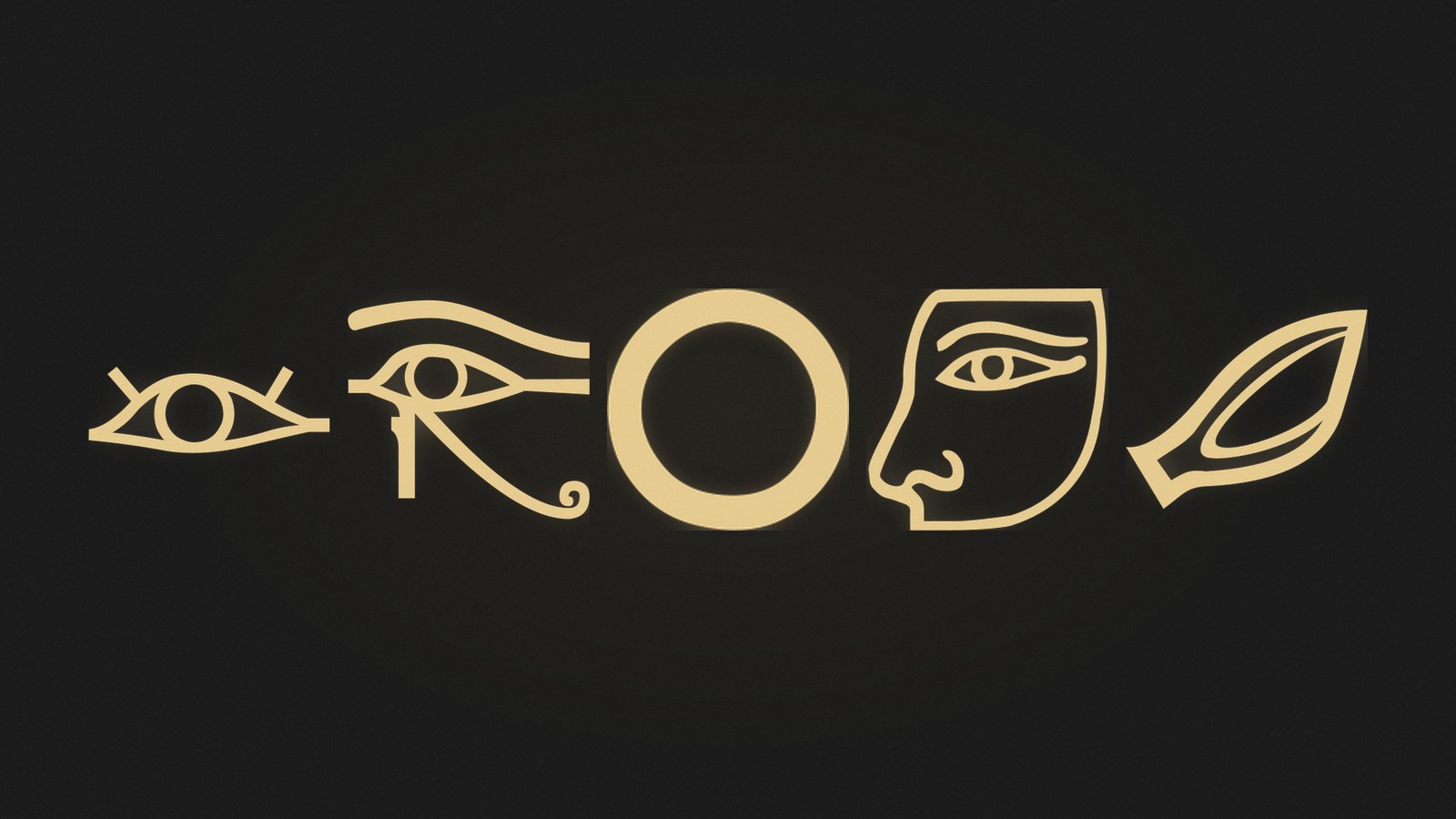
Some of the signs a beginner meets first are the ones drawn from the human body, and the sense organs in particular gave Egyptian some of its most heavily used signs. The reason is simple once you think about it: so many words touch on perceiving something, whether that is seeing, hearing, smelling or breathing. A script that pictures the world will reach again and again for the eye, the ear and the nose, and Egyptian did exactly that.
The eye is the natural place to begin. One of its forms is the painted eye, catalogued as D5, a variant of the basic eye sign that carries cosmetic lines. That small detail reflects how ubiquitous eye makeup was in ancient Egypt, and it is a nice reminder that the scribes were drawing the world they actually lived in.

A second eye is far more famous, and it is the one that has escaped Egyptology altogether to become a piece of modern jewellery. This is the wedjat, or restored Eye of Horus, listed as D10. The wedjat represents the eye that was torn apart by Seth and magically healed by Thoth, an image of something broken and then made whole again. You will find it worn today by people who have never read a single hieroglyph.

The eye can also be reduced right down to its essentials. The sign D12 depicts just the pupil of the eye in isolation, and it marks words related to seeing and sight. It is a good early lesson in how the script works, because a single small part of a picture could stand in for the whole idea.

From seeing we move to breathing. The nose in profile, sign D19, writes fnd, "nose", and it determines words for breathing and joy. That pairing may look strange at first, but it made perfect sense to the Egyptians, who said they "breathed" happiness. The same idea lies behind one of the most sacred blessings a god could bestow, the "breath of life", ṯꜣw n ꜥnḫ. To be given breath was to be given life itself.

Hearing brings a small surprise. The sign for it, F21, is not a human ear at all but an animal's ear, and it writes sḏm, "to hear". This is a helpful reminder that the scribes picked whichever picture read most clearly at small size, choosing legibility over strict anatomy. The verb it carries is one of the most important in the whole Egyptian language. In fact sḏm is the standard example used to teach Middle Egyptian grammar today, so if you go on to study the language properly, this ear is one of the first signs you will meet in your grammar book.

Taken together, these five signs show the script at its most human. The Egyptians looked at the body, chose the clearest pictures they could, and built from them the words for the everyday business of perceiving the world. Learning to recognise the painted eye, the wedjat, the pupil, the nose and the ear will carry you a long way into real texts. Hierolyte, the iPhone and iPad app behind this site, teaches one of these signs a day, with the same notes you have just read, so a handful of signs at a time gradually becomes a working knowledge.