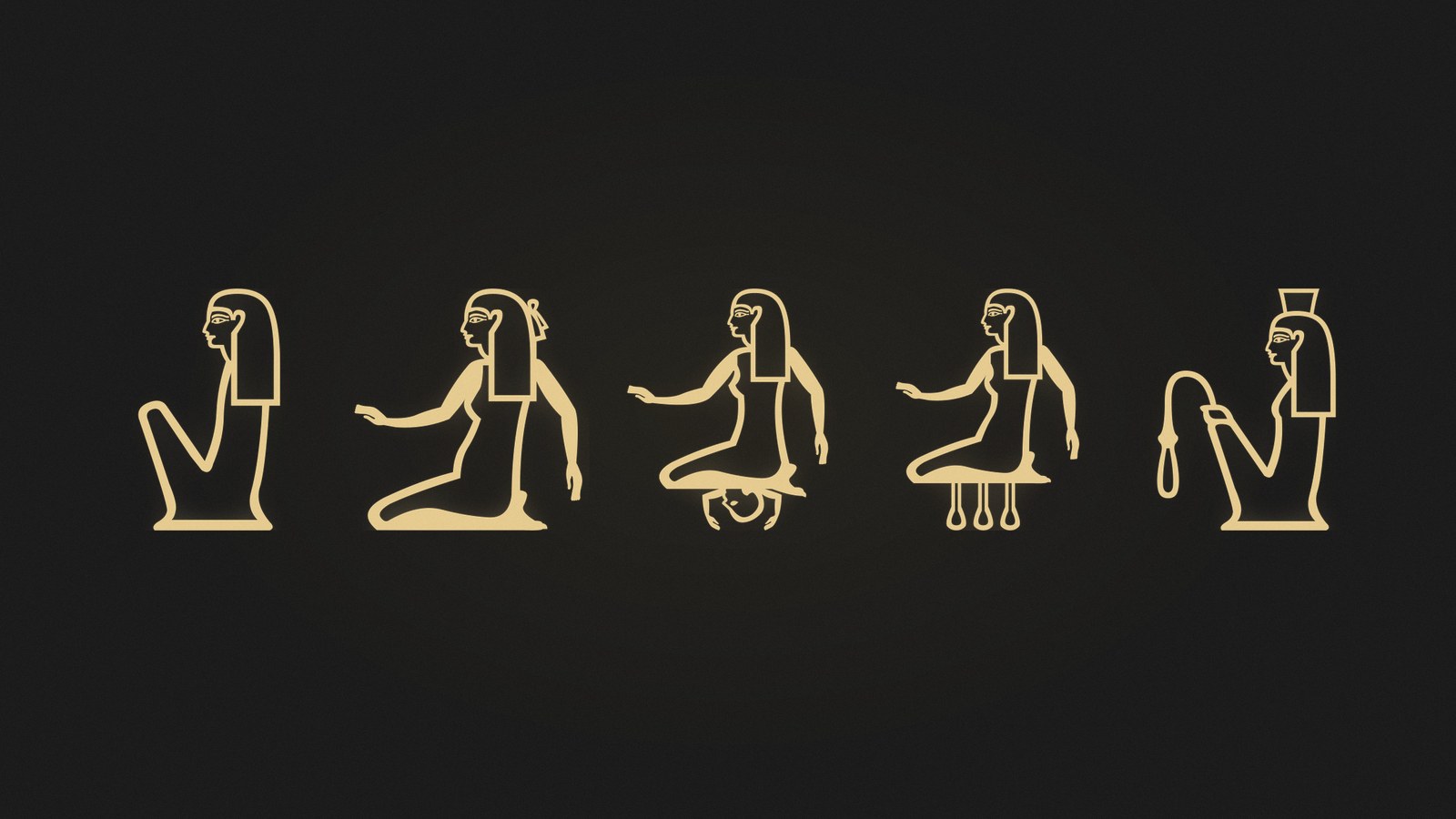
When you first meet the hieroglyphic script, you learn that not every sign stands for a sound. Some signs sit silently at the end of a word to tell you what kind of thing that word is. Scholars call these silent signs classifiers, or determinatives. One group of them is given over entirely to women, and it is unusually specific. It does not stop at a single sign for woman. It goes further, distinguishing a woman who is pregnant, a woman giving birth, a woman nursing a child, and a queen.
This group is labelled with the letter B, and it is the female counterpart to the seated man. It works in exactly the same way, sitting quietly at the end of a word as a classifier that you do not read aloud. What makes it worth pausing over is the specificity. A script that bothers to distinguish these states is recording what its scribes thought worth distinguishing, and that tells you something about the world they lived in.
The most common of these signs is the seated woman, known as B1. It is the most common female determinative in the entire writing system. You will find it after words for women, after feminine names, and after goddesses who lack their own specific sign. If you learn only one sign from this group, learn this one, because you will see it everywhere.

Next comes B2, the pregnant woman. It depicts a woman with a visibly rounded belly, and it served as the determinative for words related to pregnancy and conception. Here the script narrows its focus from woman in general to a particular state, and the sign itself carries that meaning in its shape.

B3 takes us one step further. This sign shows a woman squatting in the traditional Egyptian birthing posture, and it writes the verb msi, meaning to give birth. This is one of the most important words in royal inscriptions, which tells you how central the idea of being born, and of who was born to whom, was to the way Egyptians recorded their rulers.

After birth comes care. B4 shows a mother nursing an infant at her breast. As a determinative it appears after words for suckling, for nourishing, and for rearing children. Once again the script has chosen to record a specific act rather than fold it into a single general sign.

The last sign in this small tour is B7, the queen. It is distinguished from the ordinary seated woman by a special royal headdress or crown, and it marks words for queens and royal women. The link to B1 is clear, and so is the difference. The crown is what separates an ordinary woman from a royal one, and the script draws that line in a single detail.

Taken together, these five signs form a quiet portrait. The script noticed women, and it noticed the stages of their lives, and it built a sign for each. Reading them well is a matter of recognising each shape and remembering what kind of word it closes.
Hierolyte, the iPhone and iPad app behind this site, teaches one of these signs a day, with the same notes you have just read. Working through them one at a time is often the gentlest way to make them stick.