Among the many gods of ancient Egypt, few are as slippery to pin down as Seth, the god of storms, the desert and disorder. It is tempting to think of him as a simple villain, but that would be too neat. Seth was not simply evil. In some myths he defends the sun god against the serpent Apophis on the sun's nightly journey, standing guard at the very edge of chaos rather than being its master alone. He is a figure of danger, yes, but also of necessary power.
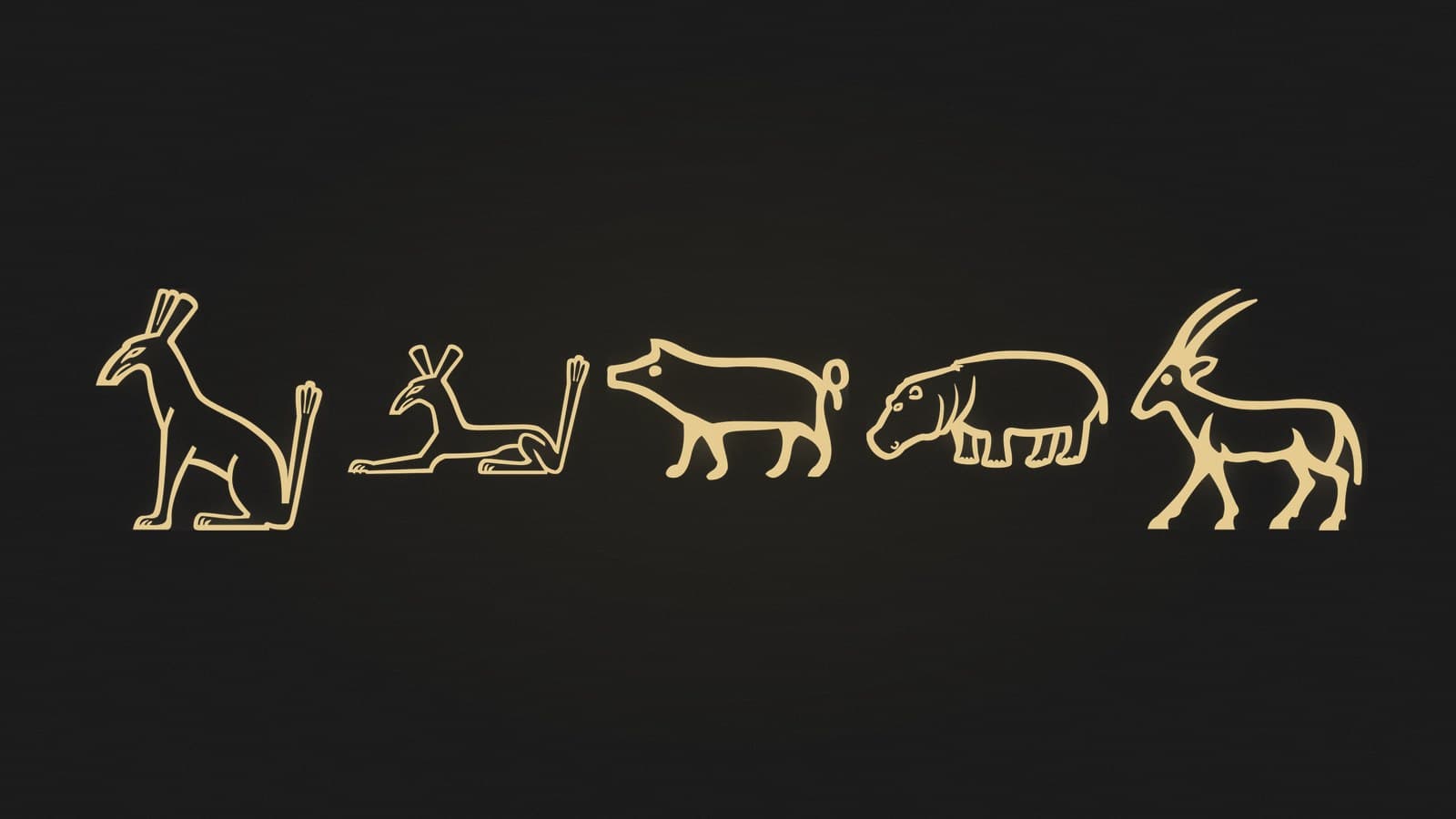
The Egyptians linked Seth to a strange creature that scribes drew again and again. No living or extinct animal has ever been conclusively matched to this bizarre Seth animal, with its forked tail, squared-off ears and curved snout. It remains one of Egyptology's enduring mysteries, and generations of scholars have argued over it without reaching agreement.

A second version of the same creature appears lying down. This reclining form shows up in words connected to storms, chaos and the desert, all domains of the unpredictable god Seth. When you meet it in a text, it signals that the surrounding word belongs to Seth's uneasy world.

Real animals were tied to Seth as well, and here the picture becomes more human and more everyday. Several of these creatures could be hunted or slain in ritual to act out the defeat of disorder. The act was symbolic, a way of pushing back against the chaos that Seth represented, and it turned certain animals into living emblems of that struggle.
The pig is a good example of how tangled these ideas could be. Pigs had a complicated reputation in ancient Egypt, associated with the chaos god Seth. They were avoided by some priests, yet archaeological evidence shows that ordinary Egyptians raised and ate pork regularly. The gap between religious caution and daily life is a useful reminder that belief and behaviour did not always march in step.

The hippopotamus carried a double meaning that captures Seth's ambiguity beautifully. The hippopotamus was both terrifying and sacred. Males were hunted as symbols of chaos, linked to Seth, while the pregnant female hippo form was adopted by the protective goddess Taweret, who guarded mothers and newborns. The same animal could stand for menace or for care, depending on which version you called to mind.

The oryx completes the group and shows the ritual idea at its clearest. The oryx was ritually hunted as a stand-in for Seth, the chaos god, and its slaughter symbolised the defeat of cosmic disorder. In these scenes the hunt was more than sport. It was a small enactment of order winning out over confusion.

Taken together, these signs give you a way into one of Egypt's most fascinating gods. The unidentified Seth animal marks his name and his world, while the pig, the hippopotamus and the oryx show how living creatures were woven into ideas about danger, protection and the defeat of disorder. Learning them a few at a time is the gentlest way to make them stick. Hierolyte, the iPhone and iPad app behind this site, teaches one of these signs a day, with the same notes you have just read.