Discoveries
News from the world of ancient Egypt.
Excavations, exhibitions, hieroglyphic texts, and research, drawn from verifiable institutional sources. Every story cites where it came from.

The Collector asks why most female pharaohs have been forgotten
A feature from The Collector examines why so few of ancient Egypt's female rulers are remembered, arguing there were more than popular memory allows. It points to how women such as Hatshepsut presented themselves as male kings, or were recorded only as queens.
2 min read
The Collector examines how ancient peoples worshipped rivers as gods
The Collector has published a comparative feature on how ancient civilisations came to worship the rivers they depended on, placing the Nile alongside the Tigris, Euphrates, Ganges and Yellow River. The essay argues that peoples deified these waterways to control and pacify them, shaping the religious life that grew up along their banks.
2 min read
The Collector podcast explores the overlooked women who helped build Egyptology
The Collector has released a podcast episode with Dr Kathleen Sheppard on the women whose notes, correspondence, teaching and research helped build Egyptology yet were often uncredited. The conversation reconsiders who did the work behind the field's famous discoveries.
2 min read
New book surveys ancient Egyptian textiles in northern English museums
A new book, Weaving for Eternity: Ancient Egyptian Textiles, surveys significant collections of ancient Egyptian cloth held in museums across the north of England. The Past's review notes that these often-overlooked artefacts offer insights into technology, economics, religion, and dress.
2 min read
Cleopatra VII gains a volume in Bloomsbury's Significant Figures series
Cleopatra VII has become the latest subject in Bloomsbury's Significant Figures in World History series, joining Nelson Mandela, Winston Churchill and Henry VIII. The new reference guide gathers her life and works into a single accessible volume, according to a review in The Past.
2 min read
Ancient Egypt Magazine issue 156 published, spanning Tutankhamun galleries to the Osirion at Abydos
Issue 156 of Ancient Egypt Magazine has been published, with features on the Tutankhamun galleries at the Grand Egyptian Museum, the origins of carnelian, ancient pain relief, the Litany of Ra, women's literacy, John Gardner Wilkinson and the Osirion at Abydos. The line-up was listed by The Past.
2 min read
The Past reviews a new book on religion in Egypt from pharaonic times to today
The Past has reviewed a new book tracing religious ideas in Egypt from the pharaonic period through the Christian and Islamic eras. Taking Herodotus's description of the Egyptians as the most religious of peoples as its cue, the book explores continuity and change across thousands of years.
2 min read
The Past profiles Sir John Gardner Wilkinson, a pioneer of British Egyptology
The Past has published a feature by Robert R Frost on Sir John Gardner Wilkinson, an antiquary and traveller remembered as a pioneer of British Egyptology. The piece explores his life and why he is regarded as the discipline's 'other founder'.
1 min read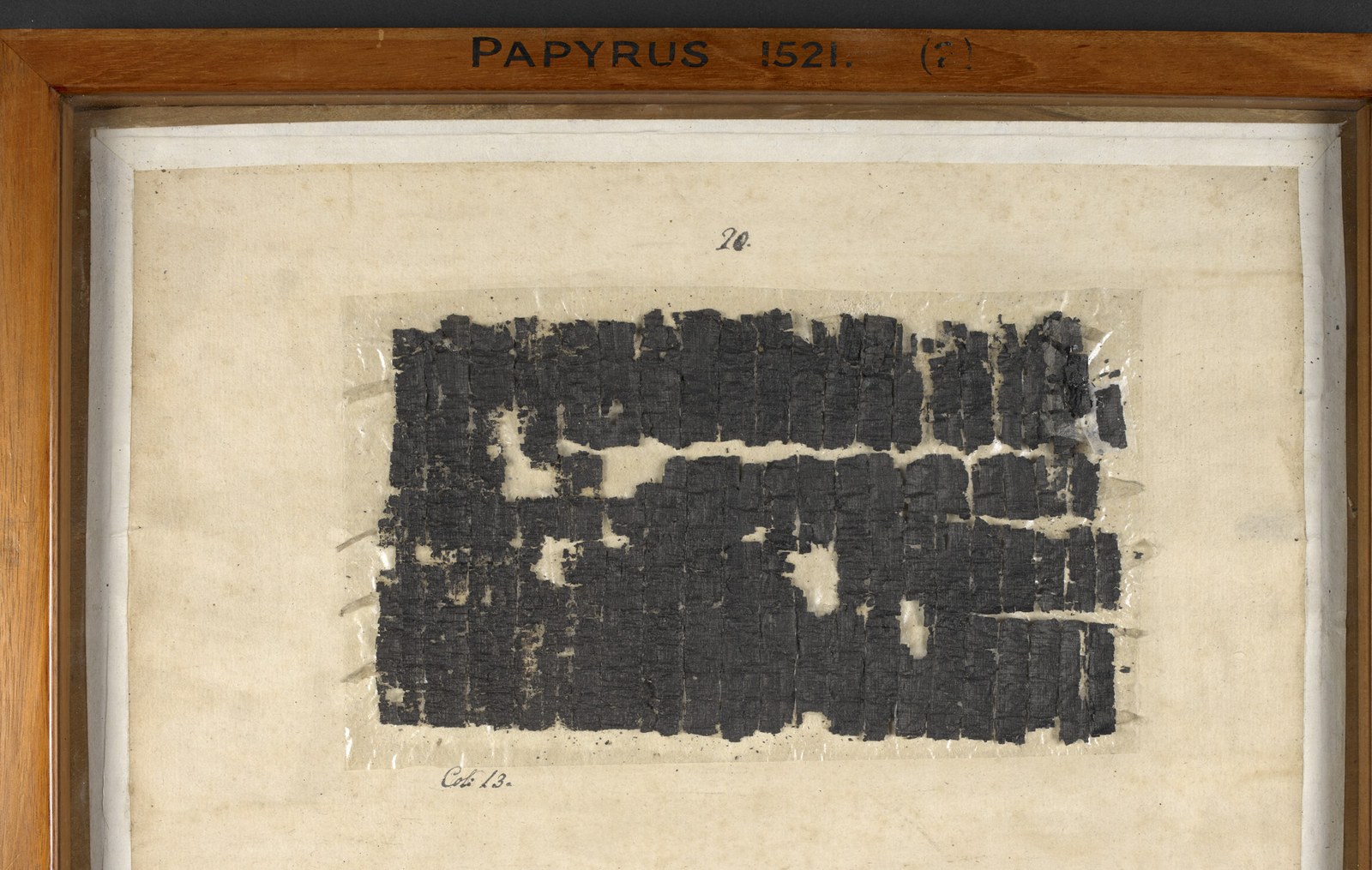
The Buried Library of Herculaneum, and the Machines Learning to Read It
When Vesuvius erupted in AD 79 it sealed the only intact library to survive from the ancient world: hundreds of papyrus scrolls, carbonised and impossible to open. This year, for the first time, a complete sealed scroll was read without being unrolled. Why that matters to anyone who loves ancient texts, and why I am getting involved.
3 min read
Simone Petacchi examines the evidence for women's literacy in ancient Egypt
The Past has published a feature by Simone Petacchi exploring whether women in ancient Egypt could read and write. The piece works through the fragmentary evidence for women's voices in the culture's written record.
2 min read
James Harrell examines the uncertain origins of ancient Egypt's carnelian
Geologist James A Harrell has published a feature with The Past on the uncertain origins of carnelian, one of ancient Egypt's most popular gemstones. The article treats the reddish-orange stone as a geological puzzle, asking where the Egyptians obtained their raw material.
2 min read
Ira Rampil examines physical and magical pain relief in ancient Egypt
Ira Rampil has published a second article on pain relief in ancient Egypt, this time examining the physical and magical interventions used to ease suffering. The feature appears on The Past and follows an earlier piece on herbal remedies.
1 min read
Hilary Wilson explores how ancient Egyptians were paid in bread and beer
The Past has published the second part of Hilary Wilson's feature on ancient Egyptian economics, showing how workers were paid in food and drink. Bread and beer, both made from grain, formed the core of a system that functioned without coinage.
2 min read
The Collector revisits Napoleon's Egyptian campaign and its scientific legacy
The Collector has published a feature on Napoleon's 1798 to 1801 expedition to Egypt and Syria, tracing its military ambitions, administrative reforms and scientific work. The article presents the campaign's scholarly legacy as its most enduring outcome, standing near the start of modern Egyptology.
2 min read
Aidan Dodson traces how the court official Amenhotep-son-of-Hapu became a god
Egyptologist Dr Aidan Dodson has explained, in a podcast with TheCollector, how the 18th Dynasty court official Amenhotep-son-of-Hapu came to be worshipped as a god. Dodson, co-author of a forthcoming biography, traces a reputation that lasted for centuries after the man's death.
2 min read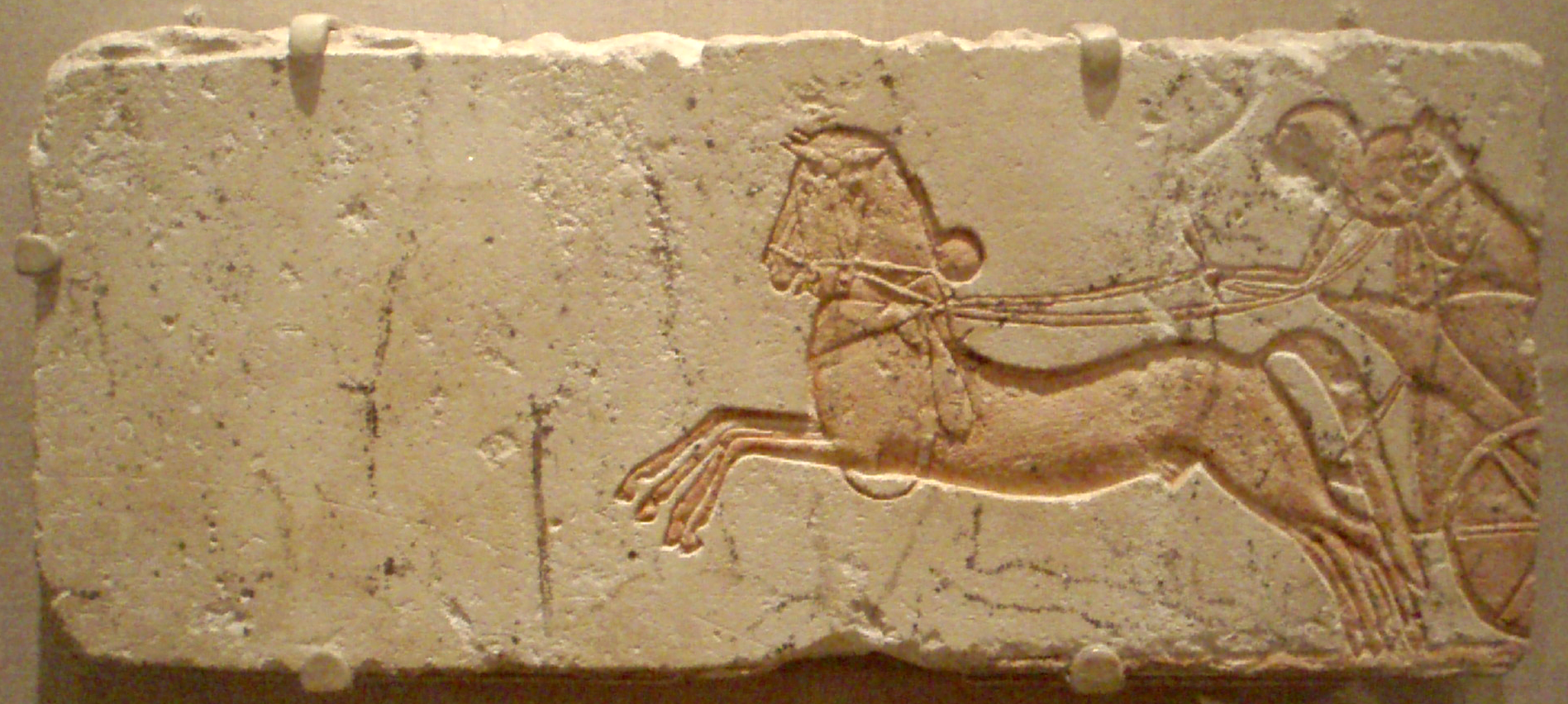
What Egyptian art reveals about horses beyond the chariot
An article from The Collector examines what Egyptian art reveals about horses, noting that nearly all surviving images tie them to chariots. It argues that rare depictions of horses being ridden show their role was broader than the monumental record suggests.
2 min readNew discoveries, straight to your inbox.
An occasional email when new Egyptology stories publish - nothing else. Every email has a one-click unsubscribe link, and your address is used only for this (privacy policy).