The twenty-third lesson counted the Egyptian participles and met one form that the two grammars file differently. James Allen counts it as a fifth participle, for action still to happen, "who will hear". Alan Gardiner calls it the sḏmty·fy and keeps it apart. Still, his account opens: "But for the peculiar mode of its formation, the sḏmty·fy form would have to be regarded as a future active participle."
Like the true participles, Gardiner says, it is an adjective, used to describe a noun or as a noun itself, and as a noun it can take nb, "every" or "any". It is best translated by a "who"-clause, and "the meaning is always future and, except in one isolated case, always active". Allen calls it the prospective participle, and notes that many Egyptologists name it after its shape, "sedgem-TEE-fee". One of Gardiner's examples:

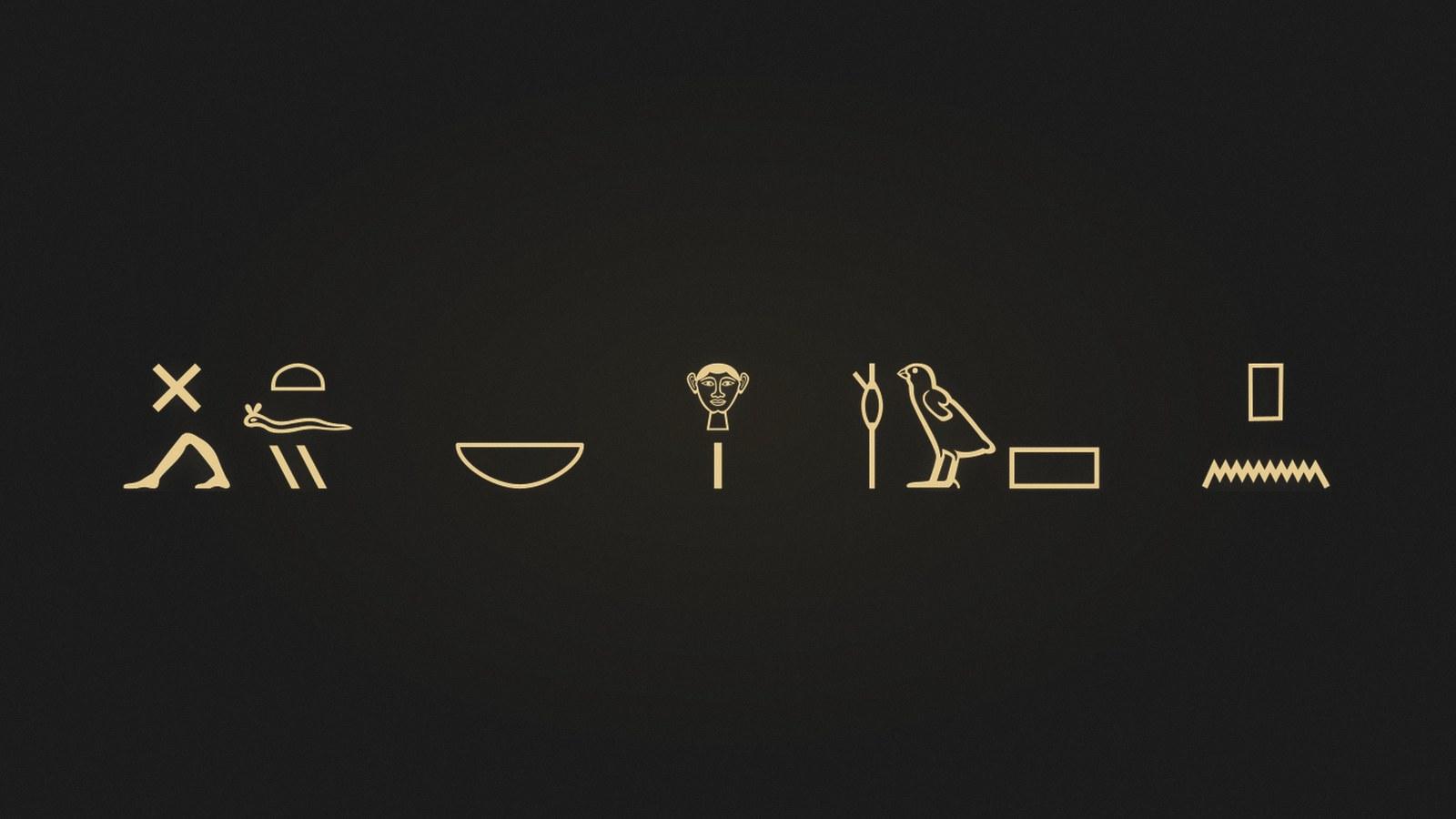
The crossed sticks over walking legs write swꜣ, "pass by". A loaf, the horned viper and two slanting strokes follow, then the basket, nb: "everyone who shall pass by". wḏ is "stela" and pn "this".
Stem, ending and pronoun
The form has three parts: the verb stem, an ending -ty, and a suffix pronoun of the third person. Gardiner lists ·fy for a masculine singular, ·sy for a feminine and ·sn for a plural. He thinks the base was a noun in -ty "expressing an activity that may be expected of someone or something", like ipwty, "messenger", and that the pronoun was a genitive, so that sḏmty·fy meant "one (of whom is expected, -ty) hearing of him".
Allen describes the same three parts. The other participles show gender and number with the endings of an ordinary adjective; this one uses the suffix pronouns instead. Both grammars connect the extra -y on the pronoun with the dual, whose feminine ending -ty and two slanting strokes appeared in the first lesson, and Allen explains that the -ty ending makes the form look like a feminine dual. Gardiner's example with sḏm, "hear":

sḏm is the ear and the owl. The y of the ending is not written here: the loaf stands over the viper and the strokes of ·fy. With a feminine noun the pronoun changes. Gardiner quotes this line of Sinuhe, and Allen gives its verb, "which will be":

ḫꜣst, "country", is feminine, so the pronoun is ·sy, the folded cloth and two strokes. Gardiner gives the literal sense as "be on his water". The verb is wnn, "be", which the twenty-second lesson met in forms with two ns and with one. In the sḏmty·fy, Gardiner says, its class shows the doubling. Verbs with a weak last letter do not double, though the weak w occasionally appears before the ending. Allen notes that the stem is the one used by his prospective sḏm·f, a name the twenty-fifth lesson said he keeps for a form other than the subjunctive, and he thinks the two forms are probably related.
Who will give
Gardiner sets the form beside two participles of rdi, "give", in a scheme of the active: rdi, "who gave", the perfective participle, for past time; dd, "who gives", the imperfective, for the present; and rdity·fy, "who will give", for the future. The sḏmty·fy, he says, "provides the most precise method of referring to future events", and it has "no other function than that of a future active participle". Like the participles it can take an object or a dative, and the same rules of word order apply as in any main clause, those of the thirteenth lesson:

The suffix dative n·i, "to me", comes before the noun object, "this white bread". rdit(y)·f(y) is the mouth over the conical loaf, then the loaf over the viper, and Allen's table of forms cites the same text for "who will give". Gardiner finds the form passive in only one Middle Egyptian context, kꜣ nb sftt(y)·f(y), "every bull which shall be slaughtered", and Allen calls it "almost always active in meaning".
On time the grammars differ. For Allen the form is for action yet to happen, but it is "not specifically future": in an account of the past English needs "would", as for ḫprty, "what would happen", in "He was thinking about what would happen in the land". Gardiner's own translation of one example needs "would" too, where he points out the form: "My Majesty perceived that there was not anyone who would do it except thee".
Who will not
The thirty-third lesson showed how tm, the negative verb, takes the form of the verb it negates, while that verb follows as the negatival complement. The sḏmty·fy is negated the same way, and Allen's table gives tmty·f mꜣꜣ, "who will not see". Gardiner's example speaks of "this boundary", and Allen quotes the same words:

The sentence opens "now as for him who shall lose it", and Allen gives its end, "he is not my son". In fḫty·fy, "who shall lose", the loaf comes before the determinative, a cord over walking legs; Gardiner notes that a t written alone occasionally takes that place. sw, "it", is a dependent pronoun, which Gardiner says is used when the object is a pronoun. Then tm itself takes the form, with the loaf over the sledge, the owl, and the loaf and viper of the ending, and ꜥḥꜣ, "fight", follows as its complement. Allen points out that the line shows the form both without and with the negative.
The next lesson turns to the participial statement, "it is I who did it".